There are worlds hidden inside our own, parallel existences that are invisible to most of us until we are forced to enter. The world of dementia is one such place. It is a landscape of shifting memories, of confused timelines, a place where the familiar becomes foreign and the people we love most can become strangers. It is a world filled with what Lisa Skinner calls the “human shadows of the disease,” a place of heartbreak and frustration, not just for the person living within it, but for the family members and caregivers who stand on its shores, desperately trying to find a way back to the person they once knew.
Into this confusing, often terrifying world, Lisa Skinner walks not as a tourist, but as a guide. For more than thirty years, she has dedicated her life to translating the strange, new language of dementia, teaching families how to navigate its treacherous terrain not with conflict and stress, but with knowledge, compassion, and a set of counter-intuitive tools that are quietly revolutionizing the very standards of care.
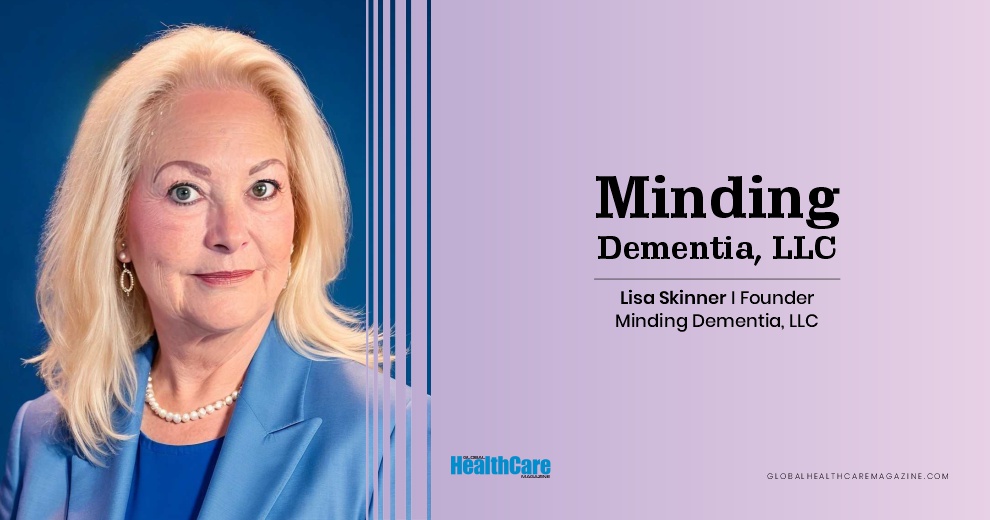
She is a behavioral specialist, a two-time best-selling author, an internationally recognized TEDx speaker, and the founder of Minding Dementia, LLC. But these titles are simply the byproducts of a mission that is far more personal. Her journey was not born from a business plan or a market analysis. It was forged in the crucible of her own family’s pain and ignited by the desperate plea of a stranger. She is a leader who measures success not in revenue, but in moments of restored connection, in the sound of laughter, in the return of a smile. In a world bracing for a “tidal wave” of dementia diagnoses, Lisa Skinner is not building a fortress. She is building a lighthouse.
A Mission Forged in Loss
To understand the depth of Lisa’s commitment, you must first understand its source. Her expertise is not purely academic. It is etched into her own family history. “Having had eight family members diagnosed with one of the brain diseases that cause dementia,” she shares, her work is a direct response to a pain she knows intimately. She has not just studied the disease; she has lived alongside it.
This personal history became intertwined with her professional life. For over three decades, she has worked in the eldercare industry, witnessing firsthand the “heartbreaking struggles” of countless others. “I have witnessed the human shadows of the disease,” Lisa says, “memory loss, confusion, changing personalities, and watching people being thrust into a new existence that no longer makes sense.”
She saw how the disease “robs people of their core being,” and she felt an unshakable, profound calling to help. “I felt compelled to try to make their worlds easier to manage with the knowledge and expertise that I gained through my lived experiences,” Lisa explains. This was not a career choice. It was a human imperative. She was serving the people whose pain she understood in her very bones.
The Prayer and the Pen
For years, Lisa’s work was direct, personal, and impactful. She was a trusted resource, a behavioral specialist whose guidance made a tangible difference. But the idea of broadcasting her message, of becoming an author or a public figure, was not hers. It was, in a way, a mission that was placed upon her by the very people she was serving.
The story of her first book begins not in a publisher’s office, but in the living room of a desperate family. “I was called over to a home by a woman who was referred to me by one of my clients,” Lisa recounts. The couple had two parents living with dementia, a father with Parkinson’s and a mother with Alzheimer’s, both diagnosed about two years prior. They were lost. They told Lisa that for two years they had been “struggling to find help, guidance and resources that could better prepare them for what to expect.” They were frustrated, and the information they could find was “extremely limited.”
For the next two and a half hours, they peppered her with questions. Lisa, drawing on her decades of lived experience, answered them. Finally, the wife paused the conversation.
“Lisa, I want to take a minute here to tell you that you are the answer to our prayers,” the woman said. “You have provided us with more valuable information in the 2 ½ hours that you have been here than we have been able to get from anybody else in that time. This entire situation has been the most stressful period of our lives.”
And then came the words that would change the trajectory of Lisa’s life.
“You need to write a book,” the woman insisted. “There are so many families like ours who are also desperate for this guidance… and it would be selfish of you not to share what you know…it would help so many people.”
The statement, Lisa says, “cut to my core.” It was not a suggestion; it was a plea. “I knew she was right,” Lisa admits. “I had heard it from other people before, but the way she said it had such a profound impact on me that I put that pen to paper and began writing my first book.” That book, “Not All Who Wander Need Be Lost,” became a #1 best-seller, not because of a savvy marketing campaign, but because it answered a prayer.
Dispelling the Myths, Rewriting the Rules
At the heart of Lisa’s work is a fundamental reorientation of how we view dementia. She is a tireless advocate for dispelling the myths that create so much unnecessary pain and isolation.
“One of the common misconceptions… is that people eventually disappear inside themselves and that they are no longer aware of life around them, similar to being in a catatonic state,” she explains. “Which is not true. They are very much aware of things and continue to have awareness, thoughts and feelings.” The key, she insists, is that “it takes specialized knowledge and skills to know how to tap into it and draw them out of their cocoon.” Her work provides those skills.
Another damaging misconception is that dementia is exclusively a disease of the elderly. “It can strike anyone at any age,” she clarifies. By educating the public, she is fighting the stigma and ignorance that so often surround the disease.
Lisa’s methods are a direct challenge to outdated, conventional practices. She has seen the standards of dementia care evolve dramatically over her 30 years in the field and has been at the forefront of that evolution. Her approach is about moving away from conflict and stress and toward a “much more promising approach to providing a higher quality of life that includes purpose, dignity and meaning for everyone involved.”
The key, as she explains in her second best-seller, “Truth, Lies & Alzheimer’s,” is to understand how the brain is changing and to respond to the new reality, not fight against the old one. This allows families and caregivers to “elicit positive outcomes” and find harmony in a heartbreaking situation.
The Test of Principle
Lisa’s commitment to dignity and principle is not just a philosophy; it is a code she has lived by, even at great personal cost. She tells a story from 2007, when she was working as a Regional Director for one of the largest elder care organizations in the United States. It was the eve of the great financial crash of 2008, and the company was in a panic.
“Our occupancy numbers, company-wide, were suddenly dropping steadily month to month,” she recalls. The executives, in a bid to protect the bottom line, “were instructing us, the Regional Directors, to instruct our teams to look the other way at some of the required regulations and admit people into our buildings in order to build the occupancy numbers back up.”
Lisa was at a crossroads. She could follow the directive, preserve her job, and compromise her integrity, or she could stand her ground. For her, it was not a choice. “I flat out refused to carry out those directives,” she states simply, “so I left the company on the principle of not being willing to be coerced into doing something that I knew was so wrong.” It was a defining moment, a quiet act of leadership that proved her commitment was to the people she served, not to a balance sheet.
The Metrics of a Meaningful Life
When you ask a typical leader about their metrics for success, they will talk about revenue growth, market share, or user acquisition. When you ask Lisa Skinner, she talks about something else entirely. Her key performance indicators are the intangible, deeply human moments that her work makes possible.
She measures her effectiveness by “witnessing positive changes and outcomes when my tools, tips and strategies prove to be successful.” She measures it “in seeing a more joyful, purposeful, meaningful experience between the people involved.”
Her metrics are “hearing laughter, seeing smiles, people able to make the best out of a heartbreaking situation, and finally being able to focus on what really matters…spending quality time with each other instead of being in a continuous state of conflict and stress.”
This is the true impact of her work. It is not just about managing behaviors; it is about restoring relationships. The books, the training programs, the media appearances, the weekly podcast and television show, they are all instruments for achieving this one goal: making a difference in the quality of people’s lives. “When family members and caregivers share with me the difference my guidance has made to their world,” Lisa says, “my reward couldn’t be any better.”
The Coming Tsunami
Lisa’s work is animated by a profound sense of urgency. She is acutely aware of the storm gathering on the horizon. “We are being told by both the World Health Organization and the Alzheimer’s Association that the number of people expected to develop Alzheimer’s disease by the year 2050 will triple worldwide unless a cure or a treatment is found,” she warns.
This stark projection has become the “bigger vision” of her continued quest. “I realize that society is not even close to being prepared for the tsunami of people who are projected to develop dementia,” she says. Her mission has expanded from helping individual families to preparing an entire society for what is to come.
She finds her own balance and strength in her family, enjoying travel and spending time with her two grandchildren and three dogs. It is this connection to her own loved ones that fuels her work for others.
Her final message is not a mere platitude; it is a promise, born of thirty years of witnessing human resilience and the quiet miracles that unfold when empathy meets informed action. It is a message of hope, tailored for those who feel lost in the fog:
“If you dream about being able to connect emotionally with your loved ones again and to find moments of peace, joy, and clarity amidst the fog, your dream is achievable.
If you dream of having tools that soothe confusion and agitation; of being able to keep your loved ones happy and safe at home longer; of strengthening family unity during this difficult time; and of creating new, positive memories to hold sacred, these things are achievable.
If you dream of ensuring your loved one feels respected and loved; of becoming a source of strength instead of just feeling reactive; and of feeling seen, heard, and supported by others who truly understand, please trust that all of these things are achievable.
I have seen miracles happen and those dreams come true.”
This is Lisa Skinner’s legacy: not just teaching how to cope with dementia, but how to live through it, with grace, with connection, and with the enduring power of human love.
Quote

Also Read: Healthcare Leadership & Innovation: Top Experts Shaping the Future of Care, 2026