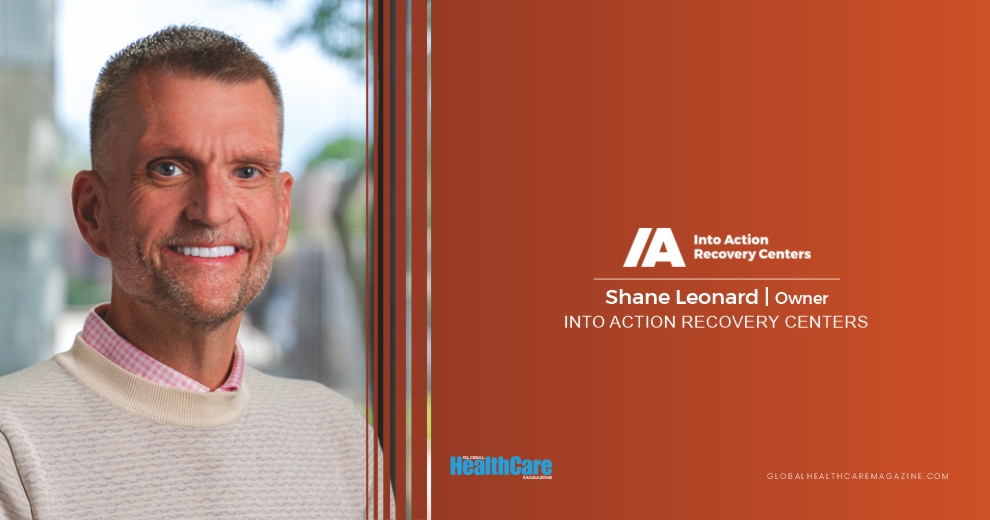
There is a statistic that floats around the addiction recovery world, a grim and persistent number that suggests nine out of ten people will fail. It is repeated in seminars, whispered in family meetings, and used to temper expectations. Shane Leonard, the Owner of Into Action Recovery Centers, finds this statistic not just wrong, but “laughable and tragic.” He is a man who has built a sprawling, multi-state recovery empire on the radical, unshakeable belief that every single person can recover. He is not interested in managing decline; he is in the business of engineering miracles.
Shane is a former engineer who, at the age of 24, went into business for himself with no formal experience but a surplus of grit. Today, he oversees a network of nine facilities that has grown from a humble 20 beds in 2010 to 112 licensed inpatient beds in Houston alone, with a new expansion reaching into Roanoke, Virginia. He has spent over 14 years in the drug and alcohol treatment field, not as a distant executive, but as a passionate advocate who views his work not as a career, but as a repayment of a debt to the universe. He is a leader who does not scout the competition because he is too busy serving the people they left behind.
The Engineer of His Own Rescue
Shane’s journey into the world of recovery began in a moment of personal desperation. Early in his career, he worked primarily in engineering, a world of concrete, physics, and predictable outcomes. But his personal life was spiraling into a chaos that no engineering principle could solve. He had been to treatment three times before, to “very reputable and expensive treatment facilities,” and each time, he left wanting. He could not remain sober.
It was at the Bay Area Recovery Center (BARC) in Dickinson, Texas, that the miracle finally happened. It wasn’t a new medication or a high-tech therapy that saved him. It was kindness. It was patience. It was an “inability to shield me from the truth.” The staff at BARC connected with him in a way that shattered his defenses. “I was so incredibly blown away that something so simple was so hard,” Shane recalls.
He knew nothing about running a treatment center. He only knew what it felt like to be a client. Yet, propelled by God and the “residual inspiration” of the people who saved his life, he found himself owning and leading what was then the “smallest and obscure treatment center in Texas.” He had no roadmap, but he had a mission. He was going to create a place where the miracle that happened to him could happen to others.
Filling the Cavernous Ravine
In 2009, when Shane applied for a state license for his new venture, he discovered something startling. He was the first person in three years to even bother applying for a detox/residential license in Texas. It wasn’t just a gap in the market; it was a “cavernous ravine.”
The early days of Into Action Recovery Centers were defined by a steep learning curve. Shane, who admits he marched to the beat of his own drum, hired excellent counselors but quickly realized that passion alone wasn’t enough. At 40 years old, he went back to school. He had to learn the dizzying complexities of managed care, of insurance networks, of keeping a ship afloat while navigating the turbulent waters of healthcare policy.
Shane was humble enough to ask for help. He found guidance from the Texas Health and Human Services Commission and key consultants like Dr. Neal Dickman, a retired insurance executive who gave him a piece of advice that became his north star: “Follow the rules, but do what’s right for your clients and the rest will take care of itself.” Shane took this to heart. He realized that standard business metrics—KPIs, balance sheets, profit margins—were “not germane to the human being business.” The only thing that mattered was caring for every person who walked through the door.
The Anti-Statistic
Today, Into Action Recovery Centers is no longer small or obscure. It is the largest in its class. Yet, Shane has fiercely protected the culture that made it special. The organization operates with a core philosophy of being professional but intimate, ensuring that clients feel exactly how he felt at the beginning of his own recovery: “right where we needed to be with the people we needed to be there with.”
The programs are rigorous, adhering to the highest levels of CARF Accreditation and state licensure. They offer a full continuum of care for adult males and females, with a specialized focus on chronic relapse clients and those who have been disenfranchised by other centers. But the true magic lies in the “loving, compassionate, empathetic but accountable” culture. Shane believes that outcomes data from major insurers like Magellan, Optum, Aetna, and Cigna can prove their effectiveness empirically, but they cannot capture the human spirit of the place.
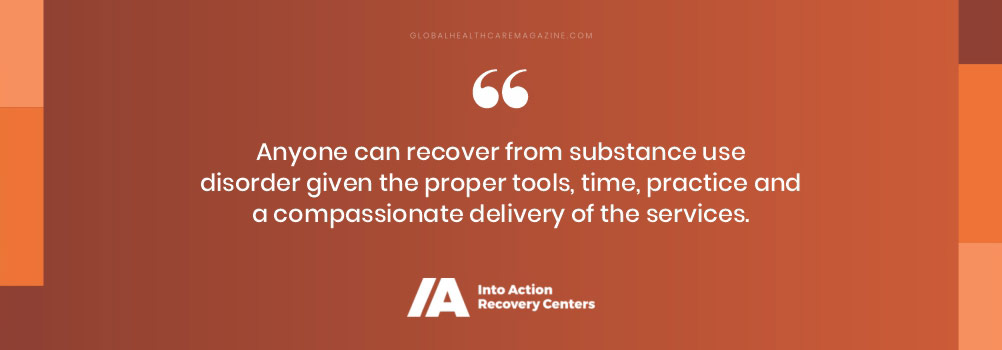
Shane is particularly proud of the team he has built, including key collaborators like Priscilla Leonard, Sabrina Harland, and Zacery Sanders. Together, they have created a sanctuary where the “punitive behavior” of the outside world is left at the door. They do not believe in the statistic that says nine out of ten will fail. They believe that “anyone can recover from substance use disorder given the proper tools, time, practice and a compassionate delivery of the services.”
The Test of Leadership
Leading a rapidly growing healthcare organization is not without its trials. Shane recalls the period around 2014-2015, when the Affordable Care Act (ACA) fully took hold, as a time when his leadership was truly tested. The heightened scrutiny from payers and the pressure to balance mandates with client care required a shift in their program offerings. The promise of affordability and accessibility, he notes, “has not proven out to be the case with ACA.”
It was a challenge to meet payer demands without compromising the quality of care. But Shane responded in typical fashion: he didn’t cut corners. He invested. He implemented new technology systems, developed improved training modules, and, “quite frankly,” hired more staff. He refused to let the bureaucracy dilute the mission.
This commitment to excellence has not gone unnoticed. Into Action Recovery Centers has been recognized by Newsweek Magazine, multiple major insurance companies, and local, state, and federal agencies. But for Shane, the only recognition that truly matters comes from the “thousands of satisfied families” whose lives have been restored.
Expanding the Footprint of Hope
Shane is not a man who rests on his laurels. He is driven by a vision of expanding his reach to more communities in need. He is currently focused on building out the Houston footprint to meet an “all time high” demand for care. He is also excited about the recent opening in Roanoke, Virginia, a region he identifies as often overlooked and devastated by substance abuse disorders.
He remains committed to an evidence-based but abstinence-based treatment philosophy, targeting areas “where others do not want to go.” His approach is not about chasing trends; it is about sticking to what works and delivering it with unshakable integrity.
The Presence of a Leader
When asked about his leadership style, Shane offers a surprising answer: “Not being at the helm of the company.” He does not see himself as a captain barking orders from the bridge. Instead, he is available. He is present. “Our clients are the most important aspect of the human care business,” he says.
This philosophy extends to his personal life. As a recovering alcoholic, he finds the concept of work-life balance “relative” and largely inapplicable. “What I do know,” he says, “is that whether if I’m at work or home, I am 100% present.” He enjoys classic cars and boating, but his greatest joy comes from “making up for lost time” with his wife, children, and grandchildren.
Shane Leonard is a man who has turned his life into a testament to the power of recovery. He is an engineer who learned to build lives instead of bridges. He is a business owner who ignores the balance sheet in favor of the human heart. And he is a leader who wakes up every day with a single, driving purpose: to prove the statistics wrong, one miracle at a time.
Quotes
Also Read: The 10 Most Influential Leaders in Addiction Recovery 2026