The story of today’s healthcare landscape often feels like a race between discovery and real-world need. Science moves fast, yet the gap between research and practical care can still be wide. In this environment, the people who stand out are those who understand both sides of the system. They see the science, the data, the global challenges, and the local realities that shape health outcomes. They also know that meaningful progress does not happen alone. It grows through teamwork, shared purpose, and leadership rooted in evidence.
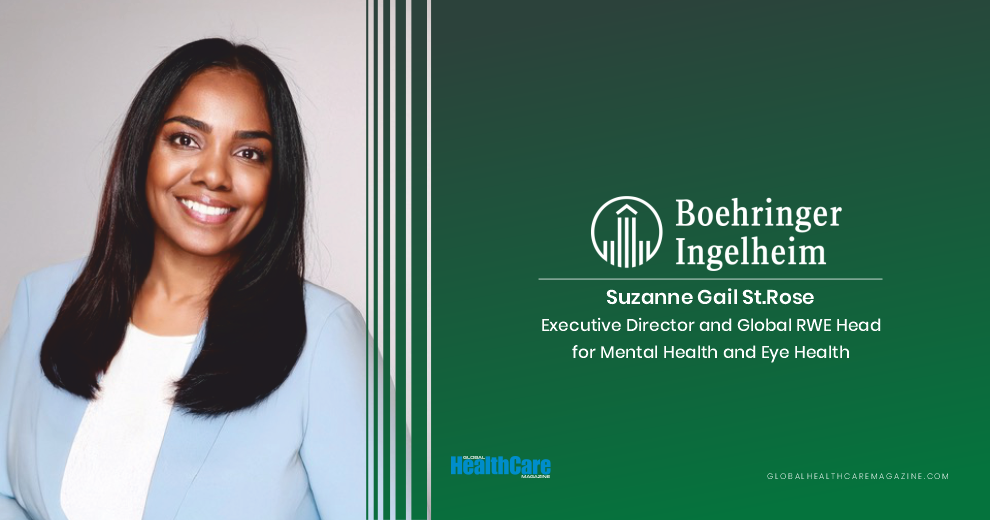
Suzanne St.Rose is one of those leaders. Her path did not begin in a traditional medical setting; it started in Veterinary Medicine, where she developed an early respect for science and the link between animal health, ecosystems, and human well-being. That perspective shaped how she sees healthcare today. She often explains that her foundation in veterinary science gave her “a deep respect for how connected our world is,” and it pushed her toward a career built on scientific integrity.
As she moved forward in her journey, Epidemiology and Real-World Evidence (RWE) became central to her work. She saw how insights from real settings could strengthen clinical discoveries. This understanding helped her champion the idea that treatments must work not only in trials but also in the daily lives of patients and clinicians. Over the years, she has led teams that use evidence to guide portfolio decisions, shape drug development, and support marketing and market access strategies. She consistently highlights that none of this work is done in isolation. “I lead a team, and without them, I can do very little,” she notes, making it clear that collaboration is at the heart of her leadership.
Her career has taken her across regions and into roles where global coordination matters as much as technical skill. She focuses on solving real problems with practical solutions, staying committed to efficiency, innovation, and continuous improvement. What drives her is simple and steady: a belief that strong evidence leads to safer patients, better outcomes, and smarter healthcare.
Leading Global RWE Efforts in Mental Health and Eye Health
In her role as Executive Director and Global RWE Head for Mental Health and Eye Health at Boehringer Ingelheim, Suzanne guides strategies that shape the full arc of drug development. She works with her team to build Epidemiology and RWE plans that support early research, development decisions, and market readiness. Her focus is on producing studies that reveal how treatments perform in real settings, offering insight into patient outcomes, treatment use, and the practical value of new therapies. She often explains that these efforts help “bridge the space between controlled trials and everyday care,” a principle that guides much of her work.
Collaboration sits at the center of her approach. She partners with global and regional colleagues, healthcare professionals, regulators, and patient advocacy groups to keep each initiative meaningful and patient-focused. She also tracks new industry trends and regulatory changes while encouraging her team to keep learning, adapting, and pushing innovation forward.
The Growing Influence of Real-World Evidence in Patient-Centered Care
Suzanne views RWE as a powerful tool that brings healthcare closer to the daily lives of patients. She explains that RWE helps close the distance between controlled trials and real experiences, offering a fuller picture of how people respond to treatments outside research settings. By using information from electronic health records, registries, wearables, and other real-world sources, her team can study patient journeys with more depth and accuracy.
These insights guide strategies that reflect what patients truly need. They help identify care gaps, understand long-term outcomes, and shape interventions that work in routine life. Suzanne often points out that this approach strengthens trust between patients and healthcare providers, since decisions are grounded in real evidence.
She and her team also explore newer methods such as pragmatic trials, external control arms, and secure data linkage. These tools help make healthcare more adaptive and patient-focused, leading to better outcomes and faster access to new treatments.
Balancing Ethics, Evidence, and Patient Impact in RWE
For Suzanne, ethical responsibility sits at the center of every RWE strategy. She and her team follow a structured framework that aligns with global standards, including guidance from the FDA, EMA, and PMDA. Each study is designed with strict data protection measures, clear governance, and the necessary ethics approvals. She often notes that this structure helps protect patient privacy while reducing the risk of bias.
Her approach remains anchored in patient needs. By using data from records, registries, and wearable devices, her team builds a clearer picture of real life experiences outside clinical trials. They work closely with healthcare professionals, regulators, and advocacy groups to make sure the insights remain relevant and useful.
Scientific rigor strengthens this work. Suzanne and her team use advanced analytics, integrated evidence plans, and secure methods such as tokenization and data linkage. These tools support accuracy while keeping every step ethically sound and focused on meaningful outcomes.
Working With the Stakeholders Who Shape Her Mission
Suzanne describes her mission as “ensuring the delivery of high-quality RWE across the full lifecycle of asset development,” and she is clear that such work depends on strong collaboration. Internally, she partners with teams across Research and Development, Commercial, Market Access, Marketing, Health Economics Outcomes Research, and Patient Engagement. She also works closely with colleagues in Medicine, Safety, and Regulatory, noting that these connections help keep every project aligned with scientific and organizational goals.
Her external network is just as important. She engages with academic partners, Contract Research Organizations, and specialists who bring deep subject expertise. She often says that these collaborations “help us use patient data and RWE in a thoughtful, strategic way,” ensuring that insights carry both scientific value and real business relevance. This broad partnership model supports her team’s ability to influence key decisions and move evidence into meaningful practice.
Measuring Progress Through Evidence, Impact, and Real Outcomes
When Suzanne talks about performance, she focuses on results that matter both to science and to patients. She explains that her team uses “a mix of efficiency, scientific value, patient outcomes, operations, and innovation” to understand whether their work is truly moving the needle. Time-to-insight and the ability to close high-priority evidence gaps serve as early markers of efficiency. Scientific impact shows up in regulatory submissions supported by RWE, including FDA and EMA filings, as well as peer-reviewed publications and conference presentations. She notes that these outputs help demonstrate real-world effectiveness and safety.
Patient-centered results remain central. Her team looks for clearer treatment pathways, fewer care gaps, and long-term measures such as adherence and persistence. Operational and financial indicators help keep projects on track, ensuring that spending aligns with forecasts and that vendor governance stays strong. Innovation is monitored through the use of tokenization, AI-supported analyses, and pragmatic trial designs. She often points out that frameworks like Gap Analysis and Integrated Evidence Planning “help us score what matters by urgency and impact.”
Dashboards, regular reviews, and shared accountability keep this structure alive. For Suzanne, the goal is not only strong metrics but a culture where evidence guides decisions in a consistent and lasting way.
A Leadership Test Under Pressure
Suzanne recalls one moment that pushed her leadership skills to their limits. Chinese health authorities had requested a post-authorization safety study with a strict six-month deadline, a timeline far shorter than usual. She responded by bringing together a cross-functional group that included clinical operations, biostatistics, regulatory experts, and local teams in China. “We had to move fast, stay aligned, and trust each other’s expertise,” she says. Her team built the study protocol in-house and used global safety data to cut development time by nearly half.
To keep the work on track, she set up daily status meetings and secured expedited ethics approvals. She also worked closely with trusted CRO partners to navigate operational challenges. Clear communication with senior leaders and regulators helped maintain confidence throughout the process. The study was completed on time, reinforcing her belief that decisive action and shared responsibility can carry a team through intense pressure.
Achievements That Reflect a Career of Evidence, Innovation, and Steady Leadership
Suzanne points to several achievements that show the reach of her work. She and her team have built Real-World Evidence programs that address key gaps in Mental Health and Eye Health, tracking long-term outcomes, adherence, persistence, and real-world effectiveness through registries and tokenized datasets. “Our goal has always been to understand what truly happens in everyday care,” she says. Her leadership has also accelerated the use of pragmatic trials, external control arms, and AI-supported analytics, strengthening Boehringer Ingelheim’s position in evidence-based healthcare.
Operational impact has been just as significant. She has helped maintain less than a five percent variance from annual RWE spending forecasts and ensured strong governance for high-risk vendors. Her integrated approach has improved collaboration across Medical Affairs, Market Access, and Clinical Development, supporting regulatory submissions and launch readiness.
Suzanne also highlights the cultural milestones. During a period of major organizational change, she worked to build psychological safety and open communication across global teams. Her push for tokenization and secure data linkage reflects her belief that innovation must advance while keeping patient privacy at the center.
Championing Women’s Growth in Science and Leadership
For Suzanne, advocating for women’s advancement is a daily practice rather than a separate initiative. She explains that progress begins with “creating spaces where people feel safe to speak up, take risks, and grow,” and she works to build that environment across every team she leads. Psychological safety, trust, and open communication guide her approach, helping ensure that all voices are recognized and valued. She models empathy and resilience in her leadership, offering mentorship that encourages women to build confidence and adapt to changing demands in science and healthcare.
She also promotes evidence-based strategies and collaboration as core tools for advancement. Suzanne often shares that continuous learning plays a vital role in shaping future leaders, especially women who are navigating complex scientific fields. By setting these standards and championing inclusive practices, she supports a culture where women can lead, innovate, and influence the direction of modern healthcare.
A Vision for the Future of Evidence-Driven, Patient-Centered Care
Looking ahead, Suzanne hopes to help shape a future where RWE guides decisions across the entire healthcare system. She often says she wants RWE to be “a driving force behind how we understand and support patients,” and she is working toward models that combine advanced analytics, AI, tokenization, and real-world data into connected evidence ecosystems. Her goal is to make the full patient journey visible, from early prevention to optimized treatment.
She describes a future where care is truly centered on the realities of patients rather than limited to clinical trial results. Innovation, she believes, moves faster when it stays closely tied to real experiences. Collaboration with global partners and a strong ethical foundation remain essential to her vision. Above all, she hopes to build a world where evidence is transformed into clear, meaningful action that supports more equitable and effective healthcare for all.
Finding Balance beyond Work
Suzanne believes that balance begins with clarity. She sets firm priorities and structures her schedule so work does not spill into personal time. “I trust my team, and that trust gives everyone room to grow while keeping stress manageable,” she says. She protects her downtime by limiting after-hours emails and notifications, and she relies on short breaks, exercise, and quiet moments of reflection to stay centered during busy periods. These habits help her bring steady focus to her leadership.
Outside the demands of her role, she enjoys exploring new places and learning from different cultures. Hiking, spinning, and yoga keep her grounded, while reading about leadership and global health feeds her curiosity. She also turns to baking when she wants a creative outlet. These interests help her recharge and create a rhythm where personal well-being supports professional purpose, allowing her to show up fully in both worlds.
A Vision Rooted in Purpose, Innovation, and Human Insight
As Suzanne St.Rose reflects on her philosophy, she returns to a simple idea: leadership is rooted in responsibility and empathy. “It isn’t about authority,” she says. “It’s about listening, acting with integrity, and bringing people together.” She believes that meaningful progress in healthcare happens when scientific rigor is paired with genuine compassion, ensuring that each decision supports the person behind the data.
She sees the future of healthcare moving toward data-informed, patient-centered innovation. To her, RWE represents more than a set of tools. It reflects a shift toward understanding patients as they live, not only as they appear in trials. She emphasizes the need for ethical practices, thoughtful use of technology, and strong global partnerships.
Her guiding principle remains steady: lead with purpose, innovate with courage, and stay connected to the human stories within the evidence. This, she believes, is how healthcare continues to evolve for generations.
Disclaimer
“The views, thoughts, and opinions expressed in this interview are solely those of the individual interviewee and do not necessarily reflect the official policy or position of Boehringer Ingelheim, its affiliates, or any other individuals or entities associated with the company. The company is not responsible for the accuracy or completeness of the information provided within the interview and accepts no liability for any actions taken based on this information.”
Quotes

Also Read: Women Leaders in Healthcare, 2026