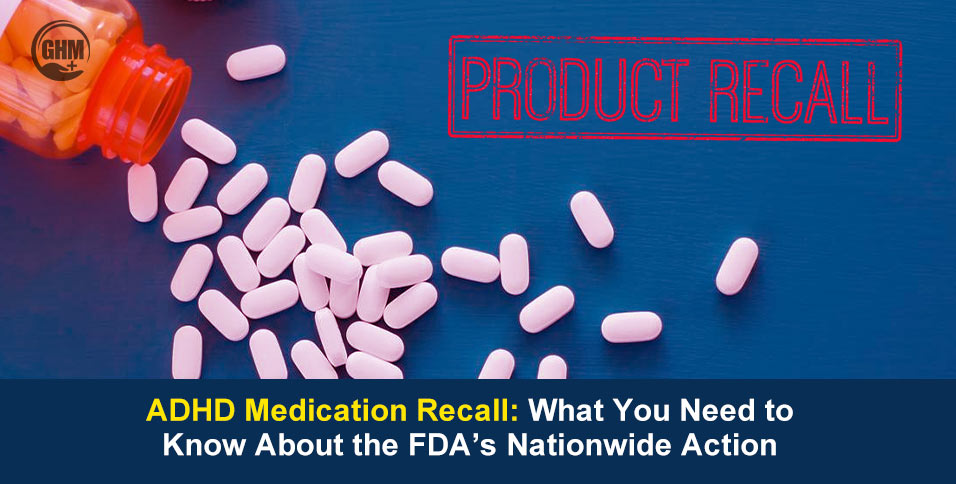
A nationwide ADHD medication recall has been issued after tests revealed that several lots of lisdexamfetamine dimesylate capsules, the generic version of Vyvanse, may not dissolve properly. This means the users aren’t getting the full therapeutic effect.
The Food and Drug Administration (FDA) confirmed that Sun Pharmaceutical Industries voluntarily recalled multiple dosage strengths (10mg to 70mg) after dissolution test failures.
Dissolution refers to how well a drug breaks down in the body for absorption. Without proper dissolution, patients may not receive the intended benefits of their ADHD meds.
“Dissolution is critical for a drug to be absorbed and have a physiological effect,” the FDA explained.
Despite the reduced efficacy, the FDA stated there are no immediate safety risks, meaning the recalled medication is not toxic or harmful.
What is Drug Dissolution and Efficacy
- The key reason for this ADHD medication recall was a failure in dissolution tests. It is a scientific but crucial concept that determines how effectively a drug works once swallowed.
- The dissolution process is how a medication breaks down and releases its active ingredient in the body so it can be absorbed into the bloodstream.
- For capsule-based drugs, especially those like lisdexamfetamine dimesylate (the generic form of Vyvanse), proper dissolution is essential because it controls how quickly and how completely the medicine delivers its therapeutic effect.
- If a capsule fails to dissolve correctly, the active drug may not be released in the intended amount or at the right time. This means the body could absorb too little of the medication, leading to reduced effectiveness.
- In the case of ADHD medications, that might translate into loss of focus, increased impulsivity, mood instability, and a return of symptoms, even if patients are taking their prescribed dose consistently.
Dissolution failures can happen for several reasons:
- Variations in the manufacturing or coating of the capsule.
- Changes in formulation or excipients (inactive ingredients).
- Improper storage conditions, such as heat or humidity, can affect capsule integrity.
To ensure every medication batch meets standards, the Food and Drug Administration (FDA)
requires rigorous dissolution testing before drugs reach the market. These tests simulate how a capsule dissolves in the human digestive system and measure how much active ingredient becomes available over time.
Recalls, like an ADHD medication recall, though precautionary, are vital to maintaining public trust and treatment reliability in medications that millions depend on daily.
What Lots Are Affected
The affected ADHD medication was distributed between May and November 2024, with expiration dates through 2026.
The capsule, lisdexamfetamine dimesylate, was recalled from dosages of 10 mg to 70 mg.
Patients can check their lot numbers on the FDA’s official website or through their pharmacy to confirm if their prescription is part of the recall.
How ADHD Medication Recall Impacts Patients
Patients taking these ADHD meds may notice these symptoms returning:
- Decreased focus or attention span
- Increased impulsivity or hyperactivity
- Reduced daily performance at work or school
If these occur, experts urge users not to stop their medication abruptly but to contact their healthcare provider for guidance or replacement options.
What Patients Should Do
If you suspect your ADHD medication is part of the recall:
- Check your bottle for the manufacturer and lot number.
- Consult your pharmacist or doctor before making any medication changes.
- Request a replacement or refund if your medication is listed.
- Monitor symptoms and note any changes in focus, mood, or energy.
Why This Recall Matters
The recall highlights the delicate balance in ADHD management. Even small changes in medication quality can have major impacts on concentration, mood, and daily functioning for millions relying on consistent treatment.
Experts emphasise that this recall is not a safety emergency but a therapeutic efficacy issue. The patients simply may not be getting the full benefit of their prescribed dose.
Need For Generic Drug Quality
This ADHD medication recall raises broader questions about generic drug manufacturing standards. While generics must meet FDA bioequivalence criteria, minor variations in production or formulation can influence drug performance for sensitive patients.
Experts have said that increased transparency and stricter quality control measures could prevent similar issues.
Conclusion
The ADHD medication recall underscores the importance of vigilance in drug manufacturing and patient awareness.
As ADHD diagnoses rise globally, ensuring medication consistency is not just a regulatory challenge but a patient safety priority.