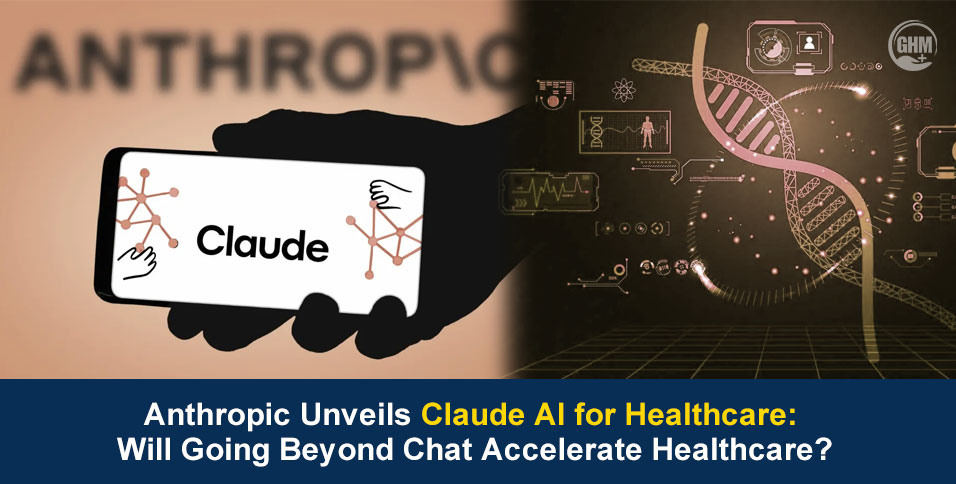
Artificial intelligence is steadily reshaping modern medicine, but adoption has often been slowed by privacy concerns, regulatory complexity, and lack of real-world usability. Anthropic’s latest move may signal a turning point. The company has officially introduced Claude AI for healthcare, a purpose-built platform designed to go beyond simple chatbot functions and support real healthcare workflows across the US healthcare system.
Unlike general AI tools, Claude AI in Healthcare is positioned as a privacy-first, compliance-ready solution that can be utilized for hospitals, payers, life science companies, and even patients.
Anthropic says the platform is designed to reduce administrative burden, improve access to health data, and support research without compromising sensitive medical information.
What Is Anthropic Claude AI for Healthcare
At its core, Claude AI for healthcare is an expansion of Anthropic’s Claude models into regulated healthcare and life sciences environments. According to Anthropic’s official announcement, the platform is “HIPAA-ready,” meaning it is built to operate within US healthcare privacy standards when deployed correctly.
More importantly, Anthropic emphasizes that healthcare data processed through Claude is not used to train its models, a concern that has made many providers cautious about AI adoption.
Anthropic explained this approach, stating that Claude is designed to help organizations “analyze, summarize, and act on healthcare data while maintaining strict privacy controls.”
This marks a clear shift from AI as a conversational assistant to AI as a news AI platform for healthcare operations.
How Claude AI In Healthcare Supports Medical Workflows
One of the biggest challenges in US healthcare is administrative overload. Doctors and nurses often spend more time on paperwork than on patient care. Anthropic believes integrating Claude AI in healthcare can help change that.
The platform connects securely to trusted healthcare databases and systems, allowing it to assist with:
- Prior authorization reviews
- Medical policy checks
- Claims documentation and coding support
- Provider credential verification
- Internal clinical and administrative summaries
Anthropic designed Claude to integrate with structured healthcare data rather than relying only on free-text prompts, making it more reliable for medical use.
This makes Claude AI for healthcare especially relevant for insurers, hospital systems, and healthcare administrators seeking efficiency without cutting corners on compliance.
How Anthropic & HealthEx Partnership Controls Patients’ Data
Anthropic is also extending Claude’s capabilities directly to individuals through partnerships like HealthEx. These integrations allow users to securely connect their personal medical records, such as lab results and visit summaries, and interact with them through Claude.
With patient permission, Claude AI can:
- Explain lab reports in simple language
- Summarize long medical histories
- Highlight trends in health data
- Help patients prepare questions for doctors
Anthropic says this patient-facing model gives individuals greater control over their own health information while keeping data private and user-owned.
As noted by Anthropic, “users decide what data Claude can access, and that data remains isolated and protected.”
This approach may help bridge the gap between complex medical data and everyday understanding.
How This New AI Platform Expands AI in Life Sciences
Beyond clinical operations, Claude AI for healthcare is also making inroads into AI in Life Sciences. Anthropic has introduced new Claude tools designed for research teams, pharmaceutical companies, and clinical trial managers.
These tools can connect to scientific and regulatory databases to assist with:
- Drafting clinical trial protocols
- Summarizing research papers
- Monitoring trial enrollment data
- Supporting regulatory documentation
According to R&D World, Anthropic is positioning Claude as a support system for scientific decision-making rather than a replacement for researchers.
This reflects a growing belief that AI in medicine works best when augmenting human expertise rather than attempting to automate it entirely.
Why Privacy, Compliance Is A Challenge for Anthropic’s AI
Privacy remains the most significant concern surrounding AI in healthcare. Anthropic has repeatedly emphasized that Claude AI for healthcare is built with safeguards such as:
- No training on customer health data
- Explicit user permissions
- Controlled system access
- Audit-friendly infrastructure
While “HIPAA-ready” does not guarantee compliance on its own, Anthropic’s design choices suggest a serious effort to meet healthcare’s regulatory demands.
Industry analysts note that this privacy-first approach sets Anthropic apart in a crowded AI market that includes players like OpenAI, which is also exploring healthcare applications but faces similar scrutiny over data use.
How Claude AI for Healthcare Fits Into the Bigger AI Race
Anthropic’s healthcare expansion comes amid intense competition in the AI sector. Companies across the tech sector are racing to move beyond generic chat tools into industry-specific platforms.
What makes Claude AI for healthcare stand out is its focus on trust, transparency, and integration with real healthcare systems rather than experimental features.
As the healthcare sector evaluates AI adoption, platforms that respect privacy while delivering measurable value are more likely to gain acceptance.
Whether Claude’s approach becomes a new industry standard remains to be seen. But one thing is clear: by going beyond chat, Anthropic is pushing AI in medicine toward a more practical and responsible future.