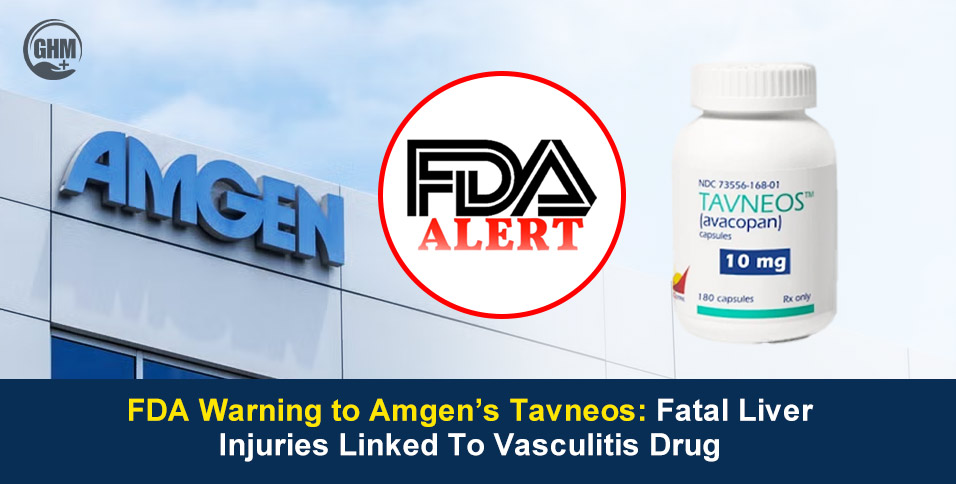
The U.S. Food and Drug Administration has issued a safety alert to the biopharmaceutical company Amgen, claiming fatal liver injury cases linked to Tavneos, a vasculitis drug developed by Amgen. This FDA warning to Amgen’s Tavneos has raised serious concerns among authorities, putting Amgen’s Tavneos drug under scrutiny.
This FDA drug safety alert comes after multiple reports of drug-induced liver injury, including fatalities, were found. Both patients and healthcare providers are being urged to reassess treatment decisions.
What Triggered The FDA Warning to Amgen’s Tavneos?
The FDA warning to Amgen’s Tavneos is based on post-marketing safety data that revealed alarming findings:
- 76 cases of drug-induced liver injury
- 74 cases classified as serious
- 8 reported deaths
- Several cases linked to vanishing bile duct syndrome (VBDS), a rare but severe liver condition.
According to the FDA, there is“reasonable evidence” connecting these cases to Tavneos. The liver injury linked to Tavneos typically appeared within 46 days of starting treatment, making early monitoring critical.
This development has intensified the ongoing Amgen Tavneos controversy, especially as regulators had previously expressed concerns about the drug’s safety profile.
What Is Tavneos & Who Uses It?
Tavneos (avacopan) is used to treat a rare autoimmune condition called ANCA-associated vasculitis, where the body’s immune system attacks blood vessels.
Approved in 2021, the drug was seen as a promising alternative to traditional steroid treatments. However, FDA Flagging Tavneos now highlights that safety risks may outweigh benefits for some patients.
This vasculitis drug remains important for patients with limited treatment options, which is why the FDA warning to Amgen’s Tavneos has sparked a complex debate rather than an immediate withdrawal.
What Are The Symptoms of Tavneos Liver Injury Risk?
In the FDA warning to Amgen’s Tavneos, the organisation has urged individuals taking Tavneos to seek immediate medical help if they notice:
- Yellowing of the skin or eyes (jaundice)
- Dark urine or pale stools
- Persistent nausea or vomiting
- Itching or unusual fatigue
- Pain in the upper abdomen
These symptoms may indicate drug-induced liver injury, which can become life-threatening if ignored.
Patients may also be referred to liver specialists if symptoms persist. Early detection can significantly reduce complications.
New Guidelines for Doctors and Healthcare Providers
The recent FDA warning to Amgen’s Tavneos also includes updated clinical recommendations:
Monitoring Requirements
- Liver function tests every 2 weeks during the first month
- Monthly monitoring for the next 5 months
- Continued testing as needed
When to Stop Treatment
Doctors are advised to discontinue Tavneos if:
- Liver enzymes (ALT/AST) rise significantly
- Signs of liver damage appear
These steps aim to reduce the risks associated with serious liver injury and improve patient safety.
Amgen’s Response To FDA Warning
Despite the FDA warning to Amgen, the company has chosen not to withdraw Tavneos from the market.
Amgen stated it remains “confident” in the drug’s effectiveness and believes it has a favorable benefit-risk profile. The company is also working with regulators to update safety labels, including adding warnings about VBDS.
However, the FDA had earlier requested a voluntary withdrawal, which Amgen declined. This ongoing disagreement has intensified scrutiny of Amgen’s Tavneos drug.
Conclusion
The FDA warning to Amgen’s Tavneos highlights the importance of post-marketing drug surveillance, monitoring medicines after they are approved.
With the Amgen Tavneos controversy growing, the focus now shifts to patient safety, regulatory transparency, and informed decision-making.
This recall highlights that even approved drugs can reveal new risks over time. For now, patients should not stop treatment abruptly but must consult their healthcare providers immediately to evaluate safer options, as patients and doctors must stay informed and proactive.