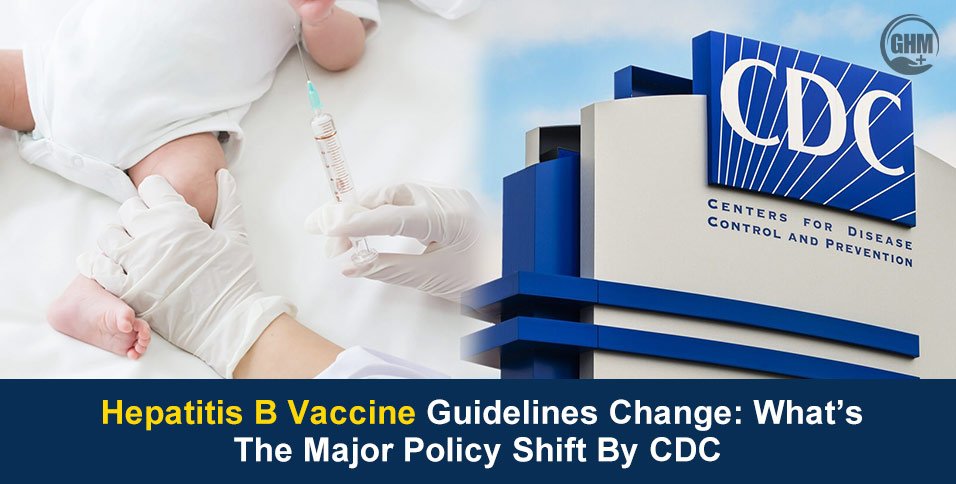
In a major policy shift, the Centres for Disease Control and Prevention (CDC) has changed how the hepatitis B vaccine is recommended at birth. While the vaccine itself remains approved and available, the CDC has rolled back its universal birth-dose guidance, creating uncertainty among parents and healthcare providers.
The hepatitis B vaccine has long been a cornerstone of newborn protection in the United States. Therefore, it is important to know that this vaccine has not been banned, withdrawn, or declared unsafe. Instead, federal guidance has shifted from a universal approach to a more targeted, risk-based recommendation.
This distinction is central to understanding what is happening and why the hepatitis B vaccine shot remains a critical public health tool.
What Has Changed in the CDC’s Hepatitis B Vaccine Guidance
For decades, the CDC advised that all newborns receive their first hepatitis B vaccine dose within 24 hours of birth. This recommendation was designed to protect infants from exposure during childbirth and early infancy, when infection can easily become chronic.
In December 2025, the CDC updated its guidance and removed the hepatitis B vaccine birth dose from its universal recommendation list.
Under the new approach, vaccination timing may depend on factors such as maternal infection status and clinical risk assessment.
Key elements of the updated vaccine guidance for hepatitis B:
- The hepatitis B vaccine is no longer universally recommended at birth.
- A risk-based assessment is now emphasised.
- States and hospitals retain authority over vaccination policies.
- The vaccine remains FDA-approved and widely available.
The CDC described, “This change is a policy realignment rather than a response to new safety concerns”
Why the Hepatitis B Vaccine Still Matters
Hepatitis B is a viral infection that attacks the liver and can lead to serious long-term complications, including liver cancer and liver failure. Infants infected at birth have a much higher risk of developing chronic disease than adults.
Public health experts stress that the hepatitis B vaccine has played a major role in reducing infection rates among children in the United States. Since the introduction of routine vaccination, childhood hepatitis B cases have dropped dramatically.
Dr Paul Offit, a vaccine expert, stated that, “The birth dose exists because it works. It protects infants when they are most vulnerable.”
He warned that delaying or narrowing access could have unintended consequences.
Hospitals Continue To Use Hepatitis B
Despite the federal policy change, many hospitals are continuing to administer the hepatitis B vaccine to newborns as they have for years. Healthcare systems argue that the evidence supporting early vaccination remains strong.
In Michigan, several hospitals publicly confirmed they would not alter their newborn vaccination protocols. Hospital leaders cited patient safety, medical ethics, and decades of clinical data.
A hospital spokesperson told local media, “Our priority is protecting newborns. The hepatitis B vaccine at birth remains a proven safeguard.”
This scenario highlights that CDC guidance influences practice, but hospitals and clinicians ultimately make patient-level decisions.
How Federal Health Leadership Affects Vaccine Policy
The hepatitis B vaccine policy change has also renewed political debate around vaccination oversight. Robert F. Kennedy Jr., U.S. Secretary of Health and Human Services, has been a prominent and controversial voice in vaccine discussions. He has also questioned aspects of federal vaccine policy in the past.
While RFK Jr. did not formally announce the CDC update, critics argue the shift reflects a broader movement toward reducing federal mandates. Supporters say it restores parental choice and clinical discretion.
How Are the States Responding
As federal guidance changes, states are reassessing their own child vaccine guidelines. The Illinois Vaccine Committee has announced it will continue to support early hepatitis B vaccine administration, including the birth dose.
Other states are reviewing their immunisation schedules, leading to varied responses across the country. Public health officials caution that inconsistent policies could increase confusion and widen gaps in care.
Experts note that communities with limited prenatal screening may be especially vulnerable if birth-dose vaccination declines.
What Parents Should Know About the Hepatitis B Vaccine
For parents, the evolving guidance can be overwhelming. Medical professionals recommend focusing on clear, evidence-based information:
- The hepatitis B vaccine is safe and effective
- Hospitals may still offer the vaccine at birth
- Parents can request vaccination even where guidance has shifted
- Early vaccination provides protection during a high-risk period
Paediatricians strongly encourage parents to discuss options directly with healthcare providers rather than relying solely on headlines or social media debates.
How CDC’s Decision Impacts Global Health
Although the CDC policy applies only to the United States, global health experts are paying close attention.
The U.S. has historically influenced vaccination practices worldwide, and changes in hepatitis B vaccine guidance may affect international confidence.
The World Health Organisation continues to recommend universal newborn hepatitis B shots as a global standard.
Conclusion
As the CDC drops the vaccine recommendation, it is a challenge to balance policy flexibility with population-wide protection. While federal guidance has shifted, the scientific consensus around the hepatitis B vaccine remains unchanged.
For healthcare professionals and families, the focus now is on clarity, communication, and continuity of care. The hepatitis B vaccine continues to be one of the most effective tools for preventing lifelong disease, especially when administered early.