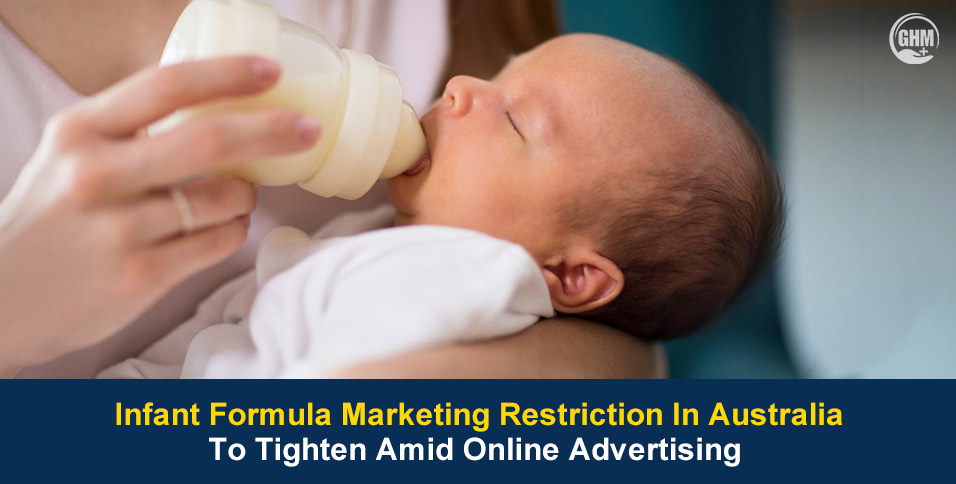
The infant formula marketing restriction in Australia is under major policy change. Health authorities are exploring stricter rules on how baby formula products are advertised. The discussion comes after concerns that modern marketing tactics, especially online advertising, may influence how parents make infant feeding decisions.
The Australian government and regulators are now reviewing whether stronger advertising laws for infant formula are needed to protect parents and promote breastfeeding. The debate is aimed at officials trying to balance public health goals with parental choice.
The move could eventually lead to tighter controls or an effective ban on infant formula advertising in Australia on certain marketing practices.
Why Australia Is Considering Restricting Infant Formula Advertising?
Australia has regulated formula marketing for decades through the Marketing in Australia of Infant Formula (MAIF) Agreement, a voluntary code created in 1992. The agreement restricts companies from promoting formula products for babies under 12 months directly to the public.
However, regulators believe the system may no longer be effective in today’s digital environment.
According to the Australian Competition and Consumer Commission (ACCC), the voluntary nature of the agreement and the rise of digital marketing have weakened its ability to control advertising.
“We are not satisfied… that the MAIF Agreement is likely to result in public benefits that would outweigh the public detriments,” said ACCC Acting Chair Mick Keogh.
As a result, policymakers are now considering replacing the voluntary code with a mandatory regulatory framework.
Why are Breastfeeding Policies Promoted In Australia?
The proposed infant formula marketing restriction in Australia is closely linked to national breastfeeding promotion policies. Breastfeeding is actively promoted in Australia as the rate of breastfeeding is declining in the country.
Health experts widely agree that breastfeeding offers major health benefits for both babies and mothers.
Research shows it can help:
- Strengthen infant immunity
- Lower risk of infections and chronic diseases
- Reduce certain cancer risks for mothers
Australia’s approach also aligns with recommendations from the World Health Organization (WHO), which promotes the International Code of Marketing of Breast-milk Substitutes to limit commercial influence on infant feeding decisions.
Public health experts say strong regulations are essential to protect families during a vulnerable period.
The Australian Department of Health aims to protect and promote breastfeeding, which supports better public health outcomes with effective regulation.
How Does Online Advertising Support Formula Marketing?
One of the biggest concerns behind the debate over infant formula marketing restrictions in Australia is the rapid expansion of digital advertising.
The formula companies increasingly use:
- Social media promotions
- Parenting advice platforms
- Online “baby clubs” and targeted ads
- Emotional messaging aimed at new parents
These strategies can blur the line between medical advice and marketing.
Healthcare professionals warn that marketing ethics on baby formula must be carefully managed, especially when parents are seeking reliable information about infant nutrition.
The Australian Medical Association has warned that some marketing campaigns may exploit parental anxiety about feeding newborns.
“These marketing campaigns prey on this anxiety at a time of vulnerability for many parents,” said AMA President Dr Danielle McMullen.
What Can Change In Australian Infant Formula Advertising Laws?
Several policy options are being discussed while reviewing the infant formula marketing restriction in Australia.
Potential reforms could include:
- A mandatory code of conduct for formula marketing
- Stricter rules for online advertising and social media promotions
- Limits on formula promotion in healthcare settings
- Clearer warning labels and health messaging
Officials say the new framework would close gaps in the current system, which lacks enforcement penalties for companies that violate voluntary rules.
Can the Regulation Balance Public Health and Parental Choice?
While many public health groups support much stronger rules, the issue remains complex. Some industry representatives argue that parents need access to accurate information about formula products, particularly when breastfeeding is not possible.
The formula can be essential for:
- Babies with medical conditions
- Mothers who cannot breastfeed
- Families facing feeding difficulties
For policymakers, the challenge is to follow ethical marketing practices without restricting access to safe alternatives.
Conclusion
The infant formula marketing restriction in Australia is still under process.
But, by following the review of the existing voluntary agreement, the Australian government is expected to develop a mandatory regulatory framework that could take several years to implement.
If introduced, the new rules could reshape how infant formula products are promoted across Australia, particularly in digital spaces.
Here, the broader challenge is protecting infant nutrition and breastfeeding while ensuring families have access to accurate, trustworthy information when making feeding decisions.