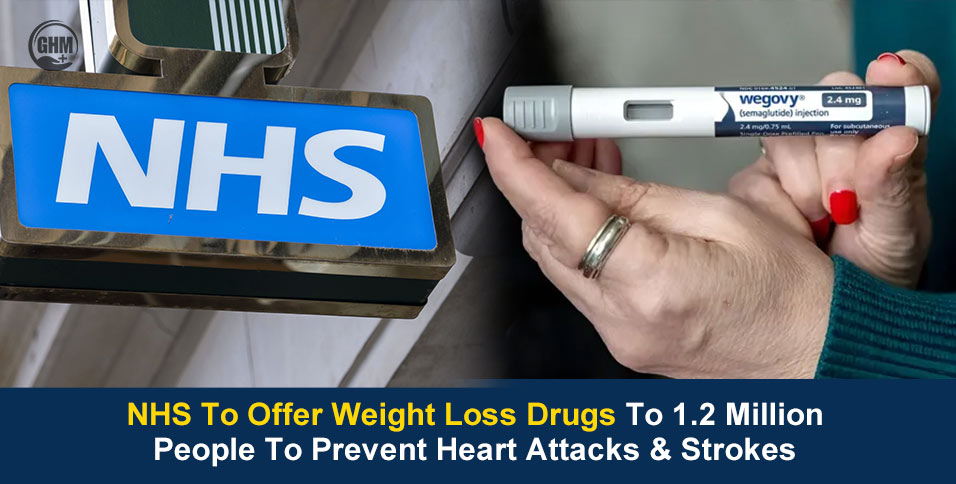
In a major shift in the United Kingdom public healthcare strategy, the NHS to offer weight loss drugs to more than 1.2 million people in England to help prevent heart attacks and strokes.
The decision follows new guidance from the National Institute for Health and Care Excellence (NICE), which recommends expanding access to the weight-loss injection Semaglutide Wegovy for patients at high cardiovascular risk.
This decision of the NHS to offer weight loss drugs not just for obesity, but also as a preventive treatment for heart disease, marks a turning point in how cardiovascular disease treatment is approached.
Healthcare experts have widely welcomed the decision of the NHS to offer weight loss drugs. Cardiometabolic specialists describe it as A “game-changer” in heart attack prevention
As the rollout begins on the coming Wednesday of April, all eyes will be on how effectively the NHS delivers this ambitious and potentially life-saving initiative.
Why Did the NHS Decide to Offer Weight Loss Drugs Now?
The idea of the NHS to offer weight loss drugs comes after strong clinical evidence showing that these medications can significantly reduce the risk of serious cardiovascular events.
Studies involving thousands of patients found that semaglutide can:
- Reduce the risk of heart attack and stroke by around 20%
- Improve overall cardiovascular health
- Provide benefits even before major weight loss occurs
This is a key breakthrough. Traditionally, weight-loss drugs were seen as cosmetic or lifestyle treatments. Now, they are being recognized as a tool for cardiovascular risk treatment.
According to NICE, “people who have already experienced a heart attack or stroke are at much higher risk of having another”. The NHS’s decision to provide weight loss drugs aims to offer these patients an “extra layer of protection.”
How Do Weight Loss Drugs Work On Heart Conditions?
The drug at the center of this decision by the NHS is Semaglutide Wegovy, developed by Novo Nordisk.
It belongs to a class of medications called GLP-1 drugs. These work by:
- Slowing down digestion
- Reducing appetite
- Helping patients feel full longer
This leads to weight loss, but importantly, it also appears to:
- Improve heart function
- Reduce inflammation in blood vessels
This dual action is why the NHS is offering weight loss drugs, which is being seen as a major advancement in modern medicine.
Expats have called this decision a “win-win” for patients managing both weight and heart health.
Who Will Be Eligible for Weight Loss Drugs at NHS?
The new rules, under which the NHS will offer weight loss drugs, will apply to a broader group of patients than before.
Eligible patients include:
- Adults with a BMI of 27 or higher
- Those who are overweight (not just obese)
- Patients with a history of Heart attack, Stroke, or circulation problems
Previously, access was limited mainly to people with obesity. Now, the NHS will offer weight loss drugs to those at high cardiovascular risk, even if they are only moderately overweight.
How Will The Weight Loss Jabs Treatment Be Given?
NHS to offer weight loss drugs in the form of weekly injections. Patients will:
- Self-administer the injection using a pen device
- Receive guidance from a GP or specialist
- Continue existing treatments like statins
Importantly, the NHS emphasizes that these drugs are not a standalone solution. They must be combined with:
- A healthy diet
- Regular physical activity
How Will The Weight Loss Drugs Benefit Public Health?
The NHS’s decision to offer weight loss drugs is expected to have a wide impact.
Benefits of weight jabs for heart patients:
- Fewer heart attacks and strokes
- Lower mortality rates
- Reduced burden on hospitals
- Better long-term health outcomes
In the UK alone:
- Around 100,000 heart attacks occur each year
- A similar number of strokes is also reported
By introducing fat jabs for heart patients, the NHS aims to significantly reduce these numbers.
Challenges and Concerns Around the Rollout:
While the decision is widely praised, some concerns remain.
- NHS capacity: Can the system handle over 1 million patients?
- Access inequality: Risk of uneven rollout across regions
- Side effects: Possible muscle loss
Experts also stress that “weight loss drugs at the NHS should be carefully monitored to ensure benefits outweigh risks.”
There are also concerns about ensuring fair access and avoiding a “postcode lottery” in treatment availability.
Conclusion
The decision of the NHS to offer weight loss drugs to over a million people signals a broader transformation in healthcare.
Instead of treating diseases after they occur, the focus is shifting toward prevention, early intervention, and integrated care.
By combining obesity management with heart attack prevention, the NHS is adopting a more holistic approach to patient health.
This model could influence healthcare systems globally, especially as GLP-1 drugs continue to gain attention.