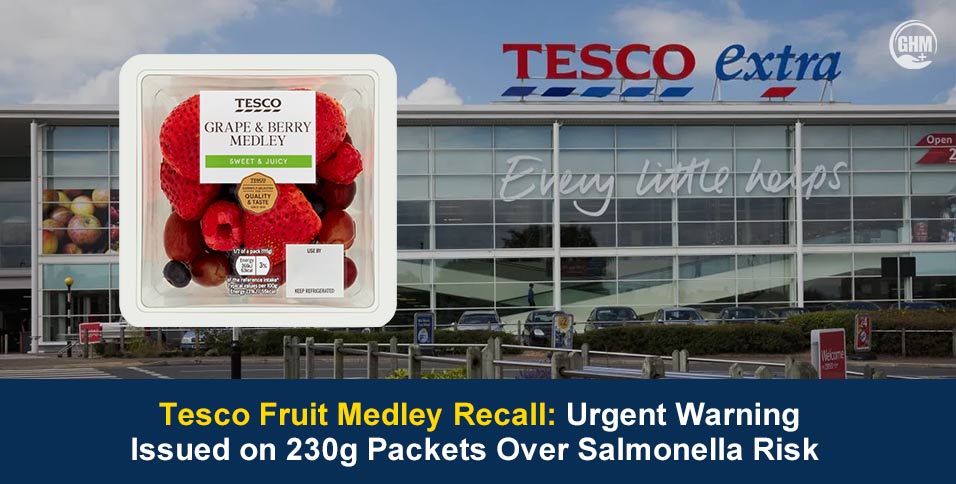
In the recent recalls, the Tesco fruit medley recall was issued when Salmonella contamination was identified in routine safety checks. On Monday, February 16, 2026, the supermarket giant and the Food Standards Agency (FSA) notified the public that certain batches of its fruit bowl staple are unsafe to eat.
A total of 230g of grape & berry medley was found to be risky. Health authorities warn that consuming the affected products could lead to severe foodborne illness. This food poisoning alert primarily impacts the consumers across the UK who recently purchased these ready-to-eat pots.
Why Did Tesco Recall Its Fruit Medley?
The Tesco fruit medley recall began when microbiological testing detected Salmonella spp. within the product line. Consequently, the retailer immediately withdrew the item from its shelves to protect public health. This type of contamination poses a significant risk because consumers eat the fruit raw, meaning no cooking process exists to kill the bacteria.
Official reports confirm that Tesco, the Supermarket, prioritizes customer safety by acting swiftly upon these findings. The FSA explains that even trace amounts of this bacteria can trigger a widespread outbreak if not managed through a strict product Recall.
Which Tesco Products Are Affected By Salmonella?
Customers should check their refrigerators for the specific Tesco Fruit Medley Batches listed below.
This recall specifically targets the 230g grape & berry medley with the following details:
- Product Name: Tesco Grape & Berry Medley
- Pack Size: 230g
- Use-by Dates: 16 February 2026 & 17 February 2026
The company confirms that no other fruit products or date codes fall under this Tesco fruit medley recall. If you own a pack matching these dates, you must handle it with caution.
“Fresh produce is a common vehicle for Salmonella,” explains a food safety analyst.
Contamination often occurs through:
- Cross-contamination in the packaging facility.
- Poor personal hygiene among food handlers.
- Contaminated water used during the washing process.
What Are The Symptoms of Salmonella Infection?
Salmonella infection, or salmonellosis, typically affects the intestinal tract. While many healthy adults recover quickly, the symptoms can be debilitating.
Common Symptoms of Salmonella Infection
- High fever and chills.
- Persistent diarrhoea (sometimes bloody).
- Severe abdominal cramps and nausea.
- Vomiting leading to dehydration.
High-Risk Groups
Medical professionals emphasize that the Salmonella contamination is particularly critical for vulnerable populations.
The following groups face a higher risk of complications:
- Young children and infants.
- Elderly individuals over 65.
- Pregnant women.
- Immunocompromised patients.
What Tesco Consumers Should Do Immediately
If you have purchased an item affected by the Tesco fruit medley recall, follow these steps:
- Do Not Eat It: Dispose of the product or keep it sealed to return.
- Return for Refund: Take the pack to any Tesco store. The retailer provides a full refund, and no receipt is required.
- Sanitize Surfaces: Wash any fridge drawers or utensils that touched the packaging.
- Monitor Health: Seek medical advice if you develop a high fever or signs of dehydration.
How Did The Public Health Agencies Responded?
The Food Standards Agency is coordinating the national alert system in the Tesco fruit medley recall crisis.
These notices ensure that retailers remain transparent and that the public receives timely information.
Effective food safety oversight prevents thousands of hospitalisations annually by identifying risks before they reach a critical mass.
Conclusion
The Tesco fruit medley recall serves as a vital reminder to stay vigilant about food safety alerts. While the immediate risk focuses on the 230g grape & berry medley, we need to recognize symptoms early and follow official guidance.
Experts suggest that climate change and complex supply chains may increase the frequency of such food poisoning alert incidents. But as retailers implement more advanced testing, we can expect faster responses to potential threats regarding ready-to-eat produce.