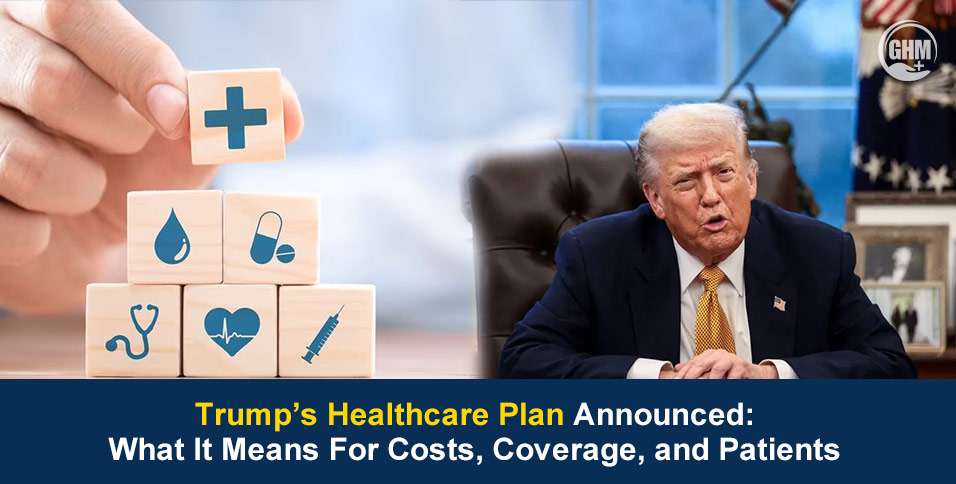
The White House has announced a new healthcare reform framework, Trump’s Healthcare Plan. The Trump administration claims it will lower costs, reduce insurance premiums, and put more control in patients’ hands.
Announced in January 2026, the proposal, officially called the Great Healthcare Plan, comes at a time when many Americans are facing higher ACA premiums and growing concerns about prescription drug pricing.
According to the Trump administration, this Healthcare Plan is designed to shift healthcare spending away from insurance companies and toward individuals, while increasing transparency across the healthcare system.
Therefore, it becomes important to analyse what The Great Healthcare Plan by the US Government includes, how it could affect patients, and why it is already sparking intense debate.
What Is Trump’s Healthcare Plan?
Trump Administration’s Healthcare plan is a policy framework, not yet a full law, that outlines how the administration wants to reshape the U.S. healthcare system.
In a video announcement released by the White House, President Trump said the plan would “deliver money directly to the people instead of bureaucrats and insurance companies.”
At its core, Trump’s Healthcare Plan focuses on three main goals:
- Lowering healthcare and insurance costs
- Reforming prescription drug pricing
- Increasing healthcare cost transparency
How Direct Healthcare Payments Would Work?
One of the most significant changes in Trump’s Plan for healthcare is the proposal for direct healthcare payments. Instead of federal subsidies flowing primarily to insurance companies, the administration wants healthcare funds to go straight to individuals.
According to the White House, these payments could be used by patients to:
- Buy private health insurance
- Cover out-of-pocket medical expenses
- Pay for prescription drugs
President Trump stated that Americans should be able to “choose how and where they spend their healthcare dollars,” rather than being locked into government-designed insurance plans.
What Impact Does The Plan Have on ACA Premiums?
The rollout of the Healthcare Plan for 2026 comes as enhanced Affordable Care Act subsidies expire, leading to higher ACA premiums for millions of Americans.
Also, many households purchasing insurance through Obamacare marketplaces are seeing sharp premium increases this year, according to Reuters.
The Trump administration argues that direct payments and increased competition could reduce pressure on premiums. However, critics note that this Healthcare Plan does not yet include a clear replacement for existing ACA subsidy structures.
Can Lower Prescription Drug Pricing Make An Impact?
Another major pillar of Trump’s Healthcare Plan is reforming prescription drug pricing. The plan supports policies that would:
- Tie American drug prices to lower prices paid in other developed countries
- Expand access to over-the-counter medications
- Increase competition among drug manufacturers
Some predict the “Trump Rx” would aim to provide lower-cost medications directly to consumers.
The administration believes drug pricing reform could significantly reduce monthly healthcare spending for older adults and patients with chronic illnesses.
What Does Healthcare Cost Transparency Mean?
This Healthcare Plan places strong emphasis on healthcare cost transparency. This requires hospitals and insurers that participate in Medicare or Medicaid to disclose their prices to the public.
Under the proposal:
- Patients could compare costs before receiving care
- Insurers would publish claim approval and denial rates
- Medical bills would be easier to understand
The administration says this would allow patients to shop for care the same way they compare prices for other major expenses.
What Did The Critics Say To Trump’s Healthcare Plan?
Trump’s Great Healthcare Plan has received mixed reactions. Supporters say it empowers patients and reduces government control, while critics argue it lacks detail and could weaken protections for vulnerable populations.
The plan does not directly address immediate premium spikes for some ACA enrollees.
According to the Guardian Report, the proposal, presented as a “framework rather than a finished reform bill,” is raising concerns about implementation.
Healthcare economists have also cautioned that moving to direct healthcare payments would require strict oversight to prevent gaps in coverage.
What’s Next For The Great Healthcare Plan?
At this stage, Trump’s Healthcare Plan remains a proposal that will require congressional approval to become law. The White House has urged lawmakers to act quickly, but no formal legislative text has yet been introduced.
Whether it moves forward or not, this Healthcare Plan has reignited the national debate over healthcare affordability, government involvement, and patient choice.
For patients facing rising ACA premiums and for healthcare professionals navigating system changes, the proposal signals a major shift in how healthcare dollars could be distributed in the United States.
As the discussion continues, the US Government’s Healthcare Plan is likely to remain at the center of healthcare policy debates throughout 2026.