Many women ignore persistent pelvic discomfort, assuming it’s simply a “bad period” or a natural part of aging. However, the pain becomes so intense they leave you bedridden. However, when that pain becomes so intense that it interferes with daily life and even leaves you bedridden, it may be something more than a routine cycle.
In most cases, it can be a symptom of Uterine fibroids, non-cancerous growths that develop in or around the muscular walls of the uterus. Uterine fibroids are incredibly common, yet the pain they cause is frequently misunderstood.
Recently, Oscar-winning actress Lupita Nyong’o sent shockwaves through social media by revealing her harrowing journey with over 70 fibroids, demanding better research and treatments for a condition that affects up to 80% of women by age 50.
But because the pain can mirror other conditions like endometriosis, many suffer in silence. Therefore, understanding what does fibroid pain feel like is the first step toward recognizing the symptoms and reclaiming your quality of life.
In this guide, we will explore the different sensations of fibroid pain, how to differentiate them from other conditions, and when medical intervention becomes an emergency.
What Are Uterine Fibroids?
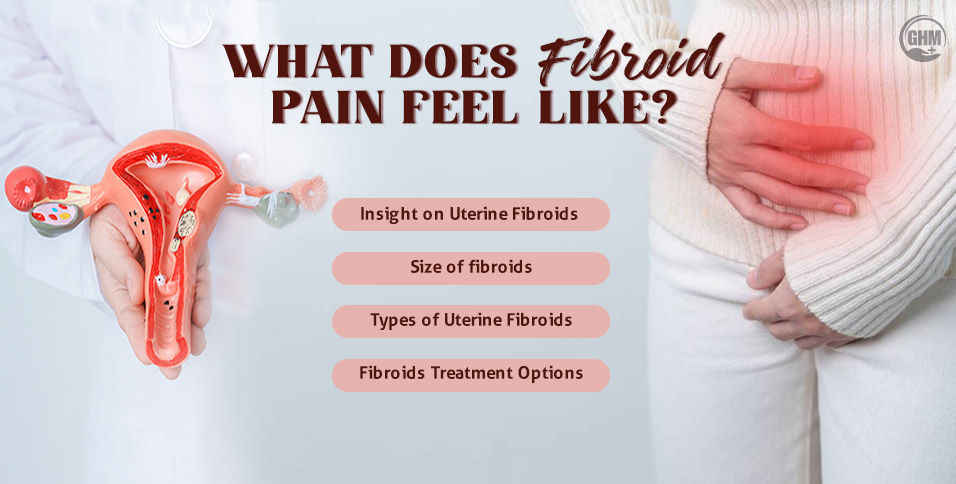
Uterine fibroids are benign (non-cancerous) tumors made of muscle and fibrous tissue. While they are not typically life-threatening, they can drastically alter the shape of the uterus and impact surrounding organs.
The exact causes of fibroids remain unclear, though genetics and hormonal fluctuations play a significant role.
The highest incidence of fibroids occurs in women aged 40–44, though they are most common across all reproductive years when estrogen and progesterone levels are at their peak.
While some women have “silent” fibroids that cause no issues, others deal with debilitating symptoms that interfere with work, exercise, and intimacy.
What Does Fibroid Pain Feel Like?
If you are wondering if your discomfort is related to fibroids in the uterus, and not just a cramp, it helps to identify the specific type of pain you are experiencing. Because fibroids are solid masses, the pain they cause is often structural:
1. Dull Pelvic Ache and Heaviness
This is the most common sensation. Many describe it as a constant “heaviness” or a feeling of fullness in the lower abdomen. It feels as though a weight is sitting in your pelvis. This is often caused by large fibroids physically distending the uterus. The situation can worsen by standing for long periods or lifting heavy objects.
2. Severe Menstrual Cramps
Unlike standard period cramps that last a day or two, fibroid-related cramping is often prolonged and significantly more intense. The uterus must contract harder to try and shed its lining around the growths created by the fibroids.
3. Sharp or Stabbing Pain (Fibroid Degeneration)
If a fibroid grows too quickly, it can outgrow its blood supply. This process, known as “fibroid degeneration,” causes the tissue to die off temporarily. This can cause localized, intense stabbing sensations in a specific area of the pelvis that may require medical attention.
4. Lower Back and Leg Pain
Large fibroids, particularly those on the back of the uterus, can press against spinal nerves. This results in radiating pain that travels into the lower back or even down the legs, similar to sciatica.
5. Pain During Sex
Certain types of fibroids, specifically those near the cervix or in the uterine wall, can make sexual intercourse deeply uncomfortable or even painful. This discomfort significantly affects intimacy and emotional well-being.
Common Symptoms That Accompany Fibroid Pain
Pain rarely travels alone. If you are experiencing pelvic discomfort, look for these signs accompanying fibroid symptoms:
- Heavy or Prolonged Bleeding: Periods lasting longer than seven days or requiring double protection.
- Frequent Urination: Large fibroids can press against the bladder, reducing its capacity. It can make you feel like you need to pee every 30 minutes.
- Constipation: Pressure on the rectum due to fibroids can make bowel movements difficult.
- Abdominal Bloating: Some women experience “fibroid belly,” where the abdomen can make a woman look pregnant even when she isn’t.
- Anemia: Chronic heavy bleeding often leads to iron deficiency, resulting in extreme fatigue and dizziness.
Many of these symptoms overlap with conditions like PCOS or Endometriosis, making a professional uterine fibroids diagnosis vital.
What Are The Types of Uterine Fibroids?
The location of a fibroid determines the type of fibroid pain you feel. There are four primary types:
- Intramural Fbroids are the most common type, which grow within the muscular wall and primarily cause heavy bleeding and pelvic pressure.
- Submucosal Fibroids grow just under the uterine lining and extend into the cavity. Even small submucosal fibroids can cause extreme bleeding and fertility issues.
- Subserosal Fibroids grow on the outer surface of the uterus. They are the most likely to press on nearby organs like the bladder, bowel, or spine.
- Pedunculated Fibroids grow on a small stalk. If the stalk twists (torsion), it can cause an acute medical emergency with excruciating pain.
Which Size of Fibroid Is Dangerous?
When discussing uterine fibroids, danger is often a combination of the physical size, the symptoms produced, and the impact on surrounding organs.
While many women live with fibroids the size of a marble without even knowing it, according to American Fibroid Centers, larger growths can lead to significant health complications.
The following table breaks down how medical professionals generally categorize fibroid sizes and the risks associated with each:
| Size Category | Approximate Diameter | Real-World Comparison | Potential Risks & Complications |
| Small | < 2 cm | Seed, Pea, or Cherry | Usually asymptomatic; may cause heavy bleeding if located inside the uterine cavity (submucosal). |
| Medium | 2 cm – 5 cm | Walnut, Plum, or Lemon | Increased risk of heavy periods, pelvic pressure, and potential fertility interference. |
| Large | 5 cm – 10 cm | Apple, Orange, or Grapefruit | Significant pelvic pain, “fibroid belly” (visible swelling), and pressure on the bladder or bowels. |
| Extra-Large | > 10 cm | Small Melon or larger | At high risk; can cause kidney compression, severe anemia, and displacement of other organs. |
According to a study, South Asia currently exhibits the highest incidence and prevalence of uterine fibroids globally, while regions like Oceania report a lower burden.
Can Fibroids Be A Symptom of Uterine Cancer?
It is a common fear that fibroids will turn into cancer. While over 99% of fibroids are benign, a rare cancer called uterine sarcoma can mimic fibroid symptoms.
However, you should seek an immediate diagnosis if you experience:
- Rapidly growing masses in postmenopausal women.
- Bleeding after menopause.
- Unexplained weight loss coupled with pelvic pain.
- Pain that does not respond to traditional management.
Are There Any Natural Ways to Manage Fibroid Pain?
While there is no proven natural cure for fibroid tumors that will make them disappear entirely, lifestyle changes can significantly reduce inflammation and pain:
- Anti-Inflammatory Diet: Reducing red meat and increasing leafy greens and cruciferous vegetables (like broccoli) can help balance estrogen.
- Heat Therapy: High-quality heating pads help relax the uterine muscles during intense cramping.
- Stress Management: High cortisol levels lead to hormonal imbalances. Managing stress can change that.
- Weight Management: Fat cells produce estrogen; maintaining a healthy weight may slow fibroid growth.
- Pelvic Floor Physical Therapy: Can help alleviate the chronic tension caused by carrying the “weight” of fibroids.
What Are The Treatment Options For Fibroids?
Uterine fibroids are a serious health condition in women, costing up to $25,000 per woman annually for treatment. Most of the time, lifestyle changes aren’t enough. In severe cases, available medical treatments for fibroids are the only solution.
1. Medications
These include hormonal birth control or GnRH agonists. While they do not remove the fibroids, they can significantly shrink fibroid volume and reduce heavy menstrual bleeding to regulate your cycle.
2. Uterine Artery Embolization (UAE)
A minimally invasive procedure that cuts off the blood supply to the fibroids. Deprived of nutrients, the fibroids shrink and die over several months, with a recovery time of about one week.
3. Myomectomy
This specialized surgery is used for fibroids located inside the uterine cavity (submucosal). The surgeon removes the fibroids while leaving the uterus intact, requiring no external incisions and offering a very rapid recovery. This process is ideal for those desiring a future pregnancy.
4. Hysterectomy
Here, the uterus is removed surgically and remains the only 100% permanent cure for fibroids. While it is a major surgery with a longer recovery (4–6 weeks), it is often the best choice for women with severe symptoms who have completed childbearing.
Final Note
Fibroid pain is not something you “just have to live with.” Whether it is a dull ache or a sharp, life-altering pain, these symptoms are your body’s way of signaling that something is wrong and it needs to be treated.
By knowing and understanding what does fibroid pain feel like, you can take a step closer towards reclaiming your health and starting to live a better life.
Early diagnosis can prevent the complications of large fibroids and help you find a treatment plan that restores your comfort and confidence.
Research predicts that the prevalence of uterine fibroids will continue to rise globally through 2036, particularly in middle- and low-income countries. But as we’ve seen with the advocacy of women like Lupita Nyong’o, the conversation surrounding uterine health is changing.
If you suspect your pelvic pain is more than just a typical period, consult a specialist today. Early intervention not only prevents complications but also ensures you have the widest range of treatment options available. You deserve to live a life free from the weight of pelvic pain.
If this guide helped you understand your body more, share it with everyone who is a woman and cares about women’s health!
Sanskruti Jadhav
Frequently Asked Questions
- What foods should you avoid if you have fibroids?
While suffering from fibroid tumors, you should avoid foods that are high in refined sugar, sodium, and high in fat. Processed food or fast food is often high in fat, which can contribute to weight gain. Weight gain can lead to hormone imbalances.
- Does vitamin D shrink fibroids?
The active form of vitamin D has been shown to have powerful anti-estrogenic and anti-progesteronic effects by decreasing its receptors. Supplementing your intake of vitamin D can lead to fibroid shrinkage, so ensuring you are not deficient in this area is one easy safeguard for avoiding fibroids.
- What exercises should you avoid with fibroids?
It’s important to avoid anything that puts pressure on your stomach, including sit-ups or crunches that could press against the fibroids. Instead, try planks or standing ab work.