Every year, millions of people spend hours under the sun without fully understanding what’s happening beneath their skin. Whether it’s a construction worker on a rooftop in Arizona, a weekend trail runner in Colorado, or a lifeguard watching the waves in Florida — the ultraviolet radiation accumulating in their skin cells doesn’t distinguish between work and leisure. It simply adds up. And over time, that accumulation tells a story that too many people only discover when it’s already written itself into a diagnosis.
Skin cancer is the most common form of cancer in the United States. More cases are diagnosed each year than breast, prostate, lung, and colon cancers combined. Yet despite these staggering numbers, sun protection remains one of the most underestimated health habits in daily life — particularly among those who spend significant time outdoors.
This article examines the real risks that UV exposure poses across different outdoor activities, the science behind effective prevention, and why building a culture of sun safety — whether at work, on the trail, or at the beach — is no longer optional. It’s a medical imperative.
Understanding UV Radiation: The Invisible Threat
Before discussing prevention, it’s worth understanding exactly what we’re protecting against. Ultraviolet radiation from the sun reaches the earth in two primary forms that affect human skin: UVA and UVB rays.
UVB rays are the ones most people associate with sunburn — they damage the outer layers of the skin and play a direct role in the development of skin cancer. But UVA rays, which penetrate deeper into the dermis, are equally dangerous in ways that are less immediately visible. They accelerate skin ageing, suppress the immune response in the skin, and contribute to DNA damage in cells that can trigger cancerous mutations over time.
Here’s the critical detail: UVA rays remain relatively constant throughout the day and throughout the year. They penetrate clouds, glass, and light clothing. This means that even on overcast days or during winter months, UV exposure is occurring — silently and cumulatively.
This is precisely why dermatologists and oncologists emphasise the importance of using broad spectrum sunscreens that protect against both UVA and UVB radiation. A product that only blocks UVB rays addresses sunburn but leaves the skin vulnerable to the deeper, long-term damage caused by UVA exposure. True protection requires coverage across the full UV spectrum, applied consistently and reapplied throughout the day.
What Are the Main Risks Faced by Those Who Work Outdoors?
Outdoor workers represent one of the most UV-exposed populations in the world — and one of the least protected. Construction workers, agricultural labourers, landscapers, utility workers, postal carriers, fishermen, and outdoor sports instructors all share a common occupational hazard that rarely appears in workplace safety briefings with the urgency it deserves.
The numbers paint a sobering picture. Studies consistently show that outdoor workers receive between two and eight times more annual UV radiation than indoor workers. Over a career spanning twenty or thirty years, that cumulative dose reaches levels associated with significantly elevated cancer risk.
The types of skin cancer most closely linked to chronic occupational sun exposure include squamous cell carcinoma, which develops in the outer skin layers and is directly associated with cumulative UV dose, and basal cell carcinoma, the most common form of skin cancer. Both typically appear on the areas most consistently exposed — the face, neck, ears, forearms, and backs of the hands.
But the risk extends beyond non-melanoma skin cancers. Prolonged UV exposure also increases the likelihood of melanoma, the most dangerous form of skin cancer, which accounts for the majority of skin cancer deaths despite representing a smaller percentage of cases.
The occupational dimension adds a layer of inequity to this problem. Many outdoor workers — particularly in agriculture, construction, and manual labour — lack access to adequate shade, have limited autonomy over their work schedules, and may not have been educated about the specific risks they face. Sun protection becomes not just a personal health decision, but a workplace safety issue that employers have a responsibility to address.
Recreational Outdoor Activities: The Risks We Choose to Ignore
If occupational exposure carries an element of inevitability, recreational sun exposure carries something arguably more dangerous: a false sense of safety. People tend to associate outdoor leisure with health and wellbeing — and they’re not wrong, broadly speaking. But the mental framing of “I’m doing something healthy” often leads to a paradoxical neglect of sun protection.
Runners, cyclists, hikers, golfers, tennis players, surfers, swimmers, and gardening enthusiasts all accumulate significant UV doses during their activities. Weekend warriors who spend four to six hours on a trail or a golf course may receive more UV radiation in a single day than an office worker receives in a month.
Several factors compound the risk during recreational activities. Altitude increases UV intensity — for every 1,000 feet of elevation gain, UV radiation increases by approximately 4 to 5 percent. Reflective surfaces like water, sand, and snow can bounce UV rays back onto the skin, effectively doubling exposure. Wind and cool temperatures mask the sensation of burning, leading people to stay exposed far longer than they would on a visibly hot day.
Sweat adds another challenge. Physical activity causes sunscreen to break down and wash away faster than it would during sedentary use. A sunscreen applied before a run may offer significantly diminished protection within 40 minutes of heavy perspiration — precisely when the runner is most exposed and least likely to stop and reapply.
This is why the formulation and technology behind sunscreen matters as much as the habit of applying it. Water-resistant, broad spectrum formulations designed for active use provide a more reliable barrier during physical activity, maintaining protection during the conditions that matter most.
How Can Daily Sun Protection Routines Help Prevent Skin Cancer?
The science on this point is unambiguous. Consistent, correctly applied sun protection significantly reduces the harmful effects of UV radiation and lowers skin cancer risk. The challenge isn’t evidence — it’s behaviour.
Effective daily sun protection combines several complementary strategies working together:
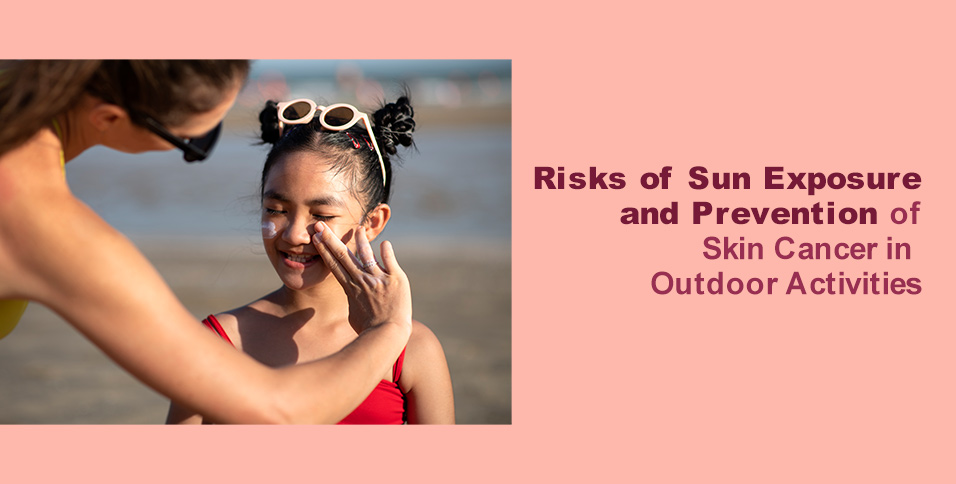
Sunscreen as the foundation. Broad spectrum sunscreens with an SPF of 30 or higher should be applied to all exposed skin at least 15 to 20 minutes before going outdoors. The key word is “broad spectrum” — this ensures protection against both UVA and UVB rays. Application should be generous; most people apply only 25 to 50 percent of the recommended amount, drastically reducing the actual protection received. Reapplication every two hours — and immediately after swimming, sweating, or towel-drying — is essential, not optional.
Protective clothing as a physical barrier. Tightly woven fabrics, wide-brimmed hats that shade the face, ears, and neck, and UV-blocking sunglasses provide protection that doesn’t wash off or wear down. For outdoor workers and athletes, UPF-rated clothing offers a measurable and reliable layer of defence.
Timing and shade as strategic tools. UV radiation peaks between 10 a.m. and 4 p.m. in most locations. Planning outdoor activities outside these hours — or incorporating shade breaks during them — meaningfully reduces total daily exposure. This is particularly relevant for employers scheduling outdoor work shifts.
Regular skin checks as early detection. Self-examinations once a month and professional dermatological screenings annually allow for the detection of suspicious changes — new moles, changing shapes, irregular borders, evolving colours — at stages where treatment is most effective. Skin cancer caught early has survival rates exceeding 95 percent. Caught late, outcomes change dramatically.
The compounding effect of these habits is what makes them powerful. No single measure provides complete protection. But together, practised consistently, they reduce lifetime UV damage substantially and shift the odds decisively in favour of long-term skin health.
Why Is a Culture of Sun Safety at Work Essential?
Individual behaviour matters enormously, but it has limits — especially in occupational settings where workers don’t always control their environment, schedule, or resources. This is where the concept of sun safety culture becomes critical.
A workplace culture of sun safety means that UV protection isn’t treated as a personal preference or an afterthought. It’s embedded into operational procedures, just like hard hats on construction sites or safety harnesses at height. It means education, access, and accountability.
Education involves ensuring that every outdoor worker understands — in concrete, practical terms — what UV radiation does to skin over time, what the early warning signs of damage look like, and what specific protective measures are available to them. This isn’t a one-time onboarding slide. It’s an ongoing conversation reinforced through regular training.
Access means providing the tools of protection as standard equipment. Sunscreen stations on job sites. UPF-rated uniforms or clothing options. Portable shade structures. Adjusted shift scheduling that minimises peak-UV work when feasible. When employers provide these resources proactively, usage rates climb dramatically compared to environments where workers are expected to supply their own protection.
Accountability creates the expectation that sun safety is a professional standard, not a suggestion. Supervisors modelling protective behaviour, site inspections that include UV protection checks, and policies that explicitly address sun exposure as a workplace hazard — all of these signal that the organisation takes the issue seriously.
The return on this investment extends well beyond individual health outcomes. Reduced absenteeism from sunburn-related illness, lower long-term healthcare costs, decreased workers’ compensation claims, and improved employee morale and retention all contribute to a measurable business case for sun safety infrastructure.
The Role of Sunscreen Technology in Modern Prevention
Sunscreen science has advanced considerably in recent years, and understanding these advances helps explain why not all sun protection products deliver equal results.
Modern broad spectrum formulations combine multiple UV filters to provide balanced protection across the UVA and UVB wavelength ranges. The most advanced products now incorporate photostable filters that resist degradation under UV exposure — meaning the protection doesn’t diminish as rapidly during extended outdoor time.
Texture and wearability have also improved dramatically. One of the historic barriers to consistent sunscreen use — particularly among men and outdoor workers — was the perception that sunscreen is greasy, uncomfortable, or impractical during physical activity. Contemporary formulations include lightweight fluids, invisible sprays, and mattifying options designed specifically for active use and daily wear.
For facial application especially, where skin cancer risk is highest due to chronic exposure, products that integrate seamlessly into morning routines — feeling comfortable, looking invisible, and offering verified broad spectrum protection — remove the friction that previously discouraged daily use.
The bottom line on sunscreen technology is this: the best sunscreen is the one you actually use consistently. Advances in formulation have made that consistency easier than ever before.
Building Lifelong Habits: Prevention Starts With Awareness
Skin cancer prevention isn’t a single decision. It’s a collection of small, daily choices that accumulate over years and decades into either protection or risk. The encouraging reality is that the vast majority of skin cancers are preventable through measures that are neither expensive nor complicated — they simply need to be practised with consistency.
For outdoor workers, this means advocating for workplace sun safety policies and taking personal responsibility for protection during every shift. For recreational enthusiasts, it means treating sunscreen application and reapplication with the same seriousness as hydration or equipment checks. For parents, it means modelling sun-safe behaviour for children whose lifetime UV clock has barely started ticking.
And for everyone, it means understanding that the damage caused by UV radiation is cumulative and largely invisible until it manifests as a clinical problem. The sunburn that heals in a week leaves behind DNA damage that the body may carry for decades. The tan that fades by autumn represents a stress response from skin cells that have been injured.
Awareness of these realities isn’t meant to create fear — it’s meant to create informed habits. And informed habits, practised over a lifetime, are the most powerful cancer prevention tool we have.
Conclusion: The Sun Isn’t the Enemy — Unprotected Exposure Is
Outdoor life — whether professional or recreational — is enriching, necessary, and fundamentally healthy. The goal of sun safety isn’t to drive people indoors. It’s to ensure that the time spent outside doesn’t carry a hidden cost that only becomes apparent years later.
The science is clear. The tools are available. Broad spectrum sunscreens, protective clothing, shade strategies, sensible scheduling, and regular skin monitoring collectively form a prevention framework that dramatically reduces risk without diminishing quality of life.
What remains is the willingness to take these measures seriously — as individuals, as employers, as communities, and as a culture. Every hour spent outdoors is an opportunity to enjoy the benefits of an active life. With the right protection, it doesn’t have to be a gamble with long-term health.
The choice, quite literally, is in your hands.