Ninety-three percent of nursing students pass the NCLEX. Only 9% report feeling fully prepared for clinical practice once they do. That gap — between a credential and actual readiness — is not a curriculum problem or a simulation gap. It is, in large part, a coordination problem. Until the healthcare industry fixes the infrastructure connecting nursing schools to clinical sites, the readiness crisis will persist regardless of how advanced the training technology becomes.
With over 193,000 annual RN job openings projected through 2032 and the U.S. nursing shortage forecast to extend through 2037, according to HRSA, the urgency is real. But the solutions dominating the conversation — curriculum reform, VR simulation, AI-assisted learning — address only part of the equation. The coordination layer sitting between academic programs and the clinical floor remains largely overlooked.
The Placement Bottleneck: Where the Pipeline Breaks
In 2023, more than 65,000 qualified applicants were turned away from U.S. nursing programs. The AACN points to faculty shortages as a primary driver, but clinical site capacity — and the failure to coordinate access to it efficiently — plays an equally significant role. Nursing programs and healthcare facilities are, in many cases, operating on entirely separate systems, separate compliance timelines, and separate administrative processes with no unified layer connecting them.
The numbers from the field confirm the dysfunction. The Cisive PreCheck Clinical Placement Benchmark Report (2026), drawing on 150 program administrators and 300 students, found that 30% of administrators identify clinical placements as their single biggest operational inefficiency. Among students, 88.5% encountered at least one significant obstacle during the placement approval process — and 99% had to navigate two to four disconnected platforms to complete it.
This is not a technology deficit. It is a coordination deficit.
The Administrative Burden Behind Every Clinical Hour
Before a nursing student sets foot on a clinical floor, they typically must clear a multi-step compliance checklist. Each requirement is often managed through a separate portal, tracked on a separate timeline, and verified by a separate institutional party. The most common items include:
- Immunization records and health screenings
- Background checks and drug screenings
- CPR certification and basic life support documentation
- Site-specific orientation modules and confidentiality agreements
- Malpractice insurance verification
Faculty coordinators absorb most of this administrative weight. Time spent chasing compliance documentation is time not spent on clinical mentorship or program quality. The burden scales with program size: a coordinator managing 80 placements across six hospital partners is effectively running a small logistics operation with the tools of a spreadsheet. Only a fraction of programs have consolidated these functions into a single integrated platform — a gap that the same Cisive benchmark found affects the overwhelming majority of institutions.
What Effective Clinical Education Management Actually Looks Like
Clinical education management, at its core, is the set of systems, processes, and platforms that coordinate student placements, track competency requirements, manage compliance documentation, and maintain communication between nursing programs and their clinical partners. It is the administrative and operational connective tissue that determines whether students get the right experience, at the right site, at the right time — and whether they arrive compliant and prepared.
For decades, this function has been largely time-based and task-oriented: count the hours, check the boxes, log the procedures. As NCSBN noted in its Fall 2025 publication on nursing regulation and education, traditional models tend to prioritize hours logged over clinical judgment development and measurable outcomes. The result is a system that can certify completion without reliably certifying readiness.
Platforms built specifically for this coordination layer — including those focused on clinical education management — are giving nursing schools tools to track student progress across sites, streamline compliance workflows, and manage school-to-facility partnerships without overwhelming coordinators. The demand from students reflects this need directly: 85% want a single unified platform for all clinical screening and placement tasks, according to the Cisive 2026 benchmark. That preference is not about convenience — it is about reducing the friction that currently causes delays, errors, and dropped placements.
The shift from hour-counting to outcome-tracking is not just a philosophical reorientation. It requires infrastructure: databases, workflow automation, partnership management tools, and data visibility that most programs currently lack.
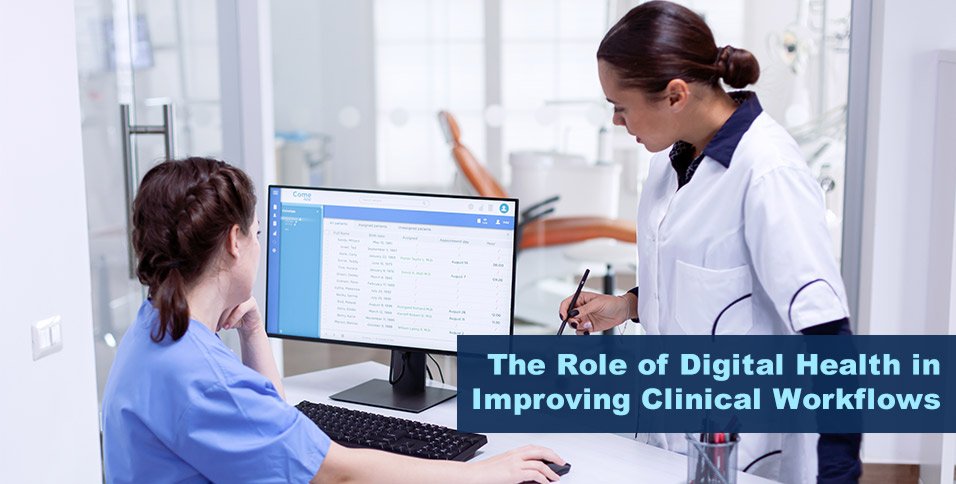
[IMAGE: Clinical scheduling dashboard on a monitor showing student placement assignments, site names, and compliance status indicators]
The Real Cost of Getting It Wrong
The downstream consequences of inadequate clinical preparation are well-documented and serious. A 2025 report found that 55% of new nurses have made medical errors attributed to gaps in clinical readiness. That statistic sits uncomfortably alongside an NCLEX pass rate that exceeds 90%, suggesting that standardized credentialing is measuring something different from practice preparedness.
Hospitals absorb much of this cost invisibly. Extended orientation periods, preceptor hours devoted to filling preparation gaps, and early turnover among nurses who feel underprepared in their first year all represent expenditures that trace back, at least in part, to a clinical education pipeline that did not adequately prepare graduates for the complexity of real patient care.
The retention implications compound the workforce problem. Nurses who enter practice feeling underprepared face higher stress loads and burnout risk in their early careers. When those nurses leave — as nearly 18% do annually — the cycle of workforce shortage deepens and the investment in their training produces a diminished return.
The Preceptor Shortage Compounds Everything
Research published in PLOS ONE (2025) examining strategies to enhance clinical teaching in undergraduate nursing education highlights preceptors as foundational to student confidence and clinical skill development. A preceptor’s ability to provide direct, non-threatening guidance during formative clinical moments meaningfully reduces student anxiety and accelerates procedural competence.
Preceptors are in short supply, however, and their time is not managed strategically at most institutions. Coordination platforms that match students to appropriate preceptors and clinical sites — and track those relationships over time — can make the same preceptor capacity go further. Without that infrastructure, preceptor relationships are often ad hoc, inconsistently documented, and difficult to replicate at scale.
How Technology and Coordination Reform Are Converging
The investment in nursing education technology — VR simulation, AI-assisted clinical reasoning tools, hybrid learning environments — represents a genuine step forward. High-quality simulation can replace up to 50% of traditional clinical hours without negatively impacting student outcomes, according to the NCSBN National Simulation Study. That finding has real value for programs facing site scarcity.
But the other 50% still depends on coordinated, real-world clinical experience of different types of nurse practitioners. Simulation cannot replicate the variability of an actual patient population, the pressure of a live clinical environment, or the relational dynamics of working within a care team. If the systems managing the placement of students into that real-world environment remain fragmented, disconnected, and paper-heavy, simulation gains will be partially offset by coordination losses.
The strongest programs are investing in both dimensions simultaneously. They adopt simulation tools to extend and enrich practice scenarios while modernizing the administrative infrastructure that places students in clinical settings. The nursing field already supports a wide and growing range of specialized nursing roles and career pathways, each with its own competency requirements and clinical placement needs. Managing that diversity without purpose-built coordination systems creates a gap that grows wider as specialization deepens.
Institutions that close the readiness gap consistently share one characteristic: they have treated clinical placement infrastructure as a strategic priority, not an administrative afterthought.
The Infrastructure Behind the Innovation
The nursing workforce crisis cannot be resolved through better licensing exams or more sophisticated simulation software alone. The bottleneck sits at the coordination layer — in the systems and processes that connect nursing schools to clinical sites, match students to preceptors, manage compliance documentation, and ensure the whole pipeline moves with enough efficiency to serve the students waiting in it.
For healthcare leaders and nursing program administrators, modernizing clinical education infrastructure is not an incremental improvement to operations. It is a patient safety investment and a workforce strategy. The programs that graduate nurses who feel genuinely prepared for practice are not just doing students a favor — they are reducing medical errors, extending nurse careers, and returning value to the healthcare system at every level.
As demand for registered nurses continues to intensify through the 2030s, the institutions that invest in the connective tissue of clinical education — the coordination, compliance, and placement systems that determine whether training translates to readiness — will be the ones producing the workforce the healthcare system actually needs.