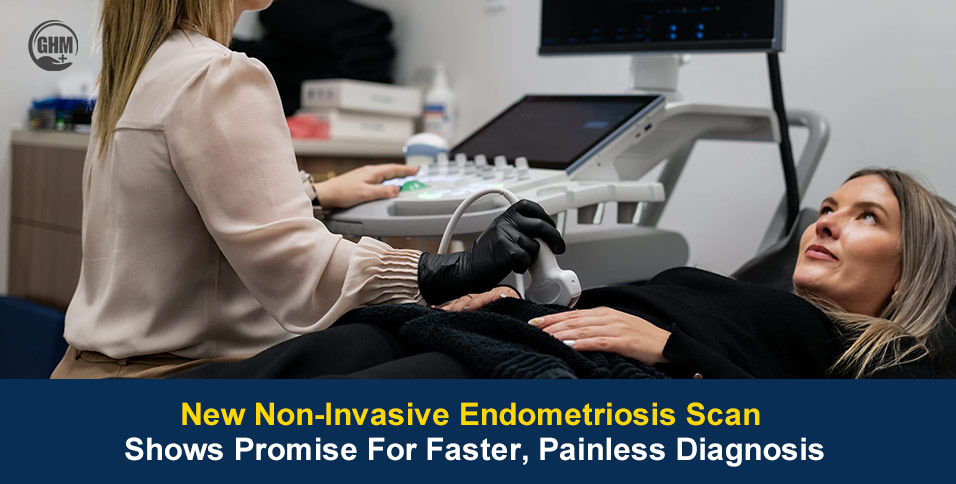
According to a trial by the University of Oxford, a non-invasive endometriosis scan could significantly change how millions of women are diagnosed, offering hope for earlier detection without surgery. Early findings from this new endometriosis diagnosis trial suggest this innovative imaging method may reduce the long-standing delay in the diagnosis and improve patient outcomes.
Researchers say this painless endometriosis imaging technique could act as a reliable alternative to laparoscopy, helping identify the condition faster and more comfortably. For many patients, this could mean years of pain and uncertainty avoided.
What Is the New Non-Invasive Endometriosis Scan?
The non-invasive endometriosis scan is a new diagnostic approach that combines imaging with a special tracer called maraciclatide.
Here’s how it works:
- A small amount of tracer is injected into the body
- The tracer attaches to areas where new blood vessels are forming
- A SPECT-CT scan then creates detailed images of these areas
This process allows doctors to detect endometriosis early, especially forms that traditional scans often miss.
Unlike conventional methods, this painless endometriosis diagnosis approach focuses on biological activity rather than structural damage, making it more sensitive to early disease.
According to a report published in The Lancet, the scan could become a major advancement in endometriosis imaging technology, particularly for early-stage disease.
Inside the Clinical Trial of Endometriosis Diagnostic
The Oxford endometriosis study, conducted in collaboration with Serac Healthcare, tested the new non-invasive endometriosis scan on 19 women.
Key findings of Endometriosis Trial:
- The scan correctly identified endometriosis in 16 out of 19 patients
- It matched surgical results in most confirmed cases
- No false positives were reported
Lead researcher Dr. Tatjana Gibbons noted that, “the results are highly promising, particularly for detecting superficial peritoneal endometriosis, the most common and hardest-to-diagnose form.”
Why Does An Endometriosis Breakthrough Matter
Currently, diagnosing endometriosis often requires laparoscopy, a surgical procedure where a camera is inserted into the abdomen.
Traditional endometriosis diagnosis creates several challenges, such as long waiting times, surgical risks with recovery, and emotional & physical stress.
Long Delays in Endometriosis Diagnosis
One of the biggest issues in endometriosis care is the delay in the diagnosis of endometriosis.
- The average endometriosis diagnosis time is 9–10 years
- Many patients are misdiagnosed with conditions like IBS
- Symptoms are often dismissed or misunderstood
Common symptoms of endometriosis include:
- Severe period pain
- Chronic pelvic pain
- Pain during or after sex
- Fatigue and fertility issues
Delayed diagnosis can lead to worsening symptoms and complications with other conditions.
The non-invasive endometriosis scan could become a practical laparoscopy alternative, making the diagnosis faster, safer, and more accessible.
This innovation could reshape endometriosis imaging technology and improve how doctors approach women’s health globally.
Recently, a new study on miscarriage prevention care was initiated, which aimed at improving women’s health outcomes, aligning with this endometriosis study.
What Happens Next In The Endometriosis Diagnosis
The next step for the non-invasive endometriosis scan is large-scale phase 3 trials.
If successful, the technology could be integrated into routine diagnostics, reduce healthcare system burden, and enable earlier and more targeted treatments. There are still opportunities for improved treatment development.
Researchers are also exploring how the scan could help track how the disease changes over time and how patients respond to treatment. However, they emphasize that this is still an early-stage new endometriosis diagnosis trial, and more data are needed before it becomes standard practice.
Conclusion
The non-invasive endometriosis scan represents a promising step toward faster, safer, and more accurate diagnosis. While still in early testing, it has the potential to reduce the long-standing, decade-long endometriosis diagnosis delay and eliminate the need for invasive procedures in many cases.
If validated through further research, this painless endometriosis diagnosis method could transform care for millions of women worldwide, marking a significant breakthrough in endometriosis imaging technology and women’s healthcare.