For a long time, women’s wellness was marketed as a polished aspiration: clean eating, perfect routines, and vague promises about “balance.”
That framing is starting to feel less useful.
A more realistic version of women’s wellness is taking shape now, one that is more honest about metabolism, hormones, body composition, medical support, and the fact that many women want better health without pretending the process is simple.
May is Women’s Wellness Month, and the most meaningful trends are not the flashiest ones.
They are the ones that acknowledge how women actually move through health decisions: often balancing work, family, changing hormones, weight frustrations, metabolic concerns, and the desire for solutions that feel both effective and sustainable. Here are six trends shaping that conversation in a more grounded direction.
1. ESG is entering the mainstream wellness conversation
One of the clearest shifts is that women’s wellness is no longer pretending every meaningful weight-loss solution has to start and end with self-directed lifestyle changes alone.
Houston’s leading minimally-invasive ESG procedure experts speak about a more realistic idea of wellness, one where some women are not looking for another generic plan, but for a clinically guided intervention that can help reset the path forward through ESG..
Endoscopic sleeve gastroplasty, or ESG is a minimally invasive alternative to sleeve gastrectomy that reduces stomach size without external incisions, and there are no cuts involved in the procedure.
The treatment is gaining more visibility as a middle-ground option for people who want structured medical support without traditional bariatric surgery.
As a leading non-surgical weight-loss provider, Everself explains, “ESG Stomach Tightening is not just a device or procedure; it’s a metabolic reset that gives patients both the anatomical change and the behavioral support they need to rebuild their relationship with food.”
That framing resonates because it positions ESG not as a shortcut, but as a more supportive structure.
In large endoscopic bariatric therapies followed with personalized supervision on lifestyle changes help bridge the gap between medical management and bariatric surgery, which helps explain why ESG is now part of a broader wellness discussion.
2. Metabolic health is replacing vague “weight loss” goals
Another major shift is that more women are asking better questions. Instead of focusing only on losing weight, they are asking about insulin sensitivity, blood sugar, triglycerides, waist circumference, energy, and inflammation.
That is a healthier direction.
Women’s metabolic health is deeply influenced by hormonal fluctuations and highlights biomarkers such as fasting glucose, HbA1c, triglycerides, HDL cholesterol, waist circumference, and blood pressure.
This change matters because “wellness” becomes more useful when it is tied to measurable health outcomes instead of aesthetics alone.
For people exploring obesity care, insulin resistance, or body composition changes, metabolic literacy is becoming a more realistic priority than simply chasing a smaller number on the scale.
3. Women’s wellness is becoming more hormone-aware, especially around PCOS and midlife
A realistic wellness conversation has to account for the fact that women do not all experience metabolism the same way across life stages.
PCOS, perimenopause, and menopause can all change how weight, fat distribution, appetite, energy, and insulin sensitivity show up.
The U.S. Office on Women’s Health says many women with PCOS have insulin resistance, and WHO describes PCOS as a chronic metabolic condition associated with increased risk for insulin resistance, type 2 diabetes, and obesity.
Midlife is another major inflection point.
The National Institute on Aging says menopause can bring a larger waist, muscle loss, and fat gain, and a widely cited longitudinal study found that body composition changes become less favorable during the menopausal transition, with accelerated fat gain and lean mass decline.
In other words, women are not imagining that their bodies feel different. Wellness messaging is simply getting more honest about it and PCOS management is crucial.
4. Strength, muscle, and body composition are getting more attention than “being smaller”
One of the healthiest corrections in women’s wellness is the move away from shrinking at all costs.
As women learn more about metabolic health and midlife body changes, muscle is finally getting the attention it deserves. This is especially important in perimenopause and menopause, when lean mass can decline and body composition can shift in frustrating ways.
The North American Menopause Society notes that aging is associated with natural muscle loss, which can reduce calories burned at rest and contribute to midlife weight gain.
This trend is more realistic because it reflects what many women actually want: strength, energy, function, and a body that feels capable. It is one reason wellness routines are increasingly emphasizing resistance training, protein intake, and body composition support rather than constant cardio or aesthetic perfection. That is a far more durable framework than older “bounce back” messaging.
5. Women want support systems, not just products
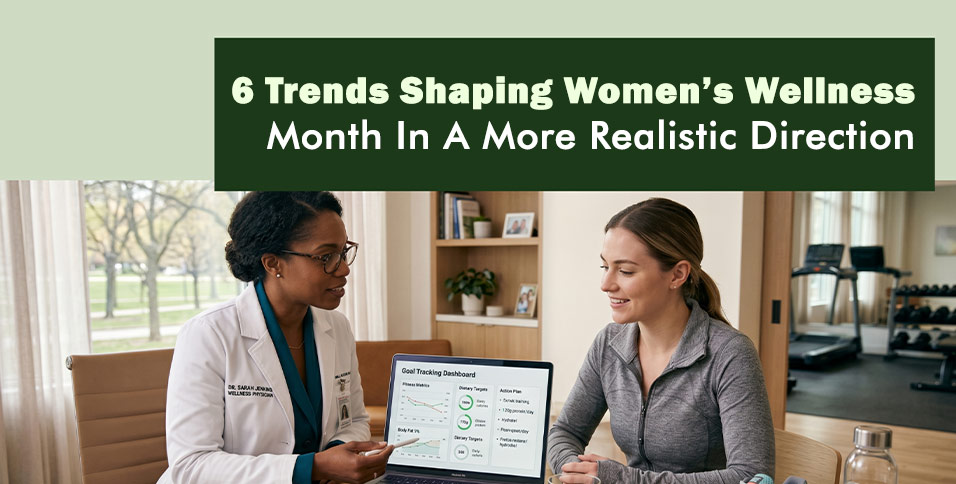
Another trend shaping this space is that women are becoming more skeptical of isolated fixes. They want support that includes education, accountability, clinical input, behavior change, and follow-through.
That is one reason clinic-led models, coaching-based care, and structured treatment pathways are getting more traction. ESG itself reflects that broader trend when it is framed not just as a procedure, but as part of ongoing metabolic and behavioral support.
This makes the current wellness landscape feel more mature.
Instead of implying that one supplement, one device, or one trend will solve everything, the better models acknowledge that progress often comes from layered support. If you are comparing lifestyle advice with clinic-led options, that shift may be one of the most important changes of all.
6. Reproductive-stage context is getting harder to ignore
A final sign that women’s wellness is becoming more realistic is the growing attention to reproductive context. Weight management cannot be discussed responsibly without considering contraception, fertility planning, pregnancy, postpartum health, and medication timing.
Global Healthcare Magazine recently highlighted emerging evidence and concern around GLP-1 use in relation to pregnancy, underscoring how important tailored guidance is for women in reproductive years.
A 2026 review similarly notes that GLP-1 agonists are not approved for use during pregnancy or lactation, and that their role in reproductive-age care remains clinically uncertain.
That is a meaningful correction to older wellness messaging, which often treated women’s bodies as static and disconnected from life stage.
Today’s more realistic approach accepts that treatment choices may need to change depending on whether someone is managing PCOS, trying to conceive, navigating postpartum recovery, or moving through menopause.
The bigger shift
Taken together, these trends point to something bigger: women’s wellness is moving away from polished fantasy and toward informed, individualized care. That does not make the category less aspirational. It makes it more credible.
Women are still looking for transformation, but increasingly they want it grounded in physiology, evidence, and support that respects real life.