There is a unique kind of silence that permeates a pathology lab. It is not an empty silence; rather, it is a heavy, loaded silence reminiscent of a library or cathedral, where countless stories are neatly arranged, waiting to be discovered. In this context, the stories are inscribed on glass slides, stained in shades of pink and purple, revealing the biological secrets of a human being. For decades, we have examined these slides through the lens of a microscope, analyzing the architecture of tissues and striving to discern the difference between health and disease, between a benign anomaly and a fatal error. We have done our best using our eyes and simple stains. However, biology is anything but simple; it is a chaotic, bustling metropolis of interactions. For a long time, we have attempted to navigate it with a map that only shows the main highways.
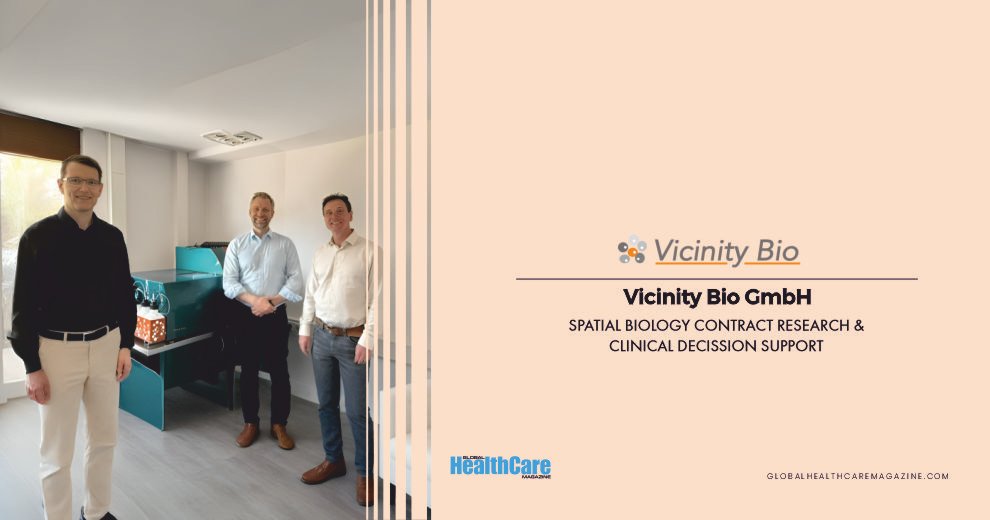
In the historic university town of Tübingen, Germany, a new entity emerged in late 2024 to transform our understanding of these maps. The company is called Vicinity Bio GmbH. It was founded not merely to create better machinery, but out of profound frustration with our inability to see clearly. The founders recognized that while technology had advanced enough to detect up to 200 protein markers on a single tissue sample, the human mind, and even standard computers, struggled to process that symphony of data. It was akin to astronomers receiving a telescope powerful enough to see every star in the galaxy, yet lacking the star charts to understand what they were observing.
This is the story of how Vicinity Bio bridges that gap. It is a story about the “Why” behind their existence: the belief that if we can comprehend the complexity of tissue composition and individual cellular interactions, we can successfully intervene in non-physiological conditions. Moreover, it is a story about “Who” they serve: the patient whose tumor resists standard treatment and the researcher whose hypothesis is bogged down by data overload.
The Origin of the Observer
The foundation of Vicinity Bio is rooted in a unique kind of scientific curiosity. It began in the academic fields of pathology, immunology, and bioinformatics, where the founders spent years observing how technology was advancing faster than the ability to interpret it. By late 2024, the gap had widened significantly. High-plex tissue imaging technologies had emerged, capable of generating vast amounts of data. However, many laboratories and hospitals found themselves at the base of these data mountains, lacking the integrated expertise to navigate them; they lacked the guides.
Vicinity Bio was established to bridge this critical gap between the generation of ultra-high plex tissue imaging data and its meaningful interpretation. The founders recognized that a tumor is not a single entity. It is a heterogeneous landscape, a dynamic terrain with both shared and unique features that can adapt over time. This adaptability is one reason why combating cancer is so challenging; the disease changes its appearance and enlists the body’s own cells to create protective barriers around itself.
To tackle such an adversary, one must do more than simply observe it; understanding its sociology is essential. One must also grasp the tumor microenvironment. This understanding drives the mission of the company. Having data alone is insufficient; one must derive insights from it. Vicinity Bio aims to combine ultra-high plex tissue imaging with AI-driven, single-cell resolved data analysis, focusing on areas where conventional histopathology and low-plex immunohistochemistry reach their limitations.
The Architecture of Insight
Vicinity Bio operates with the precision of a master watchmaker. The company offers a comprehensive solution that encompasses the entire workflow of spatial proteomics. While the term may sound abstract, it essentially involves taking a physical sample, preparing tissue, digitizing it through high-multiplex imaging, and then analyzing it with advanced AI-supported data analysis.
What sets this approach apart from academia, industry, and hospitals is its focus on translation. Vicinity Bio believes in more than just providing clients with a hard drive full of raw data and wishing them good luck. Instead, they integrate the interpretation of spatial proteomics data with pathology-focused insights.
This distinction may be subtle, but it is crucial. Raw experimental data can often be noisy and hard to interpret. Purely computational results can appear abstract. Vicinity Bio provides an integrated solution by combining measurement services with the translation of high-dimensional single-cell data into meaningful cellular phenotypes. They map spatial interaction patterns and identify biomarker signatures.
To illustrate, imagine a city viewed from a satellite. While you can see the buildings, which represent the raw data, you may not know which building is a bank, a school, or a safe house. You also wouldn’t be aware of traffic flows or areas of concern. Vicinity Bio essentially creates a detailed map that labels these buildings, identifying “cellular neighborhoods.” This makes the data directly applicable for translational research, biomarker discovery, and study-driven clinical decision support. They transform a satellite image into a useful city guide.
Taming the Data Deluge
The amount of information produced by high-plex tissue imaging is staggering, resembling a tsunami of pixels and protein expressions. These datasets cannot be understood through visual inspection alone. While the human eye is remarkable, it cannot simultaneously cross-reference 200 markers across a million cells.
Vicinity Bio stands out by recognizing this human limitation and shifting the heavy lifting to the machine while still keeping a human element in control. They combine standardized imaging workflows with machine learning-based analysis pipelines that work strictly at the single-cell level.
This process is a remarkable feat of digital transformation. Highly multiplexed imaging data is segmented and mathematically analyzed, turning it into high-dimensional cellular profiles that include marker expression, morphology, and spatial context.
Next comes the sorting. AI-driven clustering and classification methods are applied. These algorithms act like diligent librarians, organizing every book in a chaotic pile into its proper genre and shelf. They enable the reproducible identification of tumor cells, immune cells, and stromal cell populations. Furthermore, they determine the functional states of these cells: for instance, is an immune cell actively attacking, or is it in a resting state? They also map spatial relationships to show who is positioned next to whom.
This systematic approach ensures scalability, allowing studies conducted in January to be comparable to those done in June. It brings order to the chaos of data.
The Adversary: Tumor Heterogeneity
Cancer is an incredibly complex and adaptable disease, making it one of the most challenging to treat. It is rarely just a singular entity; a single tumor can consist of a wide variety of cell types, each with different genetic mutations and behaviors. This phenomenon is known as tumor heterogeneity, and it poses a significant challenge in oncology.
Vicinity Bio addresses this challenge by focusing on the specifics rather than averages. In traditional testing, a piece of tissue is often ground up and analyzed as a whole, which provides an average snapshot of its contents. However, if that tissue sample contains mostly safe components with one deadly “poison pill,” the average analysis could misleadingly suggest that the sample is harmless.
Instead of homogenizing samples, Vicinity Bio analyzes hundreds of markers across thousands to millions of individual cells while preserving the intact tissue architecture. They take detailed photographs of each molecule.
This approach allows for the identification of distinct populations of tumor cells. It uncovers immune niches; areas where cancer cells evade detection by the immune system. Moreover, it reveals cellular neighborhoods that conventional diagnostics might overlook. By quantifying these intricate patterns, Vicinity Bio enhances our understanding of tumor biology. This deeper insight helps researchers comprehend why a particular therapy may be effective for one patient but not for another, ultimately revealing the true nature of the disease.
The Ecosystem of Collaboration
Vicinity Bio collaborates with a diverse array of partners. The company works with academic research groups that are pushing the boundaries of scientific knowledge, as well as with biotech and pharmaceutical companies developing the next generation of drugs. Additionally, it partners with clinical organizations in oncology and immunology, including oncology patient concierge services dedicated to improving individual lives.
The needs of these customers shape the very core of Vicinity Bio. Requests vary widely, from exploratory discovery projects that simply ask, “What is happening here?” to hypothesis-driven biomarker validation studies. In personalized oncology, the stakes are particularly high; therefore, data accuracy and rapid turnaround times are critical.
These collaborations significantly influence product development at Vicinity Bio. The company prioritizes robustness, interpretability, and turnaround times that align with the fast pace of research and translational workflows.
To achieve this, Vicinity Bio employs state-of-the-art automated imaging platforms, including MACSima™ and PhenoCycler-Fusion (CODEX®). These technologies are supported by standardized protocols and rigorous quality controls. On the data side, reproducible AI pipelines and validated antibody panels ensure consistent results across different tissue types.
However, the effectiveness of these machines relies heavily on the expertise of the people who operate them. Vicinity Bio’s founding team comprises a diverse mix of experts in pathology, immunology, and bioinformatics. This interdisciplinary structure is essential as it bridges the gap between the wet lab and the dry lab.
Vicinity Bio maintains a small, highly interactive team to maximize communication between specialists: the pathologist who understands disease, the immunologist who understands defense mechanisms, and the bioinformatician who understands data. This close integration ensures that the AI models remain biologically grounded, clinically relevant, and free from inaccurate assumptions.
Validating the Vision
The impact of Vicinity Bio is already being felt throughout the scientific community. The company’s scientific foundations are grounded not just in theory but also in peer-reviewed publications in high-impact journals. Their research has shown tangible results in real-world applications within tumor immunology.
Recognition has come swiftly. In 2024, the team was awarded 1st Prize at the Science2Start Ideas Competition (BioRegio STERN). This accolade was more than just a trophy; it served as validation of their work, emphasizing the translational relevance of their approach and confirming the importance of Vicinity Bio’s efforts.
The products of Vicinity Bio have been embraced by a diverse range of users, including academic groups, biotech firms, and clinical partners. They are instrumental in guiding decisions that influence drug development and patient care.
The Horizon: 2026 and Beyond
As we look toward the future, Vicinity Bio is not standing still. The roadmap for 2026 and beyond is shaped by emerging trends in AI-driven tissue analysis. Vicinity Bio sees a future with deeper integration of AI for spatial pattern recognition. The company plans an expansion toward multimodal data integration, combining protein data with genetic data, creating an even richer map of biology.
There is also the increasing relevance of spatial biomarkers in clinical trials. Vicinity Bio envisions a world where a patient enters a trial not just based on a genetic mutation, but based on the spatial architecture of their tumor. These developments will further strengthen the role of spatial proteomics in precision oncology.
The long-term vision is clear. Vicinity Bio aims to advance precision medicine by making high-dimensional tissue imaging data accessible, interpretable, and actionable. The goal is to support translational research and clinical decision-making with robust, AI-driven tissue analytics that capture the true complexity of human disease.
A Final Reflection
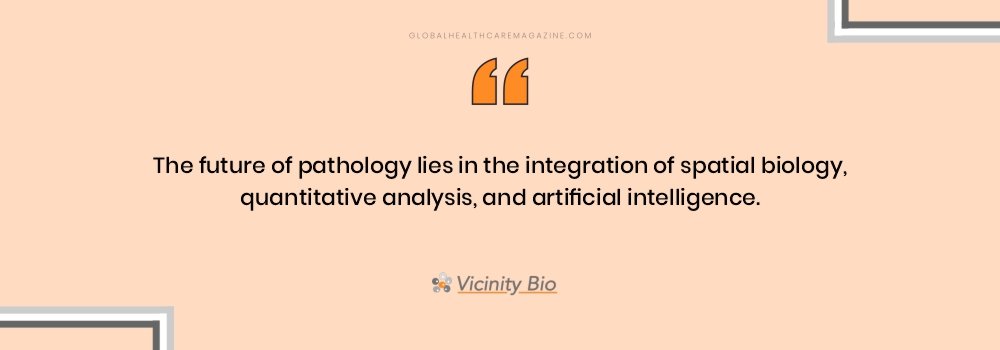
At the core of this technology is a service that addresses the complexity of life itself. The future of pathology lies in integrating spatial biology, quantitative analysis, and artificial intelligence. By combining these elements, tissue analysis can evolve from a simple descriptive assessment, simply saying “this is cancer,” toward a data-driven, predictive insight.
Vicinity Bio believes that understanding the complexity of tissue composition is essential for making successful interventions and ultimately saving lives. In a world filled with biological noise, Vicinity Bio focuses on identifying the relevant signals. This ensures that when we examine a patient, we look beyond just the disease; we also see the path to a potential cure.
Quote
Also Read: Global Leaders Driving AI & High-Plex Tissue Analysis 2026