There is a particular kind of exhaustion that does not look like exhaustion at all. It looks, from the outside, like competence. Like reliability. Like a person who has everything managed. It looks like the individual who shows up first and leaves last, who takes the call at dinner and answers the email at midnight, who is, by every visible measure, doing extraordinarily well.
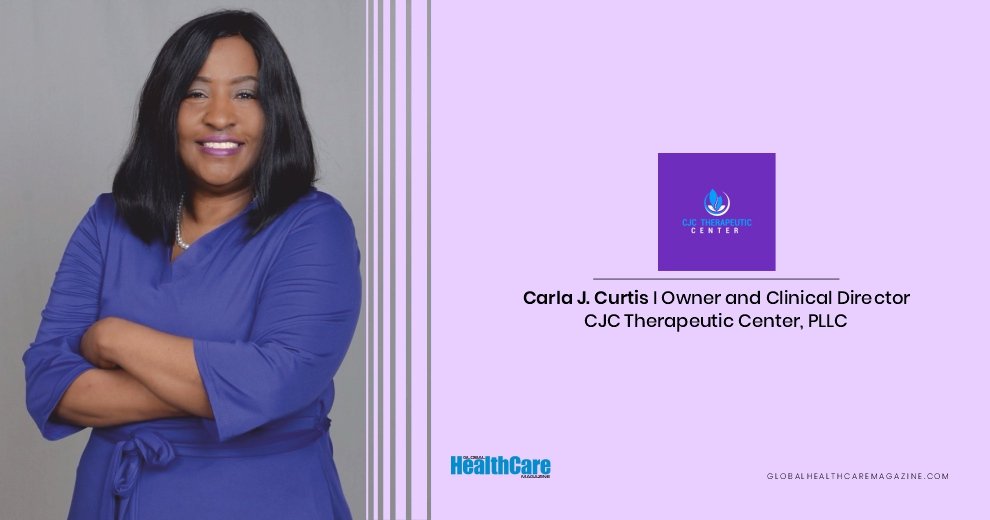
Carla J. Curtis has spent years watching this kind of person walk through her door. They arrive polished and put-together. They are high-achievers, the sort of people who have been told they are strong, yet beneath the surface of all that capability, there is something quieter happening. Something that Carla has come to understand with the precision of a clinician, the sensitivity of a storyteller, and through personal experiences.
She calls it self-abandonment. And she has built her life’s work around the gentle, careful, deeply human task of helping people recognize it, name it, and slowly find their way back to themselves.
A Life Lived in Many Rooms
Long before Carla became a therapist, she spent sixteen years in the corporate world, working for a financial services company.
That alone would constitute a full career for most people. But there were even more before this. Five years on Capitol Hill and then five more years at an independent school. Each environment is distinct, requires a particular kind of fluency and ability to read rooms, understand people, and navigate the unspoken rules of how things work.
It was a long and layered professional life. Throughout, Carla kept something in mind.
“I’ve always known that my ultimate career goal was to be a licensed clinician,” she says, in the unhurried way of someone who has never been in a rush to prove anything.
It was not a secret she kept from the people around her. Friends and family, over the years, would offer the same observation: that she belonged in the mental health field. That there was something in the quality of her presence, in the way she listened and the way she understood, that was clearly meant for something more than any single office could contain.
She carried that knowledge with her through every position. She deferred addressing it, as certain truths are best conveyed when the appropriate occasion arises.
The Practice Born from Faith
The right moment arrived in May 2021. Carla had recently left her job as a program therapist at a residential home for teenage mothers, young women with deep histories of trauma, facing situations that placed overwhelming demands on them, far beyond what anyone their age should experience. It was meaningful, necessary work. But something was pulling her in a direction she could no longer ignore.
“I decided to no longer put my dream of having my own business on the back burner,” she says.
And so, by July 2021, CJC Therapeutic Center, PLLC, was open for business. Not born from a spreadsheet or a five-year plan, but from a decision made in the spirit of faith and self-trust, the very qualities Carla would go on to cultivate in the clients who would find their way to her.
It did not take long before the patterns began to emerge.
While working with clients, listening to their stories, and holding the weight of their present-day struggles, Carla started to notice commonalities. People who, from the outside, appeared to have everything together were quietly sidelining their own needs, their own emotions, their own limits, in service of everyone and everything around them.
“I started looking at some common client themes,” she explains, “and discovered that a lot of the stressors clients were experiencing were due to engaging in self-abandonment behaviors.”
That observation became the cornerstone of everything CJC Therapeutic Center would stand for.
Giving Language to What Had Been Silent
There is something quietly radical about naming a pattern that has hidden in plain sight for years. The clients who come to Carla do not always arrive knowing what is wrong. They arrive knowing that something is. They have described their exhaustion as the price of being responsible. They have called their self-neglect loyalty. They have mistaken the slow erosion of their own needs for the inevitable cost of being a good person in a demanding world.
“Many of our clients believe their exhaustion is simply the cost of being responsible, productive, and dependable,” she notes.
Carla looks past that narrative. Self-abandonment, she explains, is a learned pattern, usually developed early in life, in which one’s needs, emotions, and limits are repeatedly set aside to meet the expectations of others, to maintain connection, to be the person the world seems to require. Over time, burnout becomes so familiar that it begins to feel normal. Rest starts to feel like weakness. And self-worth, fragile and quietly conditional, becomes entirely tethered to performance.
Her definitions are precise and deliberately given.
Self-abandonment is the repeated dismissal of oneself. Burnout is the depletion that follows prolonged overextension. And awareness, she is firm on this point, is where healing begins.
The work she offers in response to these patterns is not confrontational. It is an invitation. An invitation to shift from constant doing to simply being. Instead of viewing rest, joy, and meaningful relationships as prizes earned through hard work, we can recognise them as inherent rights that everyone deserves, no matter how much they produce.
She also reaches for something most people already understand. The oxygen mask, she reminds clients. You must care for yourself first to sustain anything or anyone else.
“Your needs matter. Your feelings matter. They were never meant to be pushed aside,” she says.
The Soul at the Center of the Work
The framework Carla developed to support this healing process carries a name that is both clinical and deeply personal. She calls it the Soul Work Restoration Model™.
The name is intentional. Soul Work, as Carla defines it, is “a personal and spiritual journey focused on self-discovery, healing, and growth.” It involves deep introspection, the kind that uncovers one’s true purpose, addresses emotional wounds, and builds a stronger, more honest connection with oneself and the world.
She felt that existing clinical language, precise and useful as it is, sometimes misses something essential. Something about interiority. Something about permission. Permission to go all the way in.
The Soul Work Restoration Model™ guides individuals through a structured yet sensitive process of reflection, restoration, and self-leadership. Through this approach, clients learn to reconnect with their needs, develop healthier boundaries, and restore genuine balance to lives that have long been tilted in everyone else’s direction.
Crucially, Carla does not soften her clinical rigor in the process. She integrates the Soul Work framework with psychodynamic therapy, Cognitive Behavioral Therapy, and person-centered therapy, creating an approach that is professionally sound and deeply introspective in equal measures.
She stresses that the aim isn’t transformation. It is not the construction of a new self, shinier and more optimized than the one that came before.
“Rather than pursuing transformation, the aim is to rediscover your authentic self.”
It is, she believes, about remembering. Reclaiming one’s original self before neglecting their needs and using that foundation to create a stronger version of themselves.
The Practice in Motion
On any given week, Carla sees between 15 and 25 clients. Her days carry the texture of someone who has chosen to build something on her own. Clinical care runs alongside administrative management. Patient assessments and treatment sit beside maintaining electronic health records, overseeing billing and insurance, managing marketing, and handling the logistics that keep a practice functioning.
Carla currently operates as the sole clinician at CJC Therapeutic Center, though she outsources billing and insurance responsibilities. It is a lean, intentional operation, shaped by someone who understands, from the inside, what it means to manage a great deal without losing sight of what matters most.
And what matters most to her is always the people.
“I am most passionate about working individually with my clients and seeing them make their growth and healing a priority,” she says. She speaks of watching clients increase their self-esteem, learn to trust their own judgment, stop engaging in self-abandonment behaviors, and begin, carefully and sometimes tentatively, to live authentically on their own terms.
The referrals she receives from other clinicians, nurse practitioners, and past clients speak to the reputation she has built. The former clients who return to resume treatment, having achieved their goals or stepped away for personal reasons, say something even louder.
But it is the quiet, session-by-session transformation she witnesses in the room that sustains her.
When Leadership Is Tested
Running a private practice is not only a clinical endeavor. It is also a business. And businesses encounter friction.
Early in CJC Therapeutic Center’s life, Carla found herself in a situation that would test the patience and persistence of even the most seasoned professional. For approximately six months, an insurance company failed to pay her claims. She followed up repeatedly. The experience was, by her own account, both exhausting and discouraging.
But Carla simply did not wait and hope. She researched. She identified a C-Suite employee in the company’s operations department through LinkedIn and contacted them directly, documenting the failure in customer service and the unresolved state of her claims.
A Vice President responded. The VP asked who Carla had been in contact with and assured her that if the matter was not resolved within 24 hours, she should reach out again directly. She was immediately contacted. The matter was resolved to her full satisfaction.
It is, on the surface, a practical story. But it reveals something important about how Carla operates. She is someone who identifies the right door and knocks on it with both grace and purpose. She does not accept stagnation. She moves, strategically and deliberately, toward resolution.
The Storyteller Behind the Therapist
There is another dimension to Carla that sits alongside the clinician, the founder, and the advocate. It is quieter, but it is present in everything she does. She is a writer. A storyteller. A published author since 2001.
When she founded CJC Therapeutic Center in July 2021, she set her writing ambitions aside to focus entirely on building the practice. But she has not let them go. She plans to resume writing books focused on mental health, understanding that the printed page can reach people who are not yet ready to sit across from a therapist, people who might encounter a story and feel, for the first time, that they are not alone.
“Writing and storytelling enable me to share narratives that help humanize therapy,” she explains, “and encourage clients to take ownership of their own stories.”
It is a philosophy that connects the clinical and the creative in a way that feels entirely natural for someone who has spent her life paying close attention to people.
Outside the office, Carla reads, journals, blogs, ghostwrites, and edits the work of others. She walks near water when she needs to settle herself. She plays piano occasionally, listens to music across a wide range of genres, travels, and spends time with the people she loves.
She takes long baths with lavender and rosemary oil, which is, she says with a quiet kind of certainty, one of her favorite things.
There is something important in that detail. A woman who spends her days holding the emotional weight of others, who has built an entire practice around the principle that people must learn to care for themselves, has clearly and deliberately learned how to do exactly that.
The Vision Ahead
Carla is not someone who stands still.
Her immediate goal is to expand CJC Therapeutic Center by standardizing policies and procedures and strengthening the overall organization of the practice. Once that foundation is solid, she plans to bring on two part-time therapists and a virtual assistant, growing the practice while preserving the quality and intimacy that defines it.
She is also planning to apply for licensure in Nevada and Georgia, adding to her current licenses in Illinois, Florida, and New Jersey, and enabling her to support a significantly broader population of clients across the country.
More workshops and therapy groups are also on the horizon. And the books, she says, are coming.
The vision is not about scale as an end. It is about reach. About how many people she can bring into a conversation that too many have been left out of. A conversation about what it truly means to stop abandoning yourself, and to begin living as the fullest, most honest version of who you are.
The Woman Behind the Work
Carla is a mother, mother-in-law, and grandmother to two young adult women and a teenage grandson. She speaks confidently about these relationships, demonstrating her ability to support others across generations, while also learning to nurture herself. Carla observes that these roles influence how she approaches caregiving, remains present, and renews herself at various points in her life.
Her leadership philosophy is rooted in servant leadership. It shapes not only how she runs CJC Therapeutic Center but how she moves through every professional relationship. She has, as far back as she can remember, found her deepest satisfaction in empowering others and offering hope.
“Operating CJC Therapeutic Center allows me to do this on a regular basis; for that, I am forever grateful,” she says.
She is also, and this is worth saying plainly, deeply grateful to her clients. To the people who have trusted her enough to bring her into the most private, tender corners of their lives.
“I am deeply indebted to those clients who have trusted me enough to support them on their journey to personal and professional growth and healing,” she says.
And then, because she means what she says and says what she means, she closes with the line that has become the quiet heartbeat of everything CJC Therapeutic Center stands for.
“Healing begins where self-abandonment ends.” It is a simple sentence. But like all the best truths, it carries everything inside it.
Quotes

Also Read: The 10 Most Visionary Mental Health Leaders of 2026