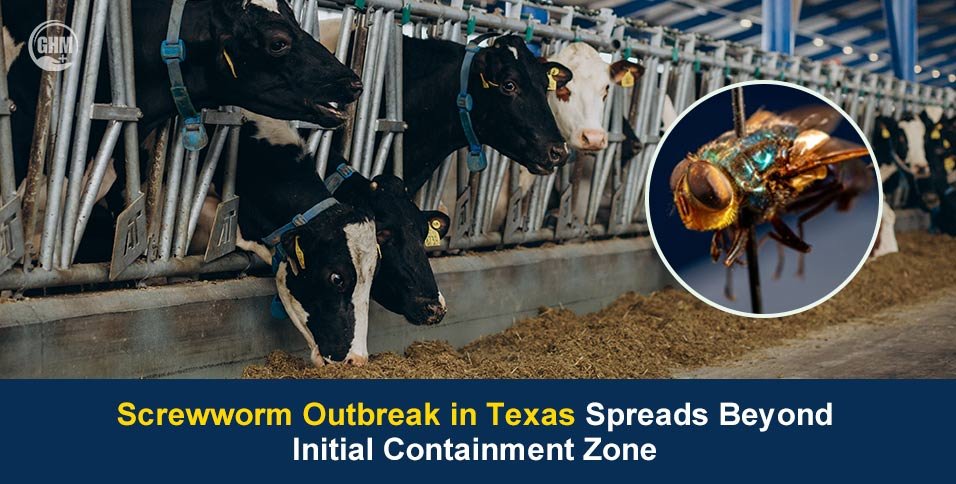
New World screwworm, a flesh-eating parasite eradicated from the United States decades ago, has returned, that too in the nation’s largest livestock-producing states. The screwworm outbreak in Texas is expanding with a rise in confirmed infestations across the state. Governor Greg Abbott has also issued a statewide disaster declaration as officials work to contain the outbreak.
According to the Centers for Disease Control and Prevention (CDC), the first animal case linked to the current outbreak was confirmed in Texas on June 3, 2026. Since then, additional infestations have been identified in livestock and other animals, prompting state and federal agencies to strengthen surveillance and containment measures.
Experts believe the northward movement of infected animals and wildlife contributed to the parasite’s reappearance in the southern United States, raising concerns about animal health, agricultural losses, and the potential for wider geographic spread.
What Is the New World Screwworm?
The new world screwworm (Cochliomyia hominivorax) is a parasitic fly whose larvae feed on living tissue. Unlike common maggots that consume dead tissue, screwworm larvae burrow into healthy flesh, causing painful wounds that can rapidly worsen if left untreated.
Female flies lay eggs in open wounds or natural body openings of warm-blooded animals. Once the eggs hatch, the larvae begin feeding on living tissue, creating severe damage and increasing the risk of infection.
Animals most commonly affected by screwworm include:
- Cattle
- Sheep
- Goats
- Horses
- Wildlife
- Dogs and cats
Although rare, human infestations can also occur.
Growing Number of Reported Screwworm Cases In Texas
The screwworm outbreak in Texas has expanded rapidly since the initial detection in a calf in Zavala County. According to reports from the U.S. Department of Agriculture (USDA), confirmed infestations have now reached multiple counties across Texas, with additional cases reported in neighboring New Mexico.
Recent data indicate that 12 confirmed infestations have been identified in the United States, including 11 in Texas and one in New Mexico. The screwworm spread in Texas is moving beyond its original containment area, as the latest Texas case involved a sheep in Sutton County.
The Texas Animal Health Commission (TAHC) has also reported infestations across several premises and continues to monitor affected regions through intensive animal and fly surveillance programs.
To slow the screwworm outbreak in Texas, Texas officials have established quarantine zones in multiple counties where infestations have been confirmed.
Under current restrictions, warm-blooded animals cannot leave designated infested zones without authorization from the Texas Animal Health Commission. Animals must undergo inspection and receive movement certificates before transport.
Affected counties by screwworm outbreak include portions of:
- Zavala
- Webb
- La Salle
- Uvalde
- Edwards
- Kerr
- Gillespie
- Kimble
- Sutton
- Schleicher
- Coke
- Tom Green
- Val Verde
Impact of Screwworm Infection on Texas Livestock Industry
The screwworm outbreak in Texas poses a significant challenge for one of the nation’s largest livestock-producing states.
Texas leads the United States in cattle production, making the outbreak a serious concern for ranchers and agricultural stakeholders. A widespread infestation could result in:
- Animal deaths
- Higher veterinary expenses
- Reduced productivity
- Increased biosecurity costs
- Trade and transportation disruptions
Industry experts also fear that warmer weather conditions may create favorable environments for continued transmission during the coming months.
Health Official Response to Screwworm Infection
The U.S. Department of Agriculture (USDA) has responded to screwworm infection in Texas with the CDC, Texas Animal Health Commission, and other federal and state agencies.
Current response efforts include:
- Sterile Fly Releases
Millions of sterile male screwworm flies are being released into affected regions. Because female screwworm flies typically mate only once, mating with sterile males prevents reproduction and gradually suppresses the population.
- Enhanced Surveillance
Animal health officials are conducting inspections, fly trapping, laboratory testing, and epidemiological investigations to identify new infestations quickly.
- Public Awareness Campaigns
Authorities are educating ranchers, veterinarians, and pet owners about prevention strategies and reporting procedures.
What Should Pet Owners Know?
Although livestock remain the primary concern, the outbreak has also highlighted risks to companion animals.
Recent reports identified screwworm infestations in domestic animals, including dogs. Veterinary experts emphasize that outdoor pets living in affected counties face elevated risks.
Common screwworm symptoms in animals include:
- Open wounds that fail to heal
- Foul-smelling discharge
- Visible larvae in wounds
- Unusual aggression or lethargy
- Excessive licking or irritation
Pet owners are advised to inspect animals daily, treat wounds promptly, and seek veterinary care immediately if infestation is suspected.
Is There a Risk of Screwworm to Humans?
Despite growing concern about the outbreak, public health officials stress that the risk to people remains low.
The CDC has reported no locally acquired human cases in the United States linked to the current outbreak. However, human infestations remain possible, particularly in areas where infected flies are circulating.
Symptoms may include:
- Painful wounds that worsen over time
- Bleeding or foul-smelling sores
- Visible larvae in wounds or body openings
Health experts recommend keeping wounds clean and covered, using insect repellent, and seeking immediate medical attention if symptoms develop.
Outlook
As the screwworm outbreak in Texas continues to evolve, authorities are focused on preventing the parasite from becoming established again in the United States. Federal and state agencies are expanding surveillance, enforcing movement restrictions, and increasing sterile insect release operations.
While these measures helped eliminate screwworm decades ago, experts caution that continued vigilance will be necessary as new cases emerge.
For livestock owners, veterinarians, and pet owners, early detection and rapid reporting remain the most effective tools for limiting the impact of this growing screwworm outbreak in US.