If you have ever felt a sharp, shooting pain travelling from your lower back down through your buttock and into your leg, you already know how disruptive sciatica can be. It can make sitting, standing, sleeping, and even walking uncomfortable. While there are many approaches to easing sciatic pain, one that is gaining attention is assisted stretching. But what exactly is it, and how might it help?
Understanding Sciatica
Sciatica is not a condition in itself but a set of symptoms. It describes pain that follows the path of the sciatic nerve, the longest nerve in the body, which runs from the lower back through the hips and buttocks and down each leg. When this nerve becomes irritated or compressed, it can cause pain, tingling, numbness, or a burning sensation anywhere along that route.
Common causes include a herniated or slipped disc, spinal narrowing, and tightness or spasm in muscles such as the piriformis, a small muscle deep in the buttock that sits very close to the sciatic nerve. Tight hamstrings and hip flexors can also pull on the pelvis and lower back, adding to the tension around the nerve. Because muscle tightness plays such a large role for many people, gentle, targeted stretching is often part of the picture when it comes to relief.
What Is Assisted Stretching?
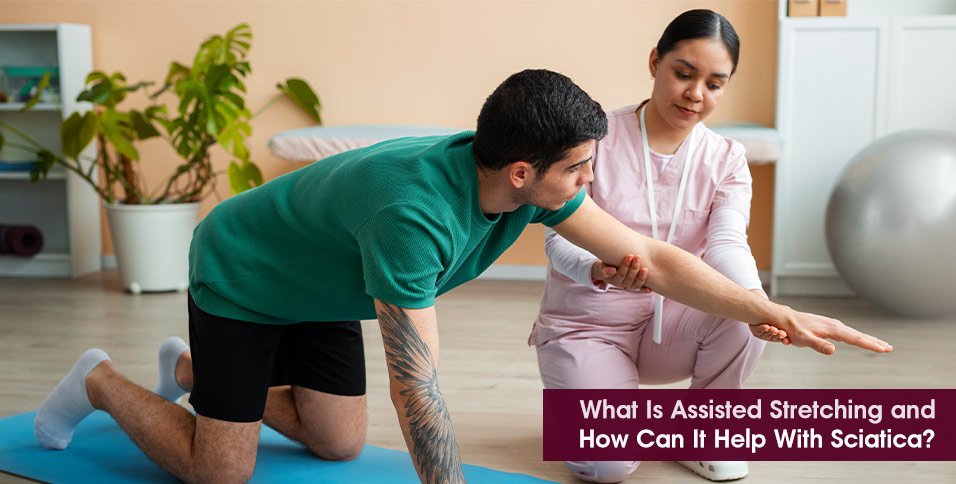
Assisted stretching is exactly what it sounds like: stretching carried out with the help of a trained practitioner rather than on your own. Instead of trying to hold and control a stretch yourself, you lie or sit comfortably while the practitioner gently moves your body into positions that lengthen specific muscles. They control the depth, angle, and timing of each stretch, guided by how your body responds and by your feedback.
This hands-on approach is sometimes offered by physiotherapists, sports therapists, and dedicated stretch studios. Practitioners often use techniques drawn from methods such as proprioceptive neuromuscular facilitation, or PNF, which involves gently contracting a muscle before relaxing it into a deeper stretch. The result is often a greater and more comfortable range of motion than most people can achieve stretching alone.
How Assisted Stretching May Help With Sciatica
For sciatica that is linked to muscle tightness, assisted stretching can offer several potential benefits.
The most direct is reduced muscle tension. When muscles like the piriformis, hamstrings, and those in the lower back are tight, they can press against or irritate the sciatic nerve. Carefully lengthening these muscles may reduce that pressure and ease the resulting symptoms.
Improved flexibility and mobility is another benefit. Sciatica often leads people to move less and guard the painful area, which over time can make surrounding muscles even stiffer. Gentle assisted stretching helps restore movement in the hips, lower back, and legs, which can make everyday activities feel easier.
Stretching also encourages blood flow to the muscles and tissues around the nerve. Better circulation supports healing and can help reduce the inflammation that sometimes contributes to nerve irritation. Many people also find the experience deeply relaxing, and because stress and muscle guarding often go hand in hand, that sense of relaxation can itself help reduce pain.
A further advantage of having a practitioner involved is precision. Stretching the wrong way, or too aggressively, can sometimes make sciatic symptoms worse. A trained practitioner can read how your body is responding, adjust in real time, and keep the movements within a safe, comfortable range.
Who Might Benefit and Who Should Be Cautious
Assisted stretching may suit people whose sciatica is connected to tight muscles, poor flexibility, or a sedentary lifestyle, as well as those who find it difficult to stretch effectively on their own. It can be a gentle option for people who feel nervous about exercising a painful area, because the practitioner takes on the effort of controlling the movement.
However, it is not right for everyone. Sciatica caused by a significant disc problem or other spinal issues may need a different approach, and in some cases stretching could aggravate symptoms. Certain warning signs, such as severe or rapidly worsening pain, weakness in the leg or foot, or any loss of bladder or bowel control, need urgent medical attention rather than stretching. This is why professional guidance matters so much.
What to Keep in Mind
A helpful rule of thumb is to pay attention to what you feel during and after a stretch. A mild, local stretching sensation that eases quickly and leaves you moving more freely is usually a good sign. Sharp, burning, or travelling pain down the leg is a signal that the stretch should be changed or stopped. A good practitioner will encourage you to share this feedback throughout your session and will never push you into pain.
It is also worth remembering that assisted stretching is best seen as one part of a broader plan. Combined with staying gently active, strengthening supporting muscles, and any treatment recommended by a healthcare professional, it can be a valuable tool. On its own, it is unlikely to be a complete cure, but for many people it provides real, welcome relief.
The Bottom Line
Assisted stretching offers a gentle, guided way to ease the muscle tension that so often contributes to sciatic pain. By lengthening tight muscles around the sciatic nerve, improving flexibility, and encouraging relaxation, it can help many sufferers move and feel better. As with any approach to sciatica, the key is to start safely, listen to your body, and work with a qualified practitioner who can tailor each session to your needs.
If you would like to explore this approach with trained practitioners, you can find out more about assisted stretching for sciatica in Glasgow and how a tailored programme could help ease your symptoms.
Disclaimer: This article is for general information only and is not medical advice. Sciatica can have several underlying causes, some of which need medical attention. Always speak to a GP, physiotherapist or qualified practitioner before starting any new stretching routine, especially if your pain is severe, worsening, or accompanied by numbness, weakness, or loss of bladder or bowel control.