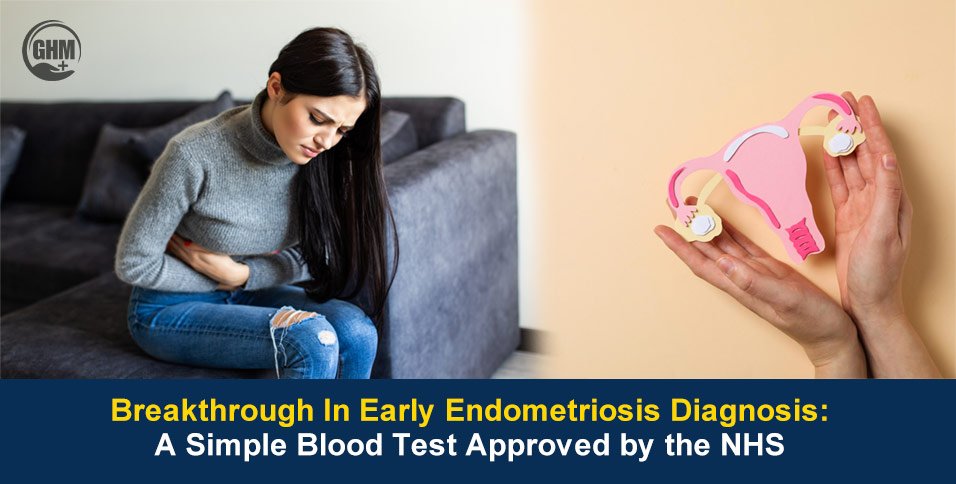
In a breakthrough in early endometriosis diagnosis, researchers from the University of Edinburgh have identified hormone biomarkers that can detect endometriosis with promising accuracy.
Shortly after this research, published in the European Journal of Endocrinology, NICE approved two rapid diagnostic technologies for NHS use. The NHS will introduce the endometriosis test in England and Wales, bringing laboratory research into routine patient care.
This breakthrough is a major advancement in non-invasive endometriosis diagnostics that can transform women’s healthcare and reduce severe diagnostic delays.
New Endometriosis Diagnosis Test With Hormone Biomarker
For decades, the medical community viewed endometriosis primarily as an oestrogen-driven disorder. Published in the European Journal of Endocrinology, the new study on endometriosis focuses on finding reliable biological markers in blood plasma, seeking more accurate and less painful endometriosis diagnostic methods.
The breakthrough in early endometriosis diagnosis was led by a collaborative research team from the University of Edinburgh, alongside scientists from the Universities of Liverpool, Glasgow, and Birmingham.
The endometriosis diagnosis study design evaluated hormone levels, which consisted of a sample group of 159 women with confirmed endometriosis and 57 women without the condition.
The research evaluated a specific group of hormones produced by the adrenal glands known as 11-oxygenated androgens. Elevated 11-ketotestosterone was identified as the key biomarker in women with the condition, allowing researchers to achieve over 95% diagnostic accuracy within the study population.
Importance of Breakthrough In Early Endometriosis Diagnosis
In the UK alone, endometriosis affects an estimated 1.5 million women. Endometriosis occurs when cells similar to those in the womb lining grow outside the uterus, reacting to the menstrual cycle by building up and bleeding with no way to escape the body.
Symptoms vary considerably among individuals, yet many patients experience:
- Chronic pelvic pain and severe abdominal pain
- Painful menstruation (dysmenorrhea) that halts daily activities
- Infertility or severe difficulty conceiving
- Extreme tiredness and chronic fatigue
Currently, an existing diagnosis of endometriosis depends heavily on subjective symptom assessment, transvaginal ultrasound scans, MRIs, and specialist referrals. Endometriosis symptoms are often mistaken for IBS, painful periods, or urinary disorders. Definitive endometriosis confirmation has traditionally required laparoscopic surgery.
To tackle the ongoing clinical crisis, researchers have increasingly focused on breakthroughs in early endometriosis diagnosis with endometriosis blood tests and hormone-based diagnostics to circumvent surgery.
NHS Offers Two Rapid Endometriosis Tests After Research Success
Following the success of these laboratory discoveries, the National Institute for Health and Care Excellence (NICE) finalized an NHS endometriosis diagnostic rollout across England and Wales.
Under the draft guidance, clinicians are expected to utilize two newly approved tools in GP surgeries for women who exhibit symptoms but have normal or inconclusive imaging results:
1. Endotest
A non-invasive endometriosis test where women provide a simple saliva sample. The sample is sent to a laboratory to screen for microRNAs, which serve as tiny biological markers indicating the presence of the disease.
2. EndoSure
This endometriosis diagnosis tool uses abdominal sensors to measure gut electrical signals, making results available immediately after testing.
[Symptomatic Patient] ➔ [Normal/Inconclusive Imaging] ➔ [GP Administers Saliva/Sensor Test] ➔ [Rapid Results / Targeted Specialist Referral]
These technologies do not act as standalone diagnostics but rather complement existing pathways, substantially reducing the historical reliance on early invasive surgeries and streamlining the referral process.
Continued Evaluation Will Strengthen Women’s Healthcare
NICE has granted draft approval for these tests for a three-year period. During this timeframe, real-world clinical monitoring and long-term assessments will gather data on performance across broader, more diverse patient populations.
Concurrently, the University of Edinburgh team is seeking industry partners to scale their breakthrough in early endometriosis diagnosis, the 11-oxygenated androgen plasma test.
By deploying rapid, non-invasive diagnostic tools, the NHS is poised to end a decade of silent suffering for millions of women.