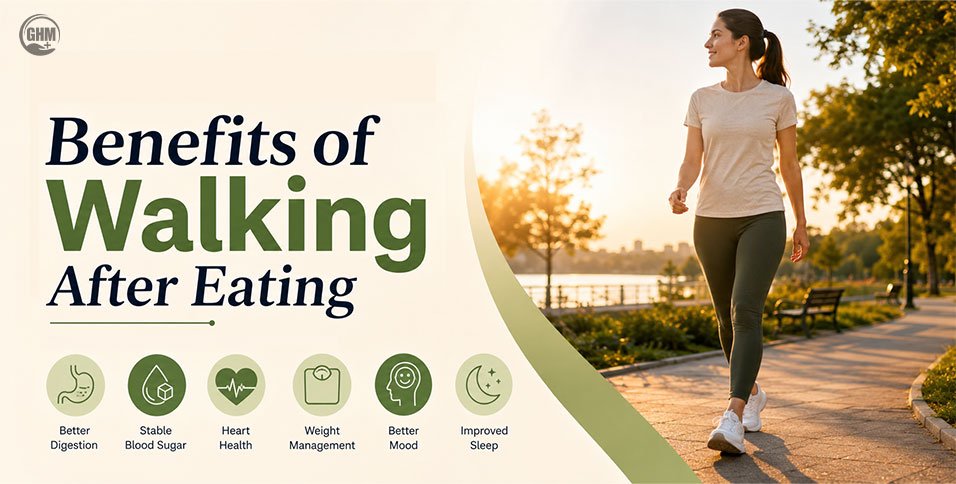
Most of us do the same thing after a meal: sit back down, grab the remote, or head straight back to our desk. It feels like the natural way to rest. But this habit might be working against you, and the fix takes as little as two minutes. You will just have to get up and walk. The benefits of walking after eating support your digestion, blood sugar, heart, mood, and sleep.
A short post-meal walk is one of the simplest, most researched habits in preventive health. It doesn’t require a gym membership, special shoes, or a training plan. Just steady, gentle movement, right when your body needs it most.
In this article, we’ll break down exactly what happens inside your body after a meal, the benefits of walking after eating, the duration to walk after a meal, and how you can make it a habit.
How Walking After Eating Works For Your Health
The moment you finish a meal, your digestive system gets to work. Your stomach and intestines begin breaking down food, and glucose starts entering your bloodstream. This causes a natural rise in blood sugar, typically peaking 60 to 90 minutes after eating.
When you move your body with a post-meal walk, your leg muscles pull glucose out of your bloodstream to use as fuel. At the same time, walking encourages peristalsis, the wave-like muscle contractions that move food through your digestive tract. Similarly, standing and walking after eating keep stomach acid where it belongs instead of traveling up into the esophagus.
For most people, the best time to walk after eating should be about 10 to 15 minutes, and no later than 30 minutes. Since blood sugar begins climbing soon after eating, walking earlier in that window tends to have the biggest impact. But if you’ve eaten a heavy or rich meal, it’s fine to wait a little longer to avoid discomfort. After a lighter meal, you can usually head out the door sooner.
In short, the benefits of walking after eating nudge several systems in your body to work more efficiently, all at once. Now let’s look at the specific benefits of walking after meals.
7 Benefits of Walking After Eating To Stay Effortlessly Healthy
1. Improves Digestion Naturally
Walking after eating food stimulates the stomach and intestines, helping food move through your digestive system more efficiently. A 2021 study found that walking for 10 to 15 minutes after each meal, for four weeks, reduced gastrointestinal symptoms like excess gas, bloating, and burping. Better intestinal movement means gas and waste move through your system instead of building up. If you regularly feel sluggish or heavy after eating, a short post-meal stroll may offer real relief.
2. Helps Prevent Blood Sugar Spikes
This is one of the most well-documented benefits of walking after eating. A review published in the journal Sports Medicine found that light-intensity walking after a meal, as short as two to five minutes, helped blood sugar and insulin levels rise and fall more gradually than sitting or even standing did.
A separate study out of New Zealand found that walking for just 10 minutes after each main meal lowered daily blood glucose more effectively than one 30-minute walk taken at any other point in the day.
Your blood sugar tends to spike within 60 to 90 minutes of eating. So, whether or not you have diabetes, for long-term metabolic health, the most effective way to get the benefits of walking after eating is to take a walk as soon as possible.
3. May Reduce Acid Reflux and Heartburn
Staying upright after eating helps your stomach empty more efficiently and keeps stomach contents from traveling back up the esophagus, but lying down right after a meal can worsen reflux.
Similarly, walking soon after a meal can shorten how long food sits in the stomach, which can ease symptoms like excessive fullness and abdominal discomfort. However, the post-meal walk should be gentle, not a brisk or vigorous workout, which can sometimes aggravate reflux instead of easing it.
4. Supports Heart Health
Regular movement after meals is linked to better circulation, healthier blood pressure, and lower inflammation over time. A 2009 meta-analysis found that walking around 30 minutes a day, five days a week, was associated with a 19% reduction in coronary heart disease risk. Because repeated blood sugar spikes are also tied to cardiovascular risk, the blood-sugar-smoothing effect of walking after eating does double duty for your heart.
5. Supports Healthy Weight Management
The benefits of walking after eating also include weight loss, as it burns extra calories. Post-meal movement is a habit most people can actually stick with, unlike a gym subscription.
Walking after meals adds low-effort movement to your day, something that adds up when repeated after every meal. A 10-minute walk isn’t a weight-loss solution on its own, but paired with healthy eating habits, it supports the calorie balance that weight management depends on.
6. Boosts Mood and Reduces Stress
A growing number of remote and desk-based workers want to lower stress hormones and improve focus between meals and meetings. A short walk gives your mind a break and your body a dose of endorphins, the feel-good chemicals released during movement.
Walking outdoors, even for a few minutes, appears to add an extra layer of mental benefit compared with walking indoors.
7. May Improve Sleep Quality
Walking after dinner in the evening may help keep blood sugar more stable overnight and reduce the chances of reflux disrupting your sleep. Combined with the mood and stress benefits above, a consistent after-dinner walk can become a ritual that helps you get uninterrupted sleep.
How Long Should You Walk After Meals?
- Beginners: 5–10 minutes is enough to start seeing benefits.
- Ideal duration: 10–15 minutes for most people
- If you’re comfortable: 20–30 minutes offers added benefits, especially for heart health
- Pace: should be casual and relaxed, as this isn’t the time for a power walk.
Consistency matters far more than speed or distance. A short daily walk will do more for your health long-term than an occasional long one.
Who Should Be Careful While Walking After Eating?
Walking after eating lunch or dinner is safe for most healthy adults, but a few groups should check with a healthcare provider before making it a routine habit:
- People recovering from recent abdominal surgery
- Those with severe or frequent acid reflux
- People with hernias
- Anyone with a serious digestive disorder
- People with mobility limitations
If a walk ever causes pain, dizziness, or significant discomfort, stop and rest, and mention it to your doctor.
The Bottom Line
The benefits of walking after eating include digestion, blood sugar, heart health, weight management, mood, and sleep. The best part is, walking is one of the simplest, most accessible habits a person can make. It takes very little time, requires no equipment, and offers measurable advantages. However, consistency plays an important part.
You can start today with a 10-minute walk after your next meal, and it will easily fit into your busy schedule. Your body is likely to thank you over the long run.
(Disclaimer: This blog is for informational purposes only. Always consult a healthcare professional for personalised advice.)
Sanskruti Jadhav