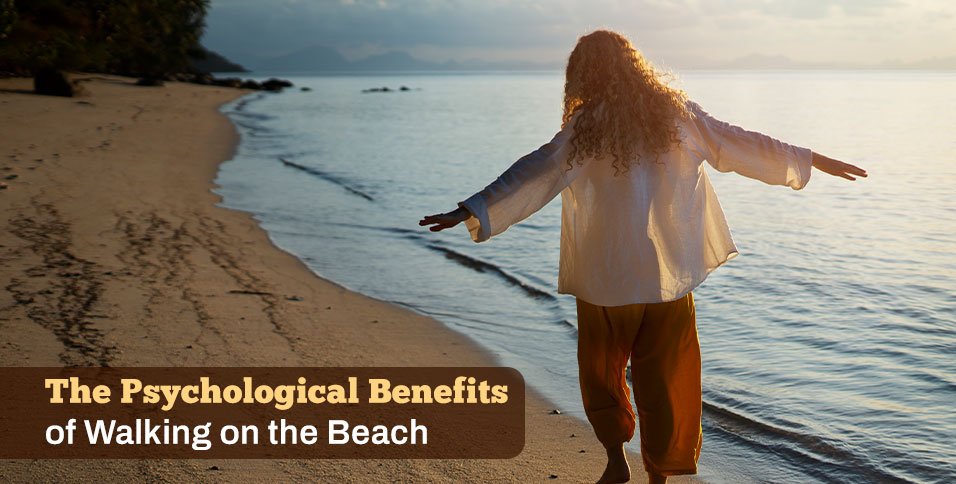
Ever wondered why a walk on the beach feels so good? It’s not just in your head. Walking on the sand actually reduces stress hormones, and the sunlight helps your brain produce more serotonin (the happy chemical). Add the rhythmic sound of the waves, and you have a perfect recipe for a mental health boost. This combo of light exercise and “blue space” (aka the ocean) is proven to ease anxiety and lift your mood.
While any physical activity is good for you, doing it in a coastal setting seriously amplifies the positive vibes. The unique mix of sights, sounds, and the feeling of sand under your feet creates a special kind of therapy.
Let’s dive into how the sun, sea, and sand work together to lower stress and how you can use beach walks to support your long-term mental health.How does proximity to blue space impact psychological distress?
The concept of “blue space” refers to outdoor environments that prominently feature water. Urban planners and public health officials study blue spaces because populations living near coastlines frequently report lower levels of psychological distress.
When an individual walks on the beach, the vast, unobstructed horizon reduces visual processing demands on the brain. This visual simplicity contrasts sharply with the high-stimulus environments of urban centers. By lowering cognitive load, the brain transitions into a state of involuntary attention. This mental state allows the nervous system to recover from cognitive fatigue, thereby reducing baseline anxiety levels.
Furthermore, the physical act of walking near a large body of water encourages a psychological distancing from daily stressors. The scale of the ocean provides perspective, which cognitive behavioral specialists often cite as a mechanism for disrupting rumination—a thought pattern closely associated with clinical depression.
What are the physiological effects of beach walking on the human brain?
Walking on the beach triggers several distinct physiological responses that directly benefit emotional regulation and cognitive function.
How does sunlight exposure influence serotonin production?
Coastal environments generally offer unobstructed exposure to natural sunlight. When sunlight enters the human eye, it stimulates the retina to signal the hypothalamus. This specific gland regulates the circadian rhythm and orchestrates the production of serotonin. Serotonin is a critical neurotransmitter responsible for stabilizing mood, facilitating feelings of well-being, and regulating sleep patterns. Adequate serotonin production during a daytime beach walk translates to more efficient melatonin synthesis in the evening, which subsequently improves sleep quality—a foundational component of mental health maintenance.
Why do the acoustic properties of ocean waves induce relaxation?
The sound of crashing ocean waves functions as a natural form of pink noise. Pink noise contains all frequencies perceptible to the human ear, but with lower frequencies amplified and higher frequencies diminished. This acoustic pattern masks background auditory disruptions and slows human brain waves. Neurological studies indicate that listening to pink noise helps the brain shift from active, alert beta waves to slower, more relaxed alpha waves. Consequently, individuals walking along the shoreline frequently experience a measurable decrease in heart rate and a reduction in circulating cortisol, the primary stress hormone.
Who benefits most from coastal walking routines?
Different demographic groups experience specific advantages from integrating beach walks into their behavioral health routines. Evaluate the following conditional recommendations to determine how a coastal walking regimen might serve specific psychological needs:
• Choose a beach walking routine if joint impact is a concern: The physical resistance of sand requires more muscular exertion than walking on asphalt, yet it provides a lower-impact surface. This makes beach walking highly beneficial for older adults or individuals recovering from physical trauma who need to maintain cardiovascular health for mood regulation without stressing their joints.
• Prioritize coastal exposure if managing seasonal affective disorder (SAD): Individuals diagnosed with SAD require high levels of ambient light to mitigate depressive symptoms during winter months. The reflective surface of the ocean amplifies ultraviolet exposure, maximizing the phototherapeutic benefits during shorter days.
• Incorporate shoreline walks if practicing active mindfulness: For individuals who struggle with stationary meditation, the tactile sensation of walking on uneven sand requires continuous spatial awareness. This physical engagement anchors the individual’s attention to the present moment, effectively functioning as a moving meditation practice.
Integrating Coastal Walks into Mental Health Strategies
Leveraging the therapeutic properties of a beach walk requires consistent application rather than occasional visits. Individuals seeking to improve their emotional regulation should schedule designated times for coastal exposure, treating the activity as a preventative health measure.
For optimal psychological outcomes, health professionals recommend walking without digital distractions. Removing headphones and leaving mobile devices out of sight allows the central nervous system to fully process the pink noise of the waves and the visual simplicity of the horizon. By systematically utilizing the natural advantages of blue spaces, individuals can establish a sustainable, scientifically grounded habit that actively fortifies their mental resilience.
Frequently Asked Questions
How often should an individual walk on the beach to see mental health improvements?
Public health research suggests that spending at least 120 minutes per week in natural environments yields significant improvements in psychological well-being. An individual can divide this duration into multiple shorter beach walks, such as four 30-minute sessions per week, to sustain lowered cortisol levels and consistent serotonin production.
Are the psychological benefits of walking near the ocean different from walking in a forest?
Yes, the benefits differ slightly based on environmental stimuli. Walking in a forest, or “green space,” effectively lowers blood pressure and boosts immune function through exposure to phytoncides released by trees. Conversely, walking near the ocean, or “blue space,” is uniquely effective at lowering cognitive load due to the unobstructed horizon and the specific alpha-wave-inducing acoustics of ocean water.
What alternatives exist for individuals who do not live near a coastline?
Individuals lacking access to an ocean beach can achieve similar psychological benefits by walking near lakes, rivers, or large urban water features. If physical blue spaces are entirely inaccessible, listening to high-quality audio recordings of pink noise or ocean waves while walking outdoors can partially replicate the neurological relaxation response induced by coastal acoustics.