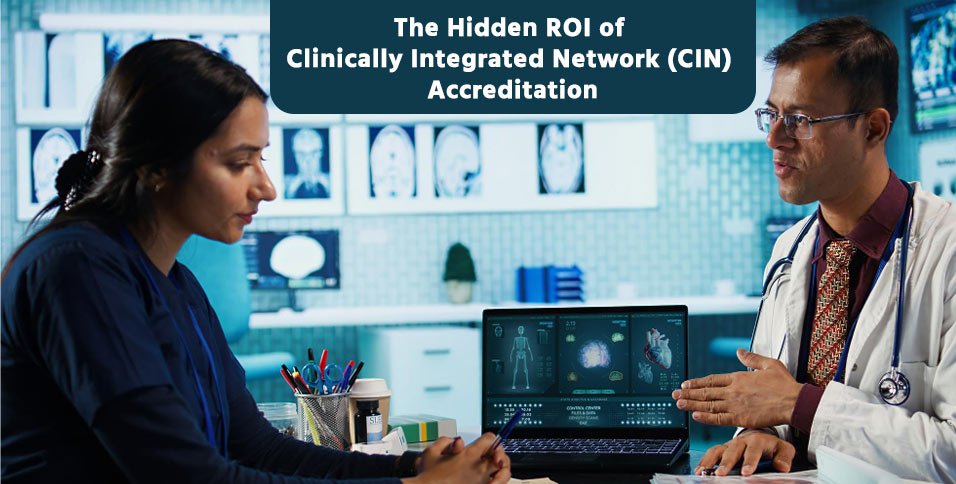
As healthcare systems shift toward value-based care, many organizations have embraced Clinically Integrated Networks (CINs) to improve patient outcomes while managing costs. However, the measurable return on investment and competitive advantages that formal accreditation provides often remain underestimated. Understanding how the top CIN accreditation bodies evaluate networks can unlock hidden financial and operational benefits.
Understanding the Rise of Clinically Integrated Networks
CINs are collaborative frameworks that enable independent healthcare providers to work together under shared quality standards and care-coordination protocols. These networks enable hospitals, clinics and private practices to pool resources, align treatment approaches and negotiate value-based contracts with payers.
A CIN usually includes healthcare providers who commit to using proven medical practices and who coordinate care to ensure prompt treatment in the appropriate setting. This network eliminates unnecessary tests and treatments, ensuring the efficient use of healthcare resources.
When evaluating clinically integrated network certification vs. accreditation, understanding the distinction is important. Certification validates specific capabilities or program elements, while accreditation provides comprehensive third-party validation of an organization’s operational structure, governance and performance standards.
Key Challenges Modern CINs Must Overcome
Forming a CIN offers a powerful strategy for improving care delivery and financial performance. However, these networks face significant operational and regulatory challenges that can undermine success if not managed properly.
Navigating Antitrust and Regulatory Hurdles
The primary challenge for any CIN involves managing the risk of violating federal antitrust laws. When independent providers collaborate on pricing or service delivery, they must demonstrate genuine integration to improve care quality. Regulators like the Federal Trade Commission require proof of legitimate clinical coordination.
Successfully navigating this landscape requires overcoming several critical obstacles. Networks must avoid illegal price-fixing arrangements and establish true clinical integration through shared protocols and data systems. They must prove significant quality improvements through measurable outcomes, maintain network non-exclusivity and ensure genuine financial risk-sharing among participants.
Ensuring Quality Control and Data Integration
Beyond regulatory compliance, CINs face operational challenges in aligning numerous disparate providers under a single set of clinical quality metrics. The technical challenge of integrating these data systems poses a substantial barrier, as providers often use various electronic medical record systems that don’t communicate seamlessly.
Key quality control challenges include human error in data entry and reporting, duplicate records that skew performance metrics and unstructured data that resists standardized analysis. Without robust systems to address these issues, networks struggle to demonstrate the quality improvements that justify their existence.
Demonstrating Value in a Competitive Market
To succeed long-term, CINs must prove tangible value through improved patient outcomes and lower hospital readmissions. They must demonstrate reduced costs to secure favorable value-based contracts with payers.
Compounding this challenge is the difficulty of handling health data across many institutions with different privacy protocols and security standards. Networks that cannot effectively aggregate and analyze cross-institutional data struggle to demonstrate their competitive advantage.
Unlocking the Financial and Clinical Benefits of Accreditation
Formal accreditation validates that a network has established the systems, governance structures and performance capabilities necessary for sustainable success.
It delivers several key benefits:
- Enhances credibility in contract negotiations: Third-party validation strengthens a client’s position when negotiating value-based contracts with payers who demand proof of quality and integration.
- Validates compliance: Accreditation confirms alignment with federal antitrust guidelines and regulatory requirements, reducing legal risk.
- Boosts data security: The process requires robust data protection protocols that safeguard patient information across multiple institutions.
- Improves care coordination: Meeting accreditation standards ensures providers have the infrastructure and protocols needed for seamless care transitions.
A Strategic Guide to CIN Accreditation With URAC
URAC is one of the top CIN accreditation bodies, offering independent third-party validation and a clear roadmap for networks pursuing excellence. URAC has a flexible accreditation approach tailored to each organization’s goals and operational context. The organization also maintains partnerships with leading healthcare organizations, reinforcing its role as a trusted accrediting body in the industry.
A critical advantage of URAC’s CIN Accreditation is its alignment with Federal Trade Commission antitrust guidelines, which provides networks with crucial legal and operational confidence. This helps organizations navigate the regulatory landscape effectively while focusing on quality improvement.
Meeting URAC CIN Accreditation Standards
URAC’s accreditation standards focus on several key areas that serve as a comprehensive blueprint for building a high-performing network:
- Structure and operations: The standards evaluate governance frameworks, leadership accountability and organizational policies that support clinical integration.
- Health information technology: URAC assesses data systems, interoperability capabilities and analytics infrastructure for performance tracking.
- Population health: The accreditation addresses strategies for managing patient populations, identifying high-risk individuals and implementing preventive care protocols.
- Care coordination: Standards cover processes for seamless care transitions, communication among providers and patient engagement.
- Performance measurement and reporting: URAC evaluates quality metrics, outcome tracking and transparent reporting mechanisms.
The Accreditation Process From Start to Finish
URAC’s accreditation process emphasizes support and collaboration throughout the six- to nine-month timeline. Each organization receives an assigned client relations manager who provides individualized attention, helping networks understand requirements, prepare documentation and address gaps before evaluation.
This personalized approach, combined with access to dedicated accreditors, ensures networks build sustainable capabilities. The result is accreditation that reflects genuine operational excellence.
Is CIN Accreditation the Right Next Step?
Accreditation enhances credibility, boosts profitability and supports long-term success. It builds a strong foundation for continuous improvement and provides the third-party validation that payers, regulators and patients expect. By pursuing accreditation, healthcare leaders position their networks for a stronger and more competitive future.
Also read: Grattan Report on Australian Pharmacy Reform Calls for Cheaper Medicines & Greater Competition