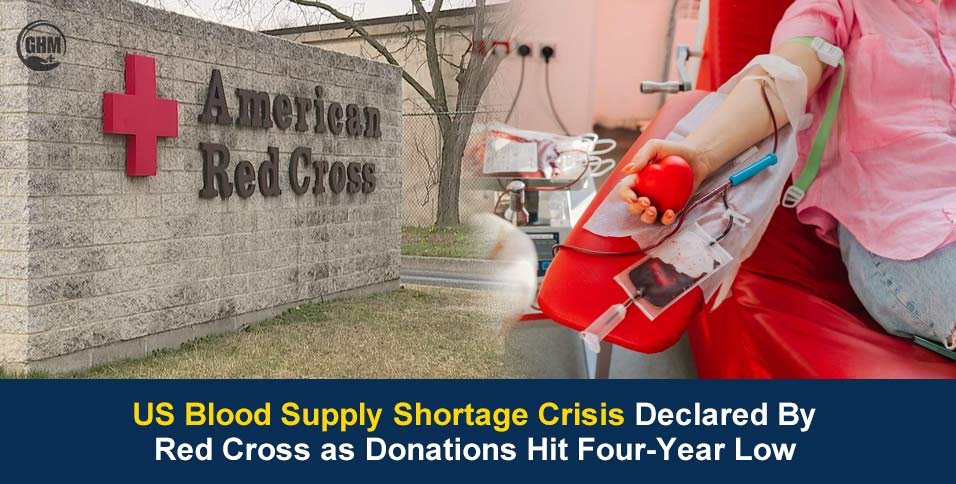
The American Red Cross has declared that the US blood supply shortage crisis has reached a critical point, the second in its history. The US blood donations have fallen to a four-year summer low, leaving hospitals across the country with dangerously limited supplies of lifesaving blood. The shortage is especially severe for type O blood, forcing the Red Cross to limit distributions to hospitals while urging eligible donors to give blood immediately.
According to the American Red Cross, it currently has less than a one-day national supply of type O positive blood, the blood type most commonly used in emergencies and routine medical care. The organization warns that if donations do not increase quickly, patients requiring surgeries, trauma care, cancer treatments, and emergency transfusions could face delays in receiving critical care.
Chris Hrouda, President of Red Cross Biomedical Services, emphasized the urgency of the situation, saying, “Every donation has the potential to help save lives, and we urgently need everyone who is eligible to make an appointment to give blood as soon as possible.”
What Is Causing the US Blood Shortage in 2026?
Several overlapping factors have contributed to the US blood shortage in 2026, making this year’s decline more severe than usual.
1. Seasonal Drop in Donations
Summer has historically been one of the most challenging periods for blood collection organizations. School breaks, family vacations, and fewer workplace blood drives reduce the number of available donors, even as hospitals often experience an increase in trauma cases.
2. Extreme Weather and Public Health Challenges
This year, environmental conditions have further reduced donor participation.
According to the American Red Cross,
- Extreme heat across many states
- Poor air quality in several regions
- Widespread foodborne illnesses discouraging healthy individuals from donating
Together, these factors have caused blood collections to fall well below the level needed to meet patient demand.
3. Rising Hospital Demand
While US blood donations have declined, hospitals continue to require large amounts of blood every day. The Red Cross noted that elevated demand during the summer trauma season has placed additional strain on already limited inventories, pushing the US blood supply shortage crisis to emergency levels.
Who Is Most Affected by the Blood Donation Shortage in USA?
The US blood supply shortage crisis is affecting patients who depend on blood transfusions every day, not just during major disasters. While hospitals are prioritizing the most urgent cases, a prolonged shortage could delay treatments for thousands of people across the country.
Patients most at risk include:
- Trauma victims injured in road accidents or other emergencies
- Cancer patients undergoing chemotherapy
- People having major surgeries or organ transplants
- Mothers experiencing serious bleeding during childbirth
- Individuals with inherited blood disorders such as sickle cell disease
How Is the American Red Cross Responding To Blood Crisis?
To help stabilize the US blood supply shortage crisis, the American Red Cross has launched an urgent nationwide appeal for blood donations. Officials estimate that just three additional donors at every blood drive this summer could help end the crisis and restore a safer blood inventory.
Red Cross supplies about 40% of the nation’s blood products, and Type O positive accounts for nearly 60% of Red Cross blood distributions because it can be transfused to about 80% of patients.
The organization is encouraging all eligible donors, especially those with type O blood, to schedule appointments as soon as possible. Even if immediate appointments are unavailable, donors are encouraged to book visits in the coming weeks to help replenish supplies.
To encourage participation in donating blood, the Red Cross is offering limited-time donor appreciation rewards:
- People who donate by July 31, 2026, receive a Fandango Movie Ticket worth up to $15.
- Those donating between August 1 and August 31, 2026, receive a $20 Amazon Gift Card by email.
At the same time, the Red Cross continues to work closely with hospitals to prioritize blood deliveries for patients facing life-threatening emergencies while carefully managing available inventories.
Following the first US blood supply shortage crisis in 2022, hospitals began scheduling much of their anticipated blood needs in advance, improving coordination across the healthcare system.