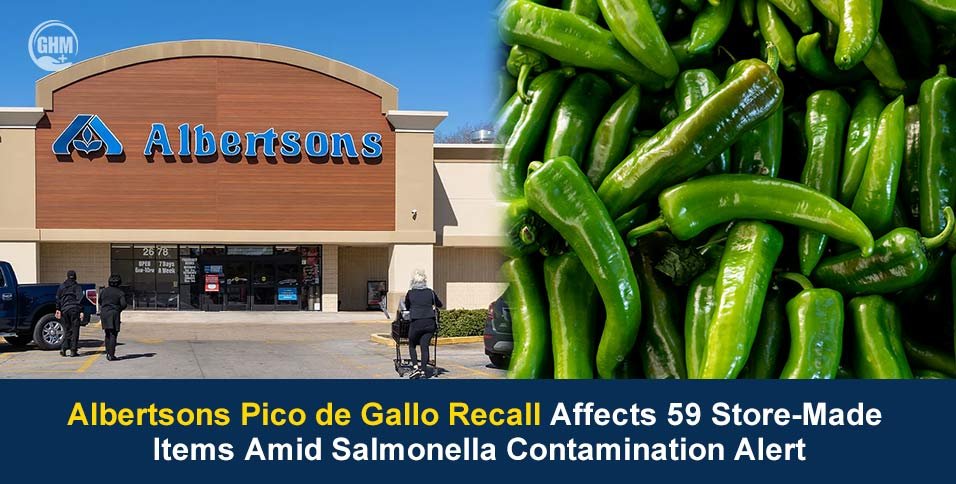
Albertsons Companies has announced the voluntary recall of its store-made products containing Pico de Gallo on August 11 after supplier Ron’s Home Style Foods recalled an ingredient due to possible Salmonella contamination. The Albertsons Pico de Gallo recall has affected 59 store-made food items made with recalled jalapeños sold at Albertsons Market, Amigos, Market Street, and United stores in Texas and New Mexico.
The Albertsons Pico de Gallo recall is part of a wider Salmonella Outbreak in USA linked to jalapeños from Sinaloa, Mexico, distributed by Coast Citrus Distributors. In the latest update by the CDC, the Salmonella outbreak reported 345 illnesses, 36 hospitalizations, and no deaths across 27 states.
The outbreak involves Salmonella, a bacterium that can cause foodborne illness. Most people infected by Salmonella experience diarrhea, fever, and stomach cramps, while symptoms usually begin six hours to six days after swallowing the bacteria. Most people recover within four to seven days.
Why Was the Albertsons Salmonella Food Recall Issued?
The Albertsons Pico de Gallo recall followed a supplier-level recall involving jalapeños used to make the pico de gallo in the affected products. This means consumers do not necessarily need to have purchased jalapeños directly to face a potential exposure; recalled peppers can also affect prepared foods that contain them.
The U.S. Food and Drug Administration (FDA) says epidemiological and traceback information identified jalapeños from Sinaloa, Mexico, distributed by Coast Citrus Distributors as the source of the multistate outbreak. The agency describes its investigation as ongoing and says downstream recalls are being conducted for products containing the recalled peppers.
Which Products Are Included in the Albertsons Food Recall?
The Albertsons Salmonella food recall covers a wide range of store-made and ReadyMeals products rather than pico de gallo alone.
Recall Albertsons items include:
- Ron Pico de Gallo
- Guacamole
- Pizza and pizza slices
- Tortas and paninis
- ReadyMeals quesadillas and enchiladas
- Salads and salsa products
- Catering and fiesta-pack items
The official notice by Albertsons Companies lists individual product descriptions, UPC numbers, and sell-through dates. Several recalled jalapeño-affected products have dates extending through August 13 or August 14, 2026.
Consumers should therefore compare their food product against the complete Albertsons Pico de Gallo recall list rather than relying only on the product name.
The Albertsons Salmonella food recall specifically affects store-made products sold in Texas and New Mexico under four store banners: Albertsons Market, Amigos, Market Street, and United.
What Should Consumers Do After the Albertsons Pico de Gallo Recall?
Consumers who purchased an item affected by the Albertsons Pico de Gallo recall should not eat it. Albertsons advises consumers to dispose of the product or return it to the store for a full refund. The company also advises anyone concerned about illness or injury to contact a healthcare provider.
The CDC also recommends cleaning items and surfaces that may have contacted recalled jalapeños with hot, soapy water or using a dishwasher. This can help reduce the risk of cross-contamination.
For questions about the Albertsons food recall and affected Albertsons products, consumers can contact Albertsons Companies Customer Service at 1-877-723-3929.
What Are The Symptoms of Salmonella?
Salmonella infection can become more serious in young children, adults aged 65 and older, and people with weakened immune systems.
Consumers should seek medical advice for severe symptoms such as bloody diarrhea, diarrhea lasting more than three days, a fever above 102°F, persistent vomiting, or signs of dehydration.
The FDA continues to investigate the Salmonella outbreak in USA and warns consumers, retailers, and food businesses not to eat, sell, or serve recalled products.
As the investigation continues, consumers should check official recall notices such as the Albertsons Pico de Gallo recall for new product information and follow food-safety guidance from public health authorities.