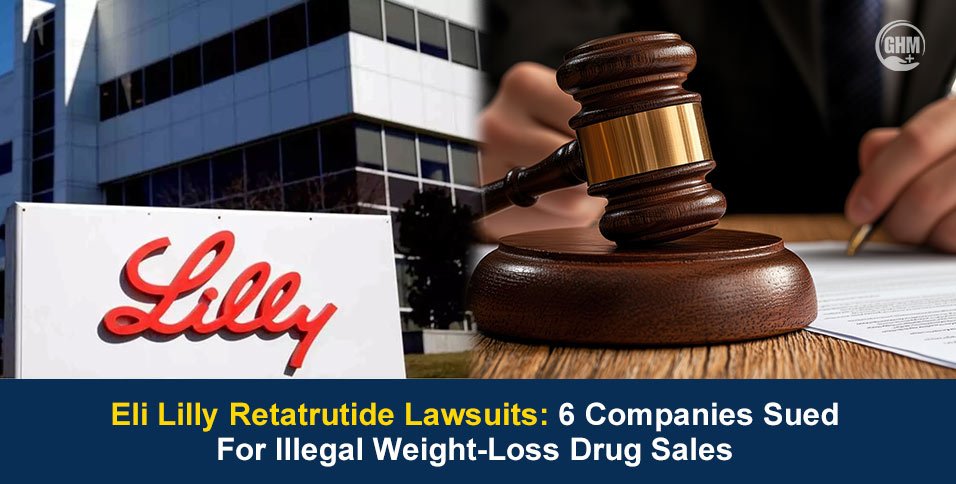
The weight-loss drug giant Eli Lilly and Company has filed six new lawsuits against U.S. businesses it accuses of illegally selling unapproved versions of retatrutide, escalating its campaign against the growing retatrutide black market. The experimental obesity drug remains in Phase 3 clinical trials and has not received regulatory approval for human use. Lilly says the Eli Lilly retatrutide lawsuits aim to protect consumers from products whose quality, safety, and contents cannot be verified.
The Eli Lilly retatrutide lawsuits target businesses that include compounding pharmacies, medical spas and online sellers that Lilly says marketed retatrutide directly to consumers, sometimes under “research-use only” labels.
Eli Lilly announced the retatrutide black market cases on August 12, 2026, while also calling on online platforms, payment companies, shipping firms and regulators to help stop illegal retatrutide sales.
Which Companies are Sued in Eli Lilly Retatrutide Lawsuits?
The Eli Lilly retatrutide lawsuits for illegal sales involve six U.S. entities:
- Aesthetic Envy Cosmetic Centers LLC, also known as Aesthetic Envy, in California
- Astra LLC, doing business as Astra Peptides, in Texas
- Legendary Peptides LLC in Texas
- Striker Pharmacy LLC in Texas
- Texas Peptides Inc. in Texas
- Lone Star Peptide Co. in Texas
Eli Lilly alleges these companies sold unauthorized retatrutide products for human use. However, allegations have not been proven in court. Eli Lilly has previously pursued litigation involving unauthorized versions of its obesity medicines, making the latest lawsuits part of a broader effort to challenge unapproved products.
How Is Eli Lilly Fighting the Retatrutide Black Market?
Eli Lilly’s weight-loss drug retatrutide is an investigational medicine, meaning researchers are still evaluating its safety and effectiveness. It is currently being studied in Phase 3 trials for obesity, type 2 diabetes, and related conditions.
Retatrutide has generated substantial interest because it acts on three hormone pathways: GLP-1, GIP and glucagon. This makes it different from medicines that target only one or two of these pathways.
No regulatory agency has approved a retatrutide-containing medicine for human use. The U.S. Food and Drug Administration (FDA) has also stated that unapproved retatrutide cannot legally be compounded and warned that the research products may be of unknown quality and potentially harmful.
Lilly Chief Medical Officer David Hyman said “the company takes responsibility for evaluating its investigational medicines seriously”, adding that what is being sold on the black market is “entirely unverified, unapproved and not worth the risk.”
This regulatory distinction is important for retatrutide regulatory approval and consumer safety. Online availability does not mean that a drug has received regulatory clearance.
Lilly Calls for Wider Action Against Illegal Retatrutide Sales
The Eli Lilly obesity drug lawsuit now extends beyond the courtroom. Lilly is asking:
- Social media and e-commerce platforms to block illegal listings.
- Credit-card companies and payment processors to stop supporting unauthorized sellers.
- Shipping and logistics companies to disrupt distribution.
- Regulators and law enforcement agencies to strengthen enforcement.
- Healthcare professionals to warn patients about the potential risks of illegal retatrutide sales.
Eli Lilly says these measures are necessary because online sellers can reach consumers rapidly, including people seeking new obesity treatments.
How Is The Black Market For Weight-Loss Drug Expanding?
Eli Lilly retatrutide lawsuits are extending beyond the six newly named defendants. Lilly said it has referred more than 200 individuals and entities to the FDA, the U.S. Department of Justice, state attorneys general, law enforcement agencies, and professional licensing boards.
The company also reported more than 14,000 websites, advertisements, social media posts and product listings that allegedly marketed retatrutide illegally across more than 100 countries.
The wider market has also drawn attention from U.S. Customs and Border Protection. The agency intercepted more than 690 shipments containing over 31,000 units of illicit GLP-1 drugs during fiscal year 2025. In July alone, interceptions increased to more than 1,400 shipments involving nearly 90,000 vials.
What Happens Next in the Eli Lilly Retatrutide Lawsuits?
The six Eli Lilly retatrutide lawsuits will proceed through the U.S. legal system, while the company continues working with regulators and law enforcement to address unauthorized sales. The company also expects retatrutide’s regulatory development to remain a major focus as clinical testing progresses.
For consumers, it is important to note that retatrutide is not currently an approved weight-loss medicine. Products marketed online as retatrutide should not be assumed to have the same quality, safety, or manufacturing standards as an approved prescription drug.