Heel pain is a common foot and ankle issue that can make walking and daily activities difficult. Whether you feel a sharp pinch of heel pain in the morning or a dull ache in your feet after a long day, discomfort can occur underneath, behind, or all around the heel.
The causes of heel pain can range from repetitive strain and footwear problems to structural injuries and nerve-related conditions. While plantar fasciitis is widely recognized as one of the most frequent causes of heel pain, it is far from the only possibility. The exact location, timing, and specific type of pain you experience provide essential clues about the underlying problem.
In this guide, you’ll get to know the 7 causes of heel pain, how to manage them, and how to prevent them.
What Is A Painful Heel?
Pain around the heels means the heel feels sore, sensitive, or painful when pressure is applied or when your foot bears weight. Heel discomfort may develop suddenly without a clear injury or manifest gradually over time.
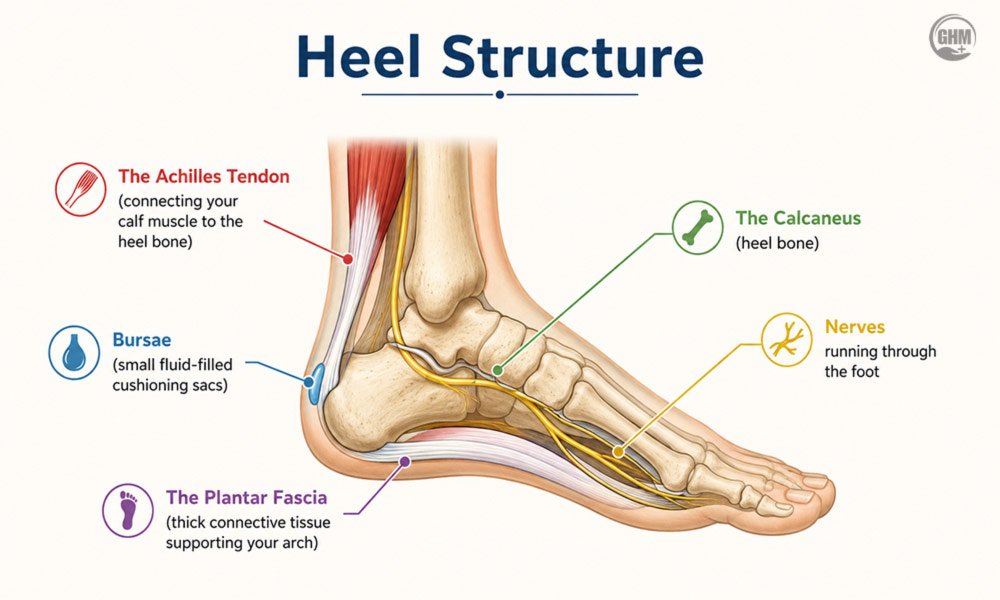
The heel contains several complex structures that can become irritated or injured.
Paying attention to the precise location of your discomfort helps distinguish between various causes of heel pain.
What Are the Most Common Causes of Heel Pain?
1. Plantar Fasciitis
Plantar fasciitis is one of the most common causes of heel pain. About 1 in 10 people will experience plantar fasciitis during their lifetime. Over 2 million people are treated for plantar fasciitis heel pain annually in the U.S. alone.
Plantar fasciitis involves inflammation and microscopic tears in the plantar fascia, the thick band of tissue running across the bottom of your foot.
Plantar fasciitis pain is typically sharp or stabbing underneath the heel and is notably worst during the very first steps in the morning or after sitting for a long period. Movement can temporarily ease the discomfort, but the pain often returns intensely after prolonged standing or heavy activity.
Common triggers of plantar fasciitis heel pain include high-impact sports like running or jumping, exercising on hard surfaces (such as concrete), and prolonged standing.
2. Achilles Tendinitis
Unlike plantar fasciitis, Achilles tendinitis affects the back of the heel rather than the sole. Achilles tendinitis heel pain involves irritation or overuse of the Achilles tendon, which is the body’s longest and strongest tendon.
Typical signs of heel pain caused by Achilles tendinitis include dull aches, stiffness, tenderness, and swelling right at the back of the heel and lower ankle.
Achilles tendon heel pain is frequently seen in runners and basketball or tennis players, and is triggered by a sudden increase in repetitive, high-impact movement. About 24% of lifetime athletes experience an Achilles tendon issue.
3. Heel Bruise or Fat-Pad Injury
One of the main causes of heel pain is a heel bruise or fat-pad injury. Stepping forcefully on a hard or sharp object can bruise the specialized fat padding underneath the heel. You might not see any visible discoloration or external bruising, but your heel will feel tender both when walking and sometimes even while resting. Repeated impact on the heel can wear down this natural shock absorber over time.
4. Stress Fracture of the Heel
A stress fracture can be one of the causes of heel pain. A stress fracture consists of tiny, hairline cracks in the heel bone caused by repetitive, cumulative force rather than a single traumatic event.
Heel pain due to a stress fracture can develop gradually along the bottom, sides, or back of the heel. It typically intensifies during physical activity and improves with rest. Runners and individuals with low bone density are especially susceptible.
5. Bursitis
Bursae are small fluid-filled sacs that cushion joints to allow smooth, friction-free movement. When these sacs swell and become inflamed, they cause a tender, bruise-like feeling, warmth, or swelling typically located at the back of the heel. Prolonged standing and shoe friction heavily contribute to heel bursitis pain.
6. Heel Spurs
A heel spur is a bony projection that can form on the heel bone over time, leading to heel pain. Contrary to popular belief, heel spurs themselves are rarely the primary causes of heel pain. Instead, they develop alongside chronic soft-tissue strain, and the discomfort usually stems from the surrounding irritated tissue rather than the bone growth itself.
7. Nerve-Related Heel Pain
Nerve involvement produces a distinct sensation in the heel compared to mechanical foot strain. Conditions like tarsal tunnel syndrome cause burning, electrical, shooting, or radiating pain that travels toward the arch or toes. Tingling, numbness, or a “pins and needles” feeling in the heel often accompany nerve compression.
8. Other Heel Pain Causes to Consider
- Haglund’s deformity: A bony enlargement at the back of the heel (sometimes called a “pump bump”) that becomes aggravated by stiff shoe counters.
- Sever’s disease: A growth-plate inflammation affecting active children, particularly between the ages of 8-14, due to running and jumping.
- Arthritis: Joint inflammation in the foot and ankle can contribute to localized heel discomfort.
- Fat-pad atrophy: Natural thinning of the heel’s cushioning fat pad, which increases direct pressure on the bone.
What Can Trigger or Worsen Heel Pain?
Various external stressors and biological factors can trigger or worsen heel pain, including:
- A sudden spike in running, walking intensity, or training mileage
- Spending long hours standing or walking on unyielding surfaces like concrete
- Wearing worn-out athletic shoes or footwear that lacks proper arch support and cushioning
- Walking barefoot frequently on hard indoor floors
- Tight calf muscles or restricted ankle mobility
- Inherent structural traits like flat feet or high arches
- Carrying excess body weight, which scales up mechanical pressure on the heel
How Do Doctors Diagnose Heel Pain?
An accurate heel pain diagnosis ensures you receive targeted treatment rather than guessing. A healthcare provider or podiatrist typically utilizes:
- Symptom History: Evaluating when your heel pain occurs, how long it has lasted, and what triggers it.
- Physical Examination: Assessing the heel pain locations, foot mechanics, and joint flexibility.
- Imaging Tests: X-rays are frequently used to check for bone spurs, stress fractures, arthritis, or structural misalignment. Ultrasounds or MRIs may occasionally be ordered to inspect soft-tissue damage.
Conditions like plantar fasciitis can frequently be diagnosed entirely through physical evaluation and symptom patterns without expensive testing.
How Can Heel Pain Be Treated?
Most problems with heel pain improve over time with consistent, conservative care, and surgery is rarely necessary.
At-Home Heel Pain Treatment
- Rest: Reduce high-impact activities and give your feet time to recover.
- Ice Therapy: Apply cold packs or roll your foot over a frozen water bottle for 15 to 20 minutes to calm inflammation.
- Stretching: Perform gentle calf and plantar fascia stretches daily to improve flexibility.
- Supportive Footwear: Avoid walking barefoot entirely; wear structured, cushioned shoes or supportive indoor slippers.
- Orthotics: Use over-the-counter arch supports or custom orthotic inserts to redistribute weight evenly across your foot.
Professional Heel Pain Treatments
If home care does not resolve your discomfort, medical treatments for heel pain may include:
- Targeted physical therapy regimens and massage therapy
- Athletic taping or specialized night splints to keep tissue elongated overnight
- Short-term nonsteroidal anti-inflammatory drugs (NSAIDs)
- Medical immobilization using a walking boot for severe inflammation
- Corticosteroid injections or advanced regenerative therapies for stubborn cases
When Is Heel Pain Serious?
While most heel discomfort resolves with time, certain heel pain requires prompt medical evaluation:
- Persistent heel pain despite weeks of rest and home care
- Severe pain that makes regular walking or bearing weight difficult
- Intense localized swelling, warmth, redness, or rigidity
- Sharp, sudden heel pain following an acute injury or fall
- Signs of infection (such as fever or spreading redness)
- Persistent numbness, tingling, or burning sensations
How To Prevent Heel Pain?
Proactive habits can stop recurring foot discomfort before it starts. Consider these heel pain prevention measures,
- Wear properly fitted, supportive footwear suited to your specific activities
- Replace athletic shoes every 300 to 500 miles
- Stretch your calves and feet before and after exercising.
- Increase workout intensity gradually using safe progression models
- Maintain a healthy body weight to minimize structural strain on your lower
End Note
There are many causes of heel pain, with several possible sources, ranging from mechanical strain and footwear issues to structural injuries and nerve conditions. Analyzing your pain location, timing patterns, and daily triggers provides useful clues, but it cannot replace a professional medical diagnosis.
Fortunately, most cases of heel pain improve successfully without surgery when diagnosed and managed appropriately. Ignoring persistent discomfort or rushing back into high-impact activities too quickly can turn a minor issue into a chronic problem that requires a much longer recovery.
If your foot pain persists, worsens, or interferes with your daily life, an evaluation with a healthcare professional to identify the root cause and restore your comfort.
Frequently Asked Questions
- How long does it typically take for plantar fasciitis to heal?
Plantar fasciitis healing typically takes several weeks to a few months along with consistent conservative treatment, such as stretching, supportive orthotics, and activity modification.
- What is better between heel cups and orthotics?
Heel cups can help cushion direct impact and relieve localized fat-pad bruises, but full-length orthotics are usually more effective for conditions like plantar fasciitis because they support the entire arch and improve overall foot mechanics.