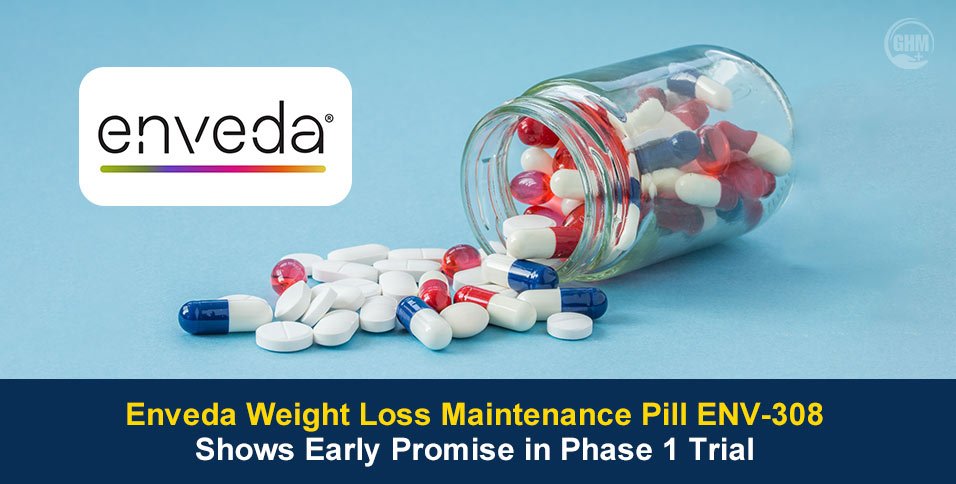
The biotechnology company Enveda’s ENV-308 pill, which mimics the effects of exercise and helps maintain weight, has shown encouraging early safety results in its first human trial. This Enveda weight loss maintenance pill will potentially open a new approach to long-term weight management.
Enveda’s ENV-308 pill is an investigational oral drug designed to mimic the activity of Lac-Phe, a molecule the body produces during intense exercise. The ENV-308 Phase 1 trial involved 88 healthy adults and found no serious adverse events, treatment discontinuations, or dose interruptions. Enveda now plans a Phase 2 study to determine whether the ENV-308 drug can help people maintain weight after stopping GLP-1 medicines.
Enveda Weight Loss Maintenance Pill Targets Exercise Chemistry
ENV-308 is a daily oral small-molecule drug designed to reproduce some biological effects of exercise. It targets Lac-Phe, a pseudo-dipeptide hormone released during high-intensity exercise and after meals.
Researchers have linked Lac-Phe to appetite suppression and metabolic regulation in animal studies. However, natural Lac-Phe remains in the body for too short a time to work effectively as a conventional medicine. Enveda used its AI-powered PRISM platform to identify the pathway and engineered ENV-308 to mimic Lac-Phe in a form suitable for daily oral treatment.
Enveda CEO Viswa Colluru described the approach as an attempt to “put the chemistry of exercise into a daily tablet.”
ENV-308 Phase 1 Trial Shows Favorable Safety Results
The ENV-308 Phase 1 trial primarily assessed safety, tolerability, and how the drug behaves in the body rather than whether it causes weight loss.
Among the 88 healthy volunteers, Enveda reported:
- No serious adverse events
- No treatment discontinuations
- No dose interruptions
- Favorable gastrointestinal tolerability across the tested dose range
- Reductions in circulating leptin levels
Leptin is a hormone produced by fat cells that helps the brain regulate appetite and energy stores. People with obesity can develop leptin resistance, meaning the brain becomes less responsive to the hormone.
The ENV-308 Phase 1 trial found the largest reductions in circulating leptin among participants who started with the highest leptin levels relative to their sex. Enveda considers this an exploratory biological signal that requires further investigation.
Enveda Weight Loss Maintenance Pill & Weight Loss
The Enveda Phase 1 study took place in healthy volunteers and was not designed to measure changes in body weight, body composition, or other metabolic outcomes. Therefore, the current findings do not establish that ENV-308 causes weight loss in humans.
Enveda Weight Loss Maintenance Pill Could Target GLP-1 Obesity Patients
The main opportunity for Enveda’s ENV-308 pill lies in weight maintenance after GLP-1 treatment.
GLP-1 medicines have transformed obesity treatment, but maintaining weight after stopping therapy remains a challenge. Enveda wants to determine whether ENV-308 can help preserve weight loss and other metabolic benefits after patients discontinue GLP-1 medicines.
Preclinical studies provide part of the rationale. In animal models, ENV-308 preserved lean muscle during weight loss and prevented weight regain after weight-loss treatment ended. Researchers also observed potential additive effects when the compound was combined with GLP-1 therapy. However, these findings remain limited to animal studies and have not been established in humans.
Enveda itself cautions that clinical development carries substantial uncertainty and that preclinical findings may not predict human outcomes.
Next Step for the Enveda Weight Loss Drug
Along with the Enveda weight loss maintenance pill, the company also plans to explore ENV-308 for conditions where exercise may provide benefits, including migraine, inflammatory bowel disease, and polyendocrine metabolic ovarian syndrome (PCOS).
For now, ENV-308 remains an investigational drug and is not approved by any regulatory authority. Its Phase 1 results provide an early safety signal, but future clinical trials must show whether the exercise-inspired mechanism can translate into meaningful, durable benefits for people managing obesity.