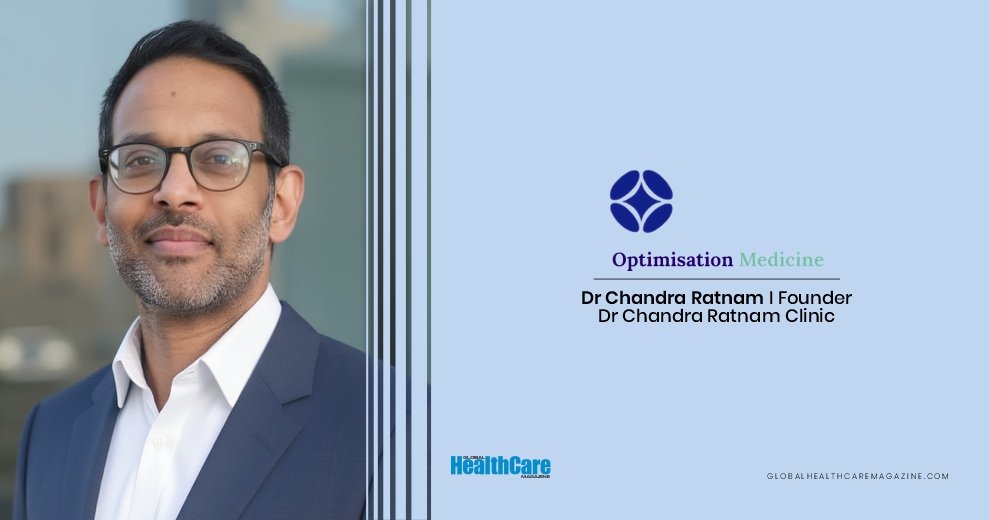
A familiar pattern can emerge in chronic disease care. A patient returns with the same symptoms, the prescription is adjusted, and the dosage goes up. The immediate problem may settle, but the reason it keeps returning often remains untouched. That pattern became difficult to ignore for Dr Chandra Ratnam, Founder of Dr Chandra Ratnam Clinic. A UK-trained, GMC-registered medical doctor, he is a doctor specialising in acute and internal medicine with 15 years of experience working in NHS hospitals across London. He has also spent more than 15 years working with the pharmaceutical industry, advising on clinical research, medical governance, drug safety, and commercial compliance. His work has taken him through the full life of a medicine, from early development and research to licensing and, eventually, its use by patients.
Yet it was his time in the clinic that pushed him toward a different question: What if treating the symptoms was not enough? He had begun seeing the same patients return repeatedly, often with another prescription or a higher dose, while the factors driving their illness went largely unexamined. “Why is the root cause of the symptoms not being addressed?” he found himself asking.
That question led him toward lifestyle medicine and chronic disease management, with a focus on prevention and the factors that shape long-term health. More importantly, it changed what he believed was possible. Through medically supervised management and a focus on root causes, he has worked to show that some common chronic conditions do not have to be treated as a life sentence. In the right circumstances, they can be reversed.
When Prevention Became Personal
Some medical decisions begin in the clinic. Others begin much closer to home. For Dr Ratnam, the decision to build his own practice was shaped by both. He lost his father to a preventable heart attack at a young age. That experience gave greater weight to a belief he had developed: prevention should come before treatment whenever possible.
The clinic was built around that principle. Rather than treating diabetes, hypertension, and other chronic conditions as unavoidable companions of ageing, he wanted to question what was driving them. His approach begins when a patient presents with symptoms. Instead of moving straight to medication, he looks at lifestyle and the factors contributing to the condition.
The aim is to address what is driving a patient’s symptoms and condition, rather than simply managing the resulting numbers or escalating treatment. His experience has shown that, with appropriate medical supervision, most lifestyle-driven conditions can be reversed and medication can be reduced or stopped safely when the underlying cause has been properly addressed.
Looking Beyond the Numbers
Chronic disease rarely comes down to a single number on a blood test. The more useful question is what sits behind it. That thinking shapes the Health Reset Programme, where Dr Ratnam builds each treatment plan around the individual rather than applying a fixed protocol. A patient’s blood results, physiology, lifestyle, and conventional medical history all form part of the picture.
He takes an extensive blood panel and interprets it through a different lens from conventional practice, looking for patterns that may point toward the underlying causes of symptoms rather than treating isolated markers on their own. Those findings then guide a treatment plan aimed at the factors actually driving the patient’s condition.
The process does not end when the patient feels better. At discharge from the Health Reset Programme, testing is repeated to establish whether the changes are clinically meaningful. For Dr Ratnam, improvement should not simply be something a patient feels. It should also be something the results can demonstrate.
Where Change Begins
Lifestyle medicine asks patients to change more than what they eat. Nutrition, physical activity, sleep, stress management, and behaviour all matter, and Dr Ratnam introduces these pillars during the pre-programme consultation. But in his experience, one of them often sets the rest in motion. “Nutrition is the pivotal lever for outcomes,” he says.
The Health Reset Programme therefore places personalised nutrition at the centre of the early work. Patients receive a plan shaped around their individual needs and follow it under close supervision. The aim is to make change practical enough to sustain, while giving patients a clear sense of progress.
That progress can come sooner than many expect. Patients typically begin reporting improvements in their symptoms by the third week of the programme. Once they see those changes for themselves, they often find it easier to bring the other lifestyle factors into place. He believes momentum builds on itself once nutrition is right.
Making Change Understandable
Sustainable change becomes easier when patients understand what they are changing and why. That is why education sits at the centre of Dr Ratnam’s approach. Before asking patients to alter their routines, he takes time to understand how they currently live, eat, sleep, and manage stress.
That was not always possible in conventional clinical practice. Consultations often left little room to explain why symptoms were happening or what could be done about them. The Health Reset Programme was designed to close that gap.
Instead of sending patients away with a prescription and a leaflet, the programme provides ongoing support as they make changes. Patients are continually educated, monitored, and reassured throughout the process.
There is also no shortage of health advice today. Much of it changes with the latest trend. Drawing on two decades as a doctor, he helps patients separate useful guidance from noise and focus on evidence-based recommendations. That level of medical supervision gives patients something equally important: confidence in the process.
Accountability Beyond the Consultation
Long-term health changes rarely happen in a single consultation. For patients managing chronic conditions, the harder part is often staying consistent when progress slows, or everyday life gets in the way. Dr Chandra Ratnam’s approach is designed to keep that connection going.
Patients have direct messaging access to him seven days a week, from 6 a.m. to 10 p.m., alongside a weekly virtual consultation. This gives him a clearer view of how each patient is progressing and allows him to adjust the treatment plan when needed, rather than waiting for a routine follow-up to discover that something has gone off track.
“That level of contact keeps patients genuinely committed and accountable to the outcomes they’ve set out to achieve,” he says. He also encourages family members to join the weekly consultations. For him, lasting change should not stop at the clinic door. When patients have people at home who understand what they are working toward, they have another layer of support while receiving medical guidance throughout the programme.
Where Evidence Meets Lifestyle
Lifestyle medicine does not mean stepping away from conventional medicine. For Dr Ratnam, the two have to work together. Evidence-based medicine remains the foundation of how he monitors patients and makes decisions throughout the programme.
That becomes particularly important when a patient’s health begins to improve. As underlying markers change, medication may need to be reduced or discontinued. Those decisions are not based on a fixed timeline or on how a patient feels alone. They are guided by what repeated clinical results show.
This creates a careful balance. Lifestyle intervention drives the changes, while medical evidence determines how and when treatment should be adjusted. “Lifestyle change drives the improvement, but evidence-based monitoring is what makes it safe to act on,” he says.
The approach therefore uses lifestyle intervention alongside medical monitoring, allowing treatment decisions to evolve with the patient’s measurable progress rather than replacing conventional clinical care.
Rethinking What Chronic Disease Means
When patients first reach out to the clinic, Dr Ratnam often encounters a surprising obstacle before treatment even begins: disbelief. Many find it hard to accept that modest, sustainable changes can have a meaningful effect on a condition they have come to see as permanent.
There is also an assumption that lifestyle medicine means punishing exercise routines or strict calorie counting. His approach is almost the opposite. He encourages patients to eat enough of the right foods to feel satisfied, while building gentle, sustainable physical activity into their lives.
He also asks patients to think differently about when chronic disease begins. Conditions such as diabetes may become visible later in life, but the underlying trajectory can develop over many years, often beginning in a person’s twenties and accumulating through years of lifestyle factors.
Addressing those factors early can change that trajectory. In his experience, the right interventions can delay, manage, and sometimes reverse lifestyle-driven conditions. The earlier those changes begin, the better the chance of avoiding medication later in life.
When Patients Can See the Difference
Data can make lifestyle change more personal when patients can see what is happening inside their own bodies. That is the role technology plays in the Health Reset Programme.
At the start of the programme, every patient is fitted with a continuous glucose monitor, or CGM, which tracks blood sugar levels in real time. The information gives him a clearer picture of how different foods affect each patient, helping him identify where they may be struggling and refine their treatment accordingly.
But the data is not just for the clinician. Patients can see the changes themselves as they happen. A meal that seemed harmless can produce a very different response than expected. That visibility can turn an abstract health recommendation into something immediate and personal.
Rather than simply being told what to eat, patients begin to understand their own responses. In his experience, that real-time feedback builds awareness and mindfulness, making healthier choices easier to understand and, ultimately, easier to sustain.
From Lifestyle Management to Health Reset Medicine
For Dr Ratnam, the clinic’s biggest achievement is not a single patient outcome. It is the evolution of the model itself. He describes the approach as Health Reset Medicine, taking patients beyond lifestyle management into genuine, clinically monitored reversal.
The results offer a measure of what that means in practice. Patients with type 2 diabetes and pre-diabetes have achieved reversal and come off medication entirely. Every patient presenting with hypertension has normalised their blood pressure and discontinued treatment. Patients have also stopped antihypertensive, reflux, and migraine medications following improvement.
The changes extend beyond prescriptions. Patients have lost an average of 9 kilograms and 11 centimetres from their waist, while triglycerides have fallen by as much as 80 per cent. Liver enzymes have normalised in every patient who began with elevated levels, while most have seen CRP return to optimal levels.
Patients with long-standing reflux have discontinued PPI medication with complete resolution of their symptoms, while those with chronic migraine have been able to stop medication entirely, with complete or substantial improvement in symptoms. Patients also consistently report higher energy, better sleep and mood, improved skin and hair, and, for those experiencing perimenopause, meaningful symptom improvement. Building on these outcomes, Dr Ratnam has also launched a dedicated perimenopause and menopause arm to the programme.
Making Prevention Part of Healthcare
Healthcare systems are built to respond when disease appears. Prevention, by comparison, often has less time and fewer resources behind it. Dr Ratnam believes that needs to change, particularly when managing conditions that develop over years.
His experience has given him a view from both sides. He has worked in NHS practice and spent more than a decade advising the pharmaceutical industry on how medicines move from development to patients. From both perspectives, he has seen a gap between treating disease once it presents and providing the time-intensive support needed to address its underlying drivers.
He believes healthcare needs greater investment in diagnostic-led, root-cause work, including real-time monitoring, weekly clinical contact, and personalised nutrition guidance. These require more than a prescription followed by an appointment months later.
“If healthcare systems valued and funded that kind of structured, evidence-based lifestyle intervention the way they fund pharmaceutical treatment,” he says, “far more chronic disease could be prevented, delayed, or reversed.”
A Different Future for Chronic Disease
The next step for lifestyle medicine, in Dr Ratnam’s view, is not to replace conventional medicine. It is to earn a place alongside it by meeting the same standard of clinical rigour.
He calls that approach Health Reset Medicine, and his ambition is for it to become a recognised model within preventative healthcare, built around measurable and retested outcomes rather than improvement based only on how a patient feels.
That would also change how conditions such as diabetes and hypertension are understood. A diagnosis, he believes, should not automatically mark the beginning of a lifetime of increasing medication. Instead, it can mark the point at which the underlying causes are identified and addressed, creating the possibility of reversal where clinically appropriate.
“I want to see a future where a diabetes or hypertension diagnosis is treated as a starting point for reversal, not a life sentence of escalating medication,” he says.
Ultimately, his measure of impact is simple. If his work can move chronic disease management upstream, catching problems when symptoms first appear rather than years into treatment, he will have achieved what he set out to do when he left conventional practice to build his clinic.
Quotes

Also Read: Lifestyle Medicine & Chronic Disease Management 2026