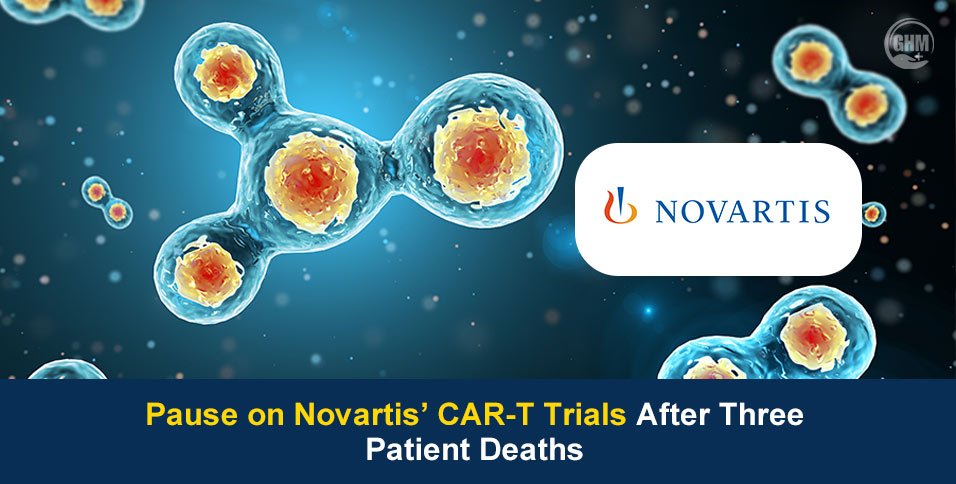
Novartis has temporarily halted eight clinical trials of its experimental CD19-targeted CAR-T therapy, rap-cel (YTB323), after three patients died from complications associated with a severe immune reaction.
The pause on Novartis’ CAR-T trials comes as researchers and drugmakers explore whether CAR-T therapies, traditionally used to treat certain blood cancers, can produce longer-lasting control of autoimmune diseases.
The Novartis CAR-T trials were testing the treatment in conditions including lupus, multiple sclerosis, rheumatoid arthritis and myasthenia gravis.
More About the Pause on Novartis’ CAR-T Trials
The Novartis CAR-T trials were placed on hold after the rap-cel program recorded three deaths linked to serious reactions due to immune effector cell-associated hemophagocytic syndrome (IEC-HS). IEC-HS is a potentially life-threatening inflammatory reaction that can occur after CAR-T treatment when engineered immune cells activate and expand rapidly.
Novartis initiated the holds on August 24, 2026, and suspended screening, randomization, and treatment administration across the affected studies. The company said it is conducting a comprehensive review of the emerging clinical and safety data.
“Patient safety remains of the highest priority,” Novartis said, adding that patients who have already received treatment will continue to be monitored according to trial protocols.
The Novartis CAR-T trial deaths therefore represent a major safety event for the company’s autoimmune cell therapy program, although they do not currently affect its cancer-focused CAR-T development.
Novartis Autoimmune CAR-T Studies Affected By The Halt
The Novartis autoimmune CAR-T program covers 8 immunology and neuroscience indications.
The pause on Novartis’ CAR-T trials is affecting the rap-cel study in:
- Systemic lupus erythematosus and lupus nephritis
- Systemic sclerosis
- ANCA-associated vasculitis
- Idiopathic inflammatory myopathies
- Rheumatoid arthritis
- Sjögren’s disease
- Generalized myasthenia gravis
- Relapsing and non-active progressive multiple sclerosis
The Novartis autoimmune cell therapy program includes Phase 2 studies as well as Phase 1/2 trials assessing safety, treatment effects and how the modified cells behave in the body.
Novartis CAR-T Safety Concerns Do Not Affect Cancer Trials
The pause on Novartis’ CAR-T trials is currently limited to its autoimmune and neurological development program. Novartis said its ongoing oncology studies of rap-cel remain unaffected.
Novartis CAR-T oncology studies are evaluating the therapy in several blood cancers, including chronic lymphocytic leukemia, small lymphocytic lymphoma, diffuse large B-cell lymphoma, adult acute lymphoblastic leukemia, and high-risk large B-cell lymphoma. The oncology program remains in Phase 1/2 development.
The CAR-T therapy is an established treatment approach for some blood cancers, while its use in autoimmune diseases remains investigational.
Bristol Myers CAR-T Trial Programme Also Faces a Pause
The CAR-T trial programme by Bristol Myers Squibb has also encountered safety-related concerns. BMS voluntarily paused enrollment in autoimmune studies of its CD19-targeted CAR-T therapy, zola-cel (BMS-986353).
The company said routine safety monitoring identified “transient and reversible inflammatory events” and that it paused enrollment “out of an abundance of caution” while it reviews clinical data.
According to reports, an earlier Phase 1 study of zola-cel had documented one IEC-HS case. The company nevertheless said the treatment’s safety profile remained consistent with the known safety profile of CAR-T therapies.
Future of CAR-T Trial for Autoimmune Therapy
CAR-T therapy modifies a patient’s own T cells so they can recognize and eliminate specific cells. In autoimmune diseases, researchers are investigating whether modified T cells can remove harmful B cells that contribute to abnormal immune activity. The goal is potentially longer-lasting disease control after a single treatment rather than repeated dosing.
Other biotechnology companies continue to study CAR-T approaches for autoimmune conditions. However, the safety reviews could influence how developers approach patient selection, manufacturing, dosing, and monitoring.
For now, the pause on Novartis’ CAR-T trials is best viewed as a significant safety review of an investigational autoimmune treatment. The immediate focus remains understanding the three fatal IEC-HS cases and determining whether and how the paused autoimmune studies can proceed.