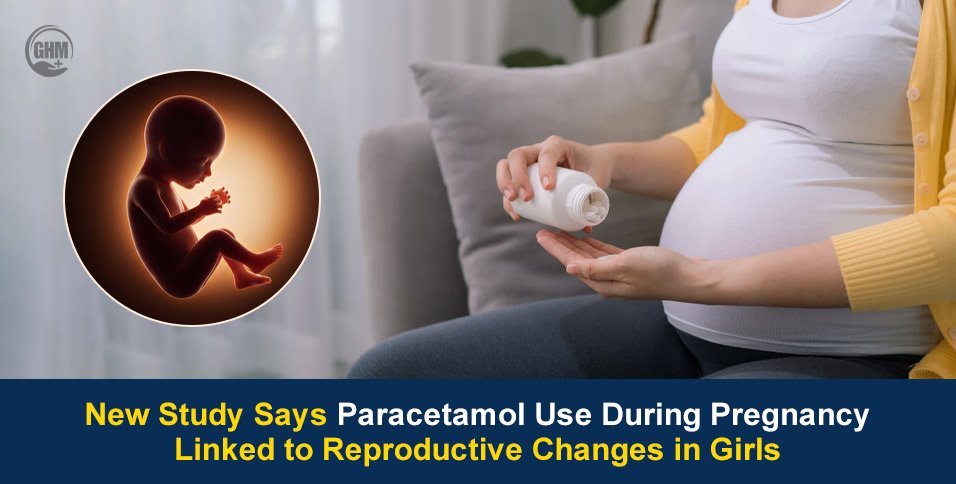
A new study has found an association between paracetamol use during pregnancy and differences in reproductive-organ development among baby girls. Researchers reported that girls exposed to paracetamol before birth had smaller ovaries and uteruses, fewer ovarian follicles and lower levels of a reproductive hormone.
However, the findings do not prove that paracetamol caused these changes, nor do they show that the girls will have fertility problems later in life. The researchers said women who have taken the medicine during pregnancy should not be alarmed.
The study was published in Human Reproduction Open and is among the first prospective human studies to examine whether the paracetamol fetal exposure may be associated with postnatal reproductive development.
Findings of The Study on Paracetamol Use in Pregnancy
Researchers from Copenhagen University Hospital–Rigshospitalet studied 685 pregnant women who enrolled during the first trimester. They tracked medication use and collected urine samples to measure paracetamol exposure.
The researchers then examined 302 baby girls at about three months of age. Among those exposed to paracetamol during fetal development, the study found:
- 40% smaller ovarian volume
- 13% smaller uterine volume
- 23% fewer ovarian follicles
- Lower levels of Anti-Müllerian hormone (AMH) among girls exposed earlier in fetal development
Ovarian follicles are structures that contain immature eggs. AMH is commonly used as a marker related to ovarian reserve, or the remaining supply of eggs in the ovaries.
None of the mothers in the study exceeded the recommended daily maximum of 4,000 milligrams, and most used the medicine for headaches or musculoskeletal pain.
Questions In The Pregnancy Pain Medication Research
The findings have raised questions about whether paracetamol and fertility could be connected, but the study cannot answer that question yet.
Girls are born with the immature egg follicles they will have throughout their lives. Researchers therefore want to determine whether differences in ovarian development during infancy could have consequences for reproductive health decades later.
The study on paracetamol use during pregnancy also examined a separate group of 1,210 girls who were followed from infancy into adolescence. In this group, fetal paracetamol exposure was associated with smaller ovaries during adolescence and smaller uteruses at puberty.
Still, the researchers did not follow participants into adulthood. They therefore cannot determine whether the observed differences will affect fertility, ovulation, ovarian reserve or the age at menopause.
Limitations To The Study On Paracetamol Use During Pregnancy
A key limitation in the study on paracetamol use during pregnancy is that this was an observational study, meaning researchers observed existing patterns rather than randomly assigning women to take paracetamol or not.
That makes it difficult to separate the effects of the pregnancy pain medication from the reasons women took it.
For example, headaches, pain, fever or infections during pregnancy could potentially influence fetal development independently of medication exposure. Researchers also acknowledged that chance findings and other differences between participants cannot be completely excluded.
It was emphasized that the research does not establish that taking painkillers during pregnancy caused the reproductive changes or indicate that the girls will experience reduced fertility.
More Caution On Paracetamol Use During Pregnancy
The new findings do not mean pregnant women should stop taking Tylenol during pregnancy or other paracetamol products without medical advice.
Paracetamol remains an important pregnancy pain medication because untreated high fever or severe pain can also create risks for the mother and developing fetus. Current guidance continues to support its use when clinically indicated. These approaches should not replace medical care when a pregnant woman has significant pain, fever or another condition requiring treatment.
Many women in the study used paracetamol for headaches or musculoskeletal discomfort rather than severe illness. For some mild problems, researchers said options such as rest, hydration, heat treatment, exercise or physiotherapy may help.
Study leader Margit Bistrup Fischer said women who have used the medicine during pregnancy “should not be alarmed” by the findings.
The researchers instead called for more informed discussions about when medication is necessary and when non-drug approaches may be appropriate.
Next Step By The Researchers
The researchers from the study say long-term follow-up is essential to determine whether the early reproductive differences have any clinical significance.
Future research needs to assess whether prenatal exposure is associated with:
- Fertility and ovulatory function
- Ovarian reserve
- Reproductive lifespan
- Age at menopause
The study also highlights the importance of examining the timing, duration and dose of exposure.
For now, the evidence shows an association, not a proven cause. The findings add to research into paracetamol use during pregnancy, but they do not establish that the medicine causes infertility or reproductive problems.
Pregnant women should discuss individual medication decisions with their healthcare professionals rather than changing treatment based on this study alone.