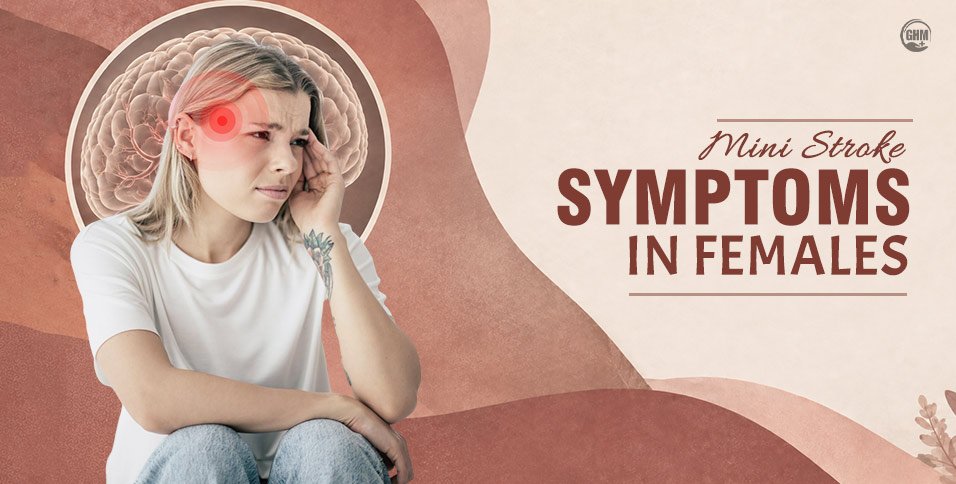
We sometimes feel sudden, strange physical sensations like a brief wave of dizziness, unusual fatigue, or a fleeting loss of balance. Most people brush it off as simple stress or tiredness. For many cases, these could be mini stroke symptoms in females that go unrecognized by most.
A mini stroke is medically called a transient ischemic attack (TIA). A TIA occurs when blood flow to part of the brain is temporarily interrupted. While the symptoms of TIA can disappear quickly, they should never be considered harmless. Crucially, a TIA serves as a vital warning sign of a future stroke. Data shows that about 1 in 3 people who experience a TIA eventually suffer a stroke, with about half of those strokes occurring within a year.
The mini stroke symptoms in women usually begin suddenly and may resolve within minutes or hours. Most symptoms of TIA disappear within an hour, although they can rarely last longer.
This article explores mini stroke symptoms in females, highlighting both classic stroke-like signs and less obvious stroke signs that women frequently experience.
Mini Stroke Symptoms in Females To Look Out For
Women can experience the classic warning signs of a TIA while also experiencing symptoms that may seem less obviously connected to a neurological emergency. Here are 10 key mini stroke symptoms in females to watch for:
1. Sudden Facial Drooping or Numbness
One side of the face may suddenly droop or feel numb. An uneven smile can be very noticeable mini stroke symptoms in females. Sudden facial changes must always be treated as an immediate medical emergency.
2. Sudden Weakness or Numbness in Arm or Leg
Sudden weakness or numbness in the arm or leg usually affects one side of the body is a mini stroke symptoms in females. It may manifest as weakness, numbness, clumsiness, or an arm drifting downward when both arms are raised. It needs immediate medical attention.
3. Sudden Speech or Language Difficulty
Individuals affected by the stroke may experience a sudden communication and language processing problem with slurred speech, difficulty finding or saying words, or trouble understanding what another person is saying.
4. Sudden Vision Changes
Blurred, double, or reduced vision, alongside sudden loss of vision in one or both eyes, can accompany a TIA. These sudden mini stroke symptoms in females require immediate professional evaluation.
5. Sudden Dizziness or Loss of Balance
Unexpected dizziness, trouble walking, and a sudden loss of coordination or balance are hallmark warning signs of mini stroke. These issues indicate sudden disruptions in brain function.
6. Sudden Confusion or Disorientation
Sudden confusion is particularly easy to dismiss or attribute to exhaustion or everyday stress. However, difficulty understanding surroundings, sudden disorientation, and trouble processing information can be mini stroke symptoms in females.
7. Sudden Memory or Awareness Problems
Women with mini strokes can experience temporary difficulty remembering information or sudden changes in general awareness and mental processing. This remains distinct from general confusion, focusing tightly on memory and cognitive processing limits.
8. Sudden Generalized Weakness or Extreme Fatigue
Women may experience general weakness that is not limited to a single arm or leg. Sudden, unexplained fatigue can be less recognizable as a neurological warning sign, making it harder to spot as a stroke.
9. Sudden Nausea or Vomiting
Nausea or vomiting may occur alongside other neurological warning signs. While nausea is not a standalone diagnosis for a TIA, sudden symptoms appearing together demand an urgent medical evaluation.
10. Sudden Seizure or Unusual Behavioral Changes
Women may experience less typical signs such as fainting, seizures, agitation, behavioral changes, or hallucinations. Because these mimic other conditions, they should never be automatically dismissed as unrelated and need immediate medical attention.
BE FAST: How to Recognize a Mini Stroke Quickly
Certain mini stroke symptoms in women can be less obviously associated with a stroke. Fatigue, nausea, confusion, fainting, or sudden behavioral shifts are frequently attributed to other health conditions like migraines, stress, or normal aging. This overlap contributes to significant delays in recognizing a neurological emergency.
Using the BE FAST framework helps everyone recognize sudden neurological symptoms efficiently.
| B | Balance | Sudden dizziness or loss of coordination |
| E | Eyes | Sudden vision changes or loss of sight |
| F | Face | Facial drooping or numbness, uneven smile |
| A | Arm | Sudden weakness or numbness, drifting arm |
| S | Speech | Slurred or difficult-to-understand speech |
| T | Time | Call emergency services immediately |
Experts recommend calling emergency services immediately when these mini stroke symptoms in females appear. Swift action saves brain tissue.
If Mini Stroke Symptoms Disappear
Never assume the danger has passed just because stroke symptoms have resolved. Call local emergency services immediately. Treat sudden stroke-like symptoms as an absolute emergency because it is initially impossible to distinguish a TIA from an active stroke. Rapid evaluation matters greatly, as the underlying physical cause remains active and could trigger a major stroke.
What Happens After a Suspected TIA
Following an emergency evaluation, doctors work to identify the underlying causes of stroke in women and reduce future risks. A standard stroke diagnosis includes:
- Reviewing detailed symptoms and personal medical history
- Performing brain imaging such as a CT or MRI scan
- Conducting vascular imaging of blood vessels in the head and neck
- Scheduling heart evaluations, such as an EKG
- Running blood tests to identify metabolic or clotting risk factors
Mini Stroke vs. Stroke: What Is the Difference?
| TIA / Mini Stroke | Full Stroke |
| Symptoms are temporary | Symptoms may persist |
| Symptoms typically resolve quickly | Can cause lasting neurological damage |
| Requires urgent evaluation | Requires immediate emergency treatment |
| Serves as a warning of future risk | Can cause permanent brain injury |
Temporary symptoms do not make a TIA harmless; it remains a critical warning indicator.
How Women Can Reduce Future Stroke Risk
Stroke prevention is possible for women by implementing these steps:
- Monitoring and managing blood pressure regularly
- Managing cholesterol and diabetes closely with medical guidance
- Avoiding smoking entirely
- Staying physically active and maintaining a healthy body weight
- Treating conditions like atrial fibrillation
- Attending regular medical checkups
End Note
Mini stroke symptoms in females encompass both classic stroke signs and less typical presentation indicators. Sudden appearance of these symptoms remains a warning that your health demands attention.
Remember that symptoms disappearing does not eliminate the emergency. The underlying problem may still require medical attention, and timely assessment of suspected TIA symptoms in women can help healthcare professionals determine what happened and identify ways to lower future risk.
If you suspect that you or someone else has experienced a mini stroke, seek emergency medical care immediately. Early action can provide an opportunity to investigate the cause, begin appropriate prevention, and potentially reduce the likelihood of a more serious event.
(Disclaimer: This blog is for informational purposes only. Always consult a healthcare professional for personalised advice.)
Frequently Asked Questions
- Can you fully recover from a mini stroke?
Yes, most people recover fully from a mini-stroke, also called a transient ischemic attack or TIA. The symptoms usually last from a few minutes to a few hours and resolve completely within 24 hours. A small group of people still feel tired, weak, or slightly unfocused for weeks or months after a mini stroke.
- What foods should I avoid after a mini stroke?
After a mild stroke, you must avoid foods high in salt, unhealthy fats, and sugar to protect your blood vessels and lower your risk of another stroke.