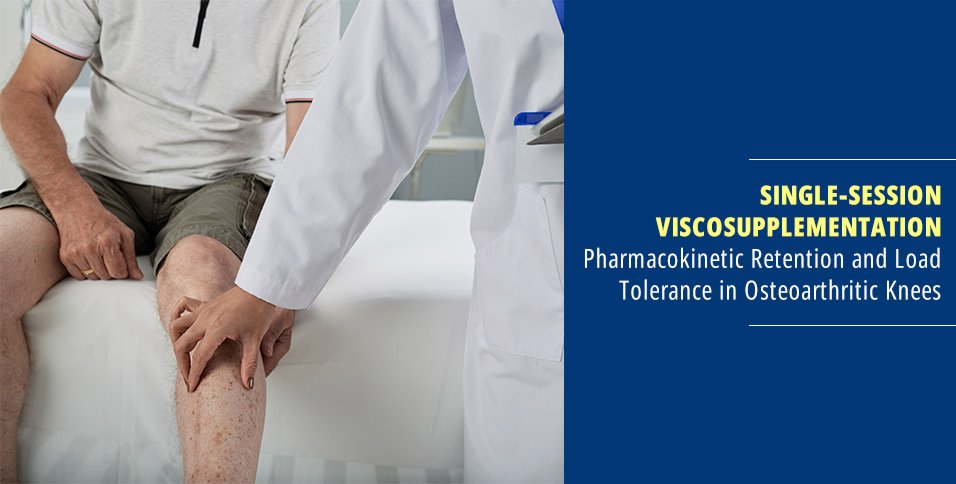
Joint degeneration changes everything about how a knee responds to physical pressure. Inside a healthy joint, the native fluid acts as both a lubricant and a shock absorber, shifting its physical properties depending on how fast or hard the joint moves. Knee osteoarthritis breaks that dynamic down. As inflammation sets in, endogenous high molecular weight hyaluronic acid degrades into smaller, less effective fragments. The fluid thins out, losing its ability to cushion impact during daily activity. Rebuilding that internal environment is where intra-articular hyaluronic acid interventions come into play.
Modern therapeutic approaches have moved away from older protocols that required patients to return every week for three to five consecutive weeks. Single-injection viscosupplementation offers a concentrated alternative designed to restore joint function in one visit. Achieving long-term relief with a single dose presents a specific biophysical challenge: the compound must resist rapid clearance by the body’s natural enzymes while providing immediate physical support under heavy mechanical stress.
Biomechanical Breakdown of the Osteoarthritic Joint
The mechanics of cartilage degeneration are tied directly to loss of viscoelasticity in the fluid matrix. When walking, the fluid must act as a lubricant to reduce friction between moving surfaces. During high-impact movements like jumping or running, the fluid needs to behave like an elastic solid, absorbing force to prevent bones from colliding.
In a degraded joint, native hyaluronidase degradation occurs at an accelerated pace. Enzymes actively clip the long polysaccharide chains that give the fluid its structure, drastically reducing hyaluronic acid molecular weight. Without that heavy structural network, the fluid cannot maintain proper boundary lubrication. Microscopic surface friction increases, accelerating wear on the remaining articular cartilage and sending pain signals through the subchondral bone.
Rheological Properties and Structural Modification
Linear, unmodified polymers do not last long inside the joint space. Un-cross-linked molecules are cleared through the lymphatic system within hours or a couple of days at most. Extending hyaluronic acid residence time in the joint requires chemical modifications that allow the structure to resist enzymatic breakdown while maintaining biocompatibility.
Chemical cross-linking creates a three-dimensional matrix. By tying individual polymer chains together, manufacturers slow down the rate at which native enzymes can break the compound apart. This structural stability directly alters how the material responds to mechanical force, allowing it to maintain synovial fluid viscoelasticity over extended periods under weight-bearing conditions.
Among these advanced structural formulations, non-animal stabilized hyaluronic acid (NASHA) stands out for its high density and structural integrity. Formulations using this technology create a durable gel matrix without relying on animal-derived tissues, minimizing the risk of adverse immune reactions. Durolane utilizes this specific stabilization process to deliver a single-session therapy with high structural resistance. By combining a dense polymer network with a high molecular weight, Durolane resists rapid breakdown inside the joint capsule. This structural resilience helps maintain physical separation between worn cartilage surfaces during routine physical activity. Healthcare facilities looking to maintain steady inventory for orthopedic procedures often explore options like Durolane bulk purchasing for clinics to manage supply chains efficiently. Relying on Durolane for single-session treatments allows providers to streamline patient schedules while delivering a concentrated, long-lasting formulation.
Pharmacokinetic Clearance and Synovial Fluid Retention
Understanding how a gel behaves after it enters the knee capsule requires looking at local fluid dynamics. The synovial membrane is highly vascularized and constantly filtering fluids. Smaller molecules escape quickly through the capillary networks, while larger structures must be broken down locally before they can exit through the lymphatic drainage system.
Synovial fluid retention depends almost entirely on molecular size and structural complexity. A 2015 biomechanical review examining intra-articular clearance mechanisms noted that unmodified polymers typically show a half-life of 12 to 24 hours inside the joint capsule. Strongly stabilized, cross-linked hyaluronic acid formulations extend that local half-life significantly, often staying physically present in the joint space for several weeks.
- Polymer chains with higher molecular weights slow down lymphatic drainage by physically impeding fluid flow through tissue boundaries.
- Extensive cross-linking masks the specific chemical sites where hyaluronidase enzymes normally attach and break the bonds.
Even after the initial gel matrix eventually degrades and clears the joint, the downstream biological effects persist much longer than the physical material itself.
Impact on Joint Loading and Weight-Bearing Tolerance
Mechanical protection is only half the goal; the ultimate objective is restoring functional performance. Joint loading / weight-bearing tolerance improves when the mechanical forces moving through the knee are redistributed across a wider surface area. When an intra-articular injection volume of three to three-and-a-half milliliters restores boundary lubrication, peak contact stress on the damaged cartilage surfaces drops.
Clinical trials tracking physical capacity in osteoarthritic patients consistently measure changes in WOMAC pain scores following single-session interventions. These standardized metrics reveal distinct improvements in stiffness, daily discomfort, and physical function. Reducing internal friction allows patients to walk farther and bear weight with less discomfort, breaking the cycle of muscle weakness caused by chronic pain avoidance.
Long-term trial data shows that the duration of pain relief following a high-density, single-dose treatment often reaches six months, with some patient cohorts reporting sustained functional improvements up to a year. The sustained presence of a dense, viscoelastic gel cushions the joint through thousands of movement cycles, protecting the articular surfaces while the surrounding tissue recovers from acute inflammation.
Clinical Utility in Long-Term Knee Osteoarthritis Management
Managing chronic joint degradation requires balancing treatment efficiency with consistent physical outcomes. Single-injection viscosupplementation provides a clear logistical advantage over multi-dose regimens, reducing the total number of clinical visits and lowering the cumulative risk of infection associated with repeated joint punctures.
Sustained retention of high-density polymers within the knee capsule stabilizes the local environment, protecting vulnerable cartilage from excessive shear stress during daily movement. As structural modifications continue to improve the physical durability of these compounds, single-session therapies remain a foundational tool for maintaining mobility and managing long-term discomfort in osteoarthritic joints.