Everyone carries pressure. Deadlines, money worries, family responsibilities, and long weeks all take a toll, and feeling worn down by them is entirely normal. The difficulty is that ordinary stress and something more serious can look almost identical from the inside, particularly when you are the person living through it.
Most people wait far too long to ask the question at all. They assume they are simply tired, or moving through a rough patch, or not coping as well as they should be. Meanwhile, the signals that would tell them otherwise go unread, because nobody ever taught them what those signals are. It is one of the most common reasons people in California put off getting help until things have become much harder to untangle.
When Support Becomes the Sensible Next Step
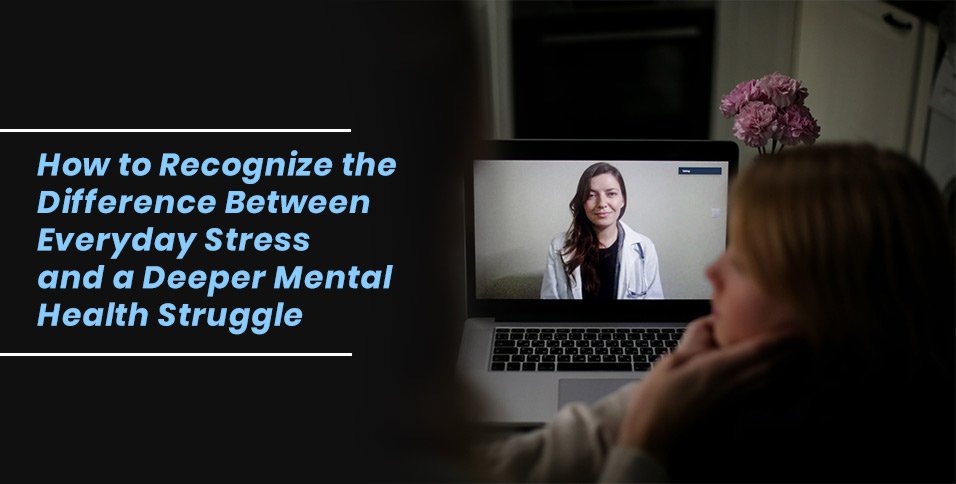
Noticing that something has shifted is only useful if there is somewhere to take that realization. Virtual psychiatric care exists in part because so many people who do notice never follow through, put off by travel, long waits, or the difficulty of fitting an appointment into a working week. Appointments held online, by secure video, remove most of those obstacles and allow a proper assessment to happen from home at a time that actually works. For anyone who would rather begin that conversation without a commute, Lucid Behavioral Health serves patients across California virtually. Getting a clear answer early is far easier than trying to piece one together after months of guessing.
What Everyday Stress Actually Looks Like
Ordinary stress has a shape to it. It attaches itself to something specific, it rises when that thing is close, and it eases once the thing is behind you. A hard quarter at work, a move, an exam, a difficult conversation you have been dreading. The body reacts, the mind races a little, sleep gets thinner for a while, and then the pressure lifts and you return to something close to your usual self.
That return is the important part. Healthy stress responses have a natural end point. You may be exhausted afterward, and you may need a week to recover, but you can feel yourself coming back. Your appetite settles. You start sleeping properly again. Things that used to make you laugh make you laugh again.
How Daily Function Starts to Slip
Stress makes things harder. A deeper struggle makes things undoable. That distinction matters more than almost any other, and it is worth being honest with yourself about which side you are on.
Under ordinary stress, you still answer the messages, even if late. You still get to work, even if you dread it. You still pay the bills, feed yourself, and keep in touch with the people who matter. When something more serious is underway, those things start falling away. Emails go unanswered for days. Dishes pile up. You cancel plans repeatedly, not because you are busy but because the effort feels impossible. Small tasks begin to feel enormous.
Changes in Sleep, Appetite, and Energy
The body tends to register these things before the mind admits them. Sleep is often the first to go, and it goes in different directions for different people. Some cannot fall asleep at all, lying awake with a mind that will not slow down. Others sleep ten hours and wake up feeling as though they never slept.
Appetite shifts in the same unpredictable way. Food may lose its appeal entirely, or eating may become the only thing that provides any relief. Energy drains in a manner that rest does not fix, which is what distinguishes it from ordinary tiredness.
When Emotions Begin to Feel Flat or Unfamiliar
People expect sadness. What surprises them is numbness. A common sign that something has moved beyond stress is the loss of feeling altogether, where things that should move you simply do not. Good news lands with a dull thud. A friend’s success produces nothing. Music you have loved for years sounds like noise.
Irritability is another version of the same thing. Small annoyances trigger reactions far out of proportion to them. You snap at people you care about and then feel terrible afterward, without quite understanding where the anger came from.
Reaching Out Before the Weight Builds
There is a widespread belief that help is only warranted once things have become severe, which leaves an enormous number of people struggling quietly for years while they wait to qualify. It is a costly belief. Difficulties that are caught early are almost always easier to address than ones left to settle in.
You do not need to be certain that something is wrong before speaking to a professional. Uncertainty is a perfectly good reason to have the conversation, and finding out that you are simply run down and need rest is a useful answer too. The point of asking is to stop guessing, and you are allowed to ask well before you feel you have earned the right to.