Every pet parent cherishes the quiet, golden years with an older dog, but watching a loyal companion slow down can bring unexpected worries. If your senior dog starts acting confused, pacing at night, or forgetting familiar routines, then these behaviors are often more than just ordinary aging. These shifts can be signs of dementia in dogs, a condition medically known as canine cognitive dysfunction.
Catching cognitive decline in its earliest stages requires paying close attention to subtle shifts in daily habits. Because senior dogs naturally slow down, isolated incidents are easy to dismiss as normal aging. However, when these minor behavioral adjustments form a consistent, repeating pattern, they warrant a closer look.
In this comprehensive guide, we explore the core signs of dementia in dogs using the DISHAA framework. This also examines the progression stages, highlights when to consult a veterinarian, and shares practical ways to care for your aging companion. Recognizing these dog dementia symptoms early makes a profound difference in your dog’s comfort and daily life.
What Is Dementia In Dogs?
Dog dementia is an age-related neurological condition that affects a dog’s memory, awareness, learning capacity, and daily behavior, sharing many similarities with Alzheimer’s disease in humans.
As a dog’s brain ages, microscopic changes occur, including the buildup of a toxic protein called beta-amyloid that forms plaques and disrupts communication between neurons. This degeneration interferes with spatial awareness and memory, leading to confusion in once-familiar settings. While normal aging involves slower movement or longer resting periods, cognitive dysfunction fundamentally alters how a dog processes their environment and interacts with the world around them.
10 Common Signs of Dementia in Dogs To Notice
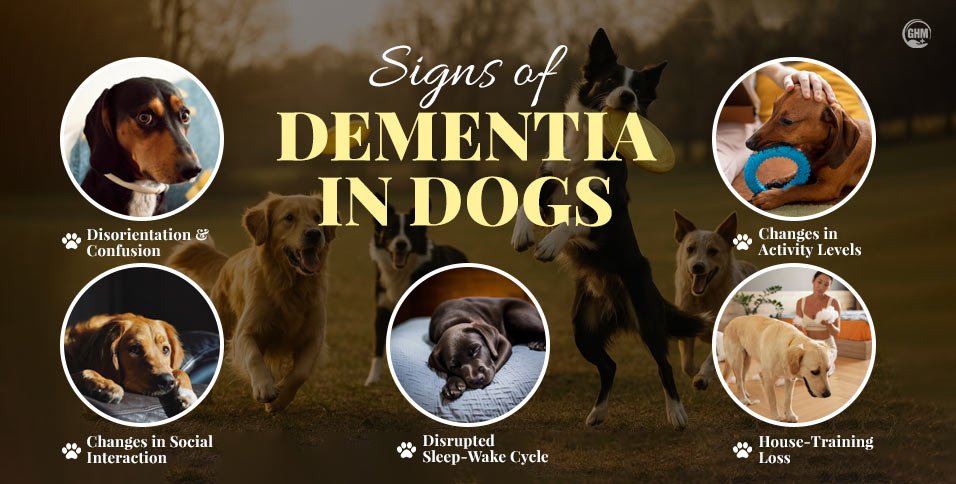
Symptoms of dementia in dogs develop gradually and vary significantly from one dog to another. Veterinarians categorize these behaviors using the DISHAA framework, which covers disorientation, interaction changes, sleep-wake shifts, house-soiling, activity changes, and anxiety. Reviewing these specific behaviors helps clarify what your dog may be experiencing.
1. Disorientation and Confusion
Dogs experiencing cognitive decline frequently lose their sense of direction in familiar environments. Your pet may stand staring blankly at walls or corners, occasionally getting physically trapped behind furniture. They might also struggle to locate their food and water bowls even when placed in their usual spots. These are the initial signs of dementia in dogs.
2. Changes in Social Interaction
A dog with cognitive dysfunction may progressively withdraw from familiar family members and other household pets. Opposite to that, some dogs develop unusual clinginess, becoming overly dependent, irritable, or less responsive to affection. These shifting social reactions are signs of dementia in dogs, which reflect underlying confusion rather than a change in loyalty.
3. Disrupted Sleep-Wake Cycle
One of the most exhausting dog dementia symptoms for pet parents is a flipped sleep schedule where the dog sleeps deeply all day. When nighttime arrives, the dog becomes restless, pacing anxiously, whining, or barking for hours without an apparent trigger. This nocturnal restlessness is often referred to as sundowning.
4. House-Soiling and House-Training Loss
Even dogs that have remained reliably house-trained for years can experience unexpected indoor accidents due to canine cognitive dysfunction. Affected pets often forget established bathroom routines or fail to signal at the door when they need to go outside. This is caused by memory loss rather than a lack of obedience.
5. Changes in Activity Levels
As signs of dementia in dogs, you may notice a distinct drop in your dog’s enthusiasm for daily walks, favorite toys, or interactive play. At the same time, they might develop repetitive, purposeless behaviors such as continuous pacing along the same path, circling rooms, or excessive licking.
6. Increased Anxiety and Fear
Cognitive decline strips away a dog’s confidence, causing them to feel fear or anxiety in familiar surroundings. They may display sudden separation-related distress or generalized nervousness without any clear environmental trigger. This persistent worry makes a calm home environment essential.
7. Forgetting Familiar Commands and Routines
In dog dementia. learning and memory centers in the brain deteriorate, causing dogs to stop responding to previously mastered cues. Tasks that were once second nature for dogs, such as waiting at the door or navigating household barriers, suddenly become overwhelming challenges.
8. Repetitive Vocalization
Unexplained vocal outbursts, including frequent barking, whining, or howling, are common signs of dementia in dogs. These noises typically occur during the night when confusion peaks, leaving both the dog and the family struggling to rest.
9. Changes in Appetite and Food-Seeking
Some senior dogs experience a noticeable drop in appetite or forget how to locate their food bowls entirely, which can be a symptom of dementia. Ensuring proper nutrition for dogs becomes a daily puzzle when cognitive impairments alter their natural food-seeking instincts and eating habits.
10. Reduced Awareness of Surroundings
Dogs affected by cognitive decline respond far less consistently to familiar sounds, environmental changes, or human presence. They often appear uncertain, detached, or entirely unaware of everyday activities happening directly around them.
The 3 Stages of Dementia in Dogs
Veterinarians generally describe canine cognitive dysfunction across three progressive stages: early, moderate, and advanced. While every dog experiences the dementia condition at a unique pace, understanding these phases helps families anticipate needs and adapt care.
- Early Stage of Dog Dementia:
During the early stage, signs of dementia in dogs are mild and easily overlooked. Pet parents might notice subtle confusion, occasional sleep disturbances, minor anxiety, and a slight reduction in enthusiasm for playtime.
- Moderate Stage of Dog Dementia:
As the dementia condition progresses into the moderate stage, behavioral changes become much harder to miss. Dogs experience more frequent disorientation, intense nighttime pacing, indoor house-soiling accidents, repetitive vocalization, and clear alterations in family interactions.
- Advanced Stage of Dog Dementia:
In the advanced stage of dementia, confusion becomes severe, sleep cycles are profoundly disrupted, and dogs struggle deeply with basic daily routines. Dependency on human caregivers increases significantly, prompting important family conversations regarding comfort, safety, and overall quality of life.
When Should You Take Your Dog to the Vet?
Schedule a veterinary appointment when your dog’s behavioral and cognitive changes persist, recur, or begin interfering with daily routines. While gradual cognitive decline requires structured management, sudden or severe symptoms of dementia in dogs demand immediate attention.
Warning signs of dementia in dogs, such as sudden collapse, stumbling, seizures, extreme panic, or a complete refusal to eat, indicate urgent medical issues that require immediate veterinary emergency care.
How Is Dementia in Dogs Diagnosed?
Veterinarians diagnose canine cognitive dysfunction through a process of elimination, evaluating behavioral history while ruling out other underlying medical conditions.
- The dog dementia diagnosis process typically begins with a detailed review of your dog’s medical history and observed behavioral shifts at home.
- Your veterinarian will perform a thorough physical and neurological examination to assess mobility, pain levels, vision, and hearing.
- Blood work and urine tests are routinely ordered to screen for metabolic, kidney, or thyroid disorders.
- Utilizing standardized behavior questionnaires, such as the Canine Dementia Scale (CADES), helps quantify the severity of cognitive changes. A study found that nearly 66 % of all dogs exhibited cognitive dysfunction, and 11% showed severe dysfunction.
Bringing home videos of your dog, from nighttime pacing or confusion to your appointment, gives your veterinary team clear clinical insights.
How to Care For a Dog With Dementia?
While there is no treatment for dog dementia, proactive veterinary guidance and structured home management can significantly improve your dog’s comfort and daily quality of life.
1. Maintain a Consistent Daily Routine
Keeping predictable schedules for feeding, outdoor walks, and bedtime provides a reassuring structure for your dog’s aging brain. This consistency minimizes anxiety and helps prevent the confusion triggered by unexpected daily changes.
2. Make the Home Safer and More Comfortable
Strategic home modifications protect disoriented dogs from accidental injury. Installing night-lights illuminates dark hallways, blocking stairways with pet gates prevents dangerous falls, and keeping water bowls close to favorite resting spots ensures easy hydration.
3. Support Mental and Physical Activity
Encouraging gentle daily walks, simple interactive games, and positive reinforcement training keeps your dog’s neural pathways engaged. Physical and mental enrichment tailored to your dog’s physical abilities helps reduce restlessness and boredom.
4. Discuss Medical and Nutritional Support
Collaborating with your veterinarian opens doors to specialized therapeutic diets, brain-supporting antioxidant supplements, and medications designed to manage cognitive decline in dogs. Targeted medical support can markedly enhance your dog’s alertness and day-to-day comfort.
The Bottom Line
Recognizing cognitive changes early is one of the most powerful ways to protect and support your senior dog’s golden years. Utilizing the DISHAA framework helps organize your observations, while professional veterinary assessments ensure that treatable medical conditions are correctly identified and managed.
Document new behaviors and signs of dementia in dogs, partner closely with your veterinarian, and prioritize environmental comfort and safety to ensure your dog gets the care and love they deserve.
Your loyal companion deserves a dignified, loving, and peaceful life.
Frequently Asked Questions
- At what age do dogs typically develop dementia?
Canine cognitive dysfunction is primarily a condition of senior pets, most frequently emerging in dogs aged nine years or older, with prevalence increasing significantly in advanced age.
- Can dogs with dementia still recognize their owners?
Recognition abilities of dogs with dementia vary depending on the progression of the disease. Some dogs maintain strong bonds with their human family, while others experience confusion regarding familiar people as the condition advances.
- Does dementia in dogs get worse over time?
Yes, canine cognitive dysfunction is a progressive neurodegenerative disorder, meaning symptoms gradually intensify over months or years, though the exact rate of progression differs for every dog.