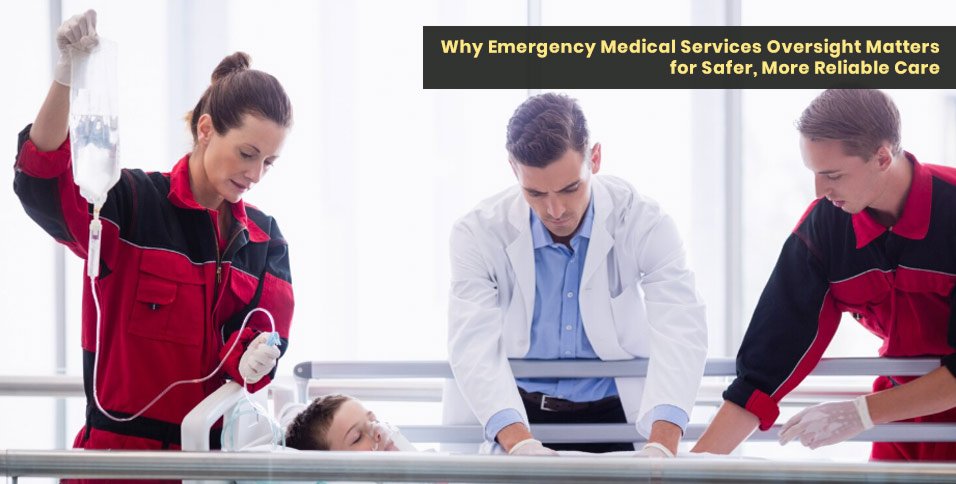
When a patient calls 911, the quality of care depends on more than how quickly an ambulance arrives. Dispatch decisions, staffing levels, clinical protocols, documentation, equipment checks, and coordination with hospitals all shape the outcome. For emergency medical services (EMS) organizations, consistent oversight connects these moving parts and helps ensure that patients receive dependable care during some of the most stressful moments of their lives.
This responsibility becomes even more important when demand rises. Severe winter weather, summer heat, large public events, respiratory illness seasons, and regional emergencies can quickly stretch crews and resources. A strong oversight structure gives EMS leaders a practical way to protect patient safety without relying on informal processes or last-minute decisions.
What Effective Oversight Looks Like in Daily Operations
Oversight is not limited to reviewing incidents after something goes wrong. It should be part of the organization’s routine management and clinical decision-making.
Clear clinical protocols
Paramedics and emergency medical technicians need current, accessible protocols for situations such as cardiac arrest, stroke, trauma, overdose, and pediatric emergencies. Protocols should reflect current standards and local realities, including available hospitals, transport times, and specialist resources.
Regular review is essential. A protocol that worked well several years ago may no longer reflect updated medications, equipment, or regional hospital capabilities. Clinical leaders should also create a clear process for handling unusual cases when a protocol does not fully address the patient’s needs.
Competent medical leadership
A qualified medical director or collaborating physician can help translate clinical standards into practical field operations. This role may include reviewing treatment guidelines, supporting education, evaluating complex cases, and helping leadership respond to recurring quality concerns.
For organizations assessing their current structure, emergency medical services oversight can provide a framework for examining whether clinical supervision, accountability, and compliance responsibilities are clearly defined.
Reliable equipment and staffing controls
Patient care can suffer when essential equipment is missing, expired, poorly maintained, or unfamiliar to the crew using it. Oversight should include documented checks for medications, monitors, oxygen systems, stretchers, communication devices, and protective equipment.
Staffing deserves the same attention. Leaders should monitor fatigue, overtime, training status, and the mix of experience on each shift. A crew may be technically staffed but still vulnerable if several employees are new, overextended, or assigned without the skills required for likely call types.
Measuring Performance Before Problems Become Patterns
Reliable EMS organizations use data to identify risks early. Useful measures may include response intervals, scene times, medication errors, incomplete documentation, hospital handoff delays, patient complaints, and clinical outcomes for high-priority conditions.
The goal is not to punish individual clinicians for every variation. Data is more valuable when it reveals system-level issues. For example, repeated delays in stroke treatment may point to dispatch questions, training gaps, transport decisions, or hospital coordination problems rather than one person’s mistake.
A practical review process
A strong quality program can include:
- Scheduled chart reviews for high-risk and high-volume call types
- Case reviews after sentinel events or unexpected outcomes
- Routine equipment and medication audits
- Refresher training tied to real performance findings
- Written follow-up that assigns responsibility and deadlines
- Reassessment to confirm whether corrective actions worked
This approach turns oversight into an improvement cycle. It also creates documentation that can demonstrate responsible management to regulators, municipal partners, insurers, and hospital systems.
Why Patients and Communities Benefit
Patients benefit when care is consistent regardless of which crew responds, which shift is working, or how busy the system becomes. Families receive clearer communication, hospitals receive more complete handoffs, and clinicians gain better support when difficult decisions arise.
EMS agencies benefit as well. Preventing avoidable errors can reduce legal exposure, equipment waste, staff turnover, and costly operational disruption. Clear expectations also make onboarding easier and help experienced employees apply their judgment within a dependable framework.
Oversight cannot eliminate every emergency complication. It can, however, make an EMS organization more prepared, accountable, and resilient. When leaders regularly evaluate clinical practice, staffing, equipment, and outcomes, they create a system that is better equipped to deliver safe care when patients need it most.