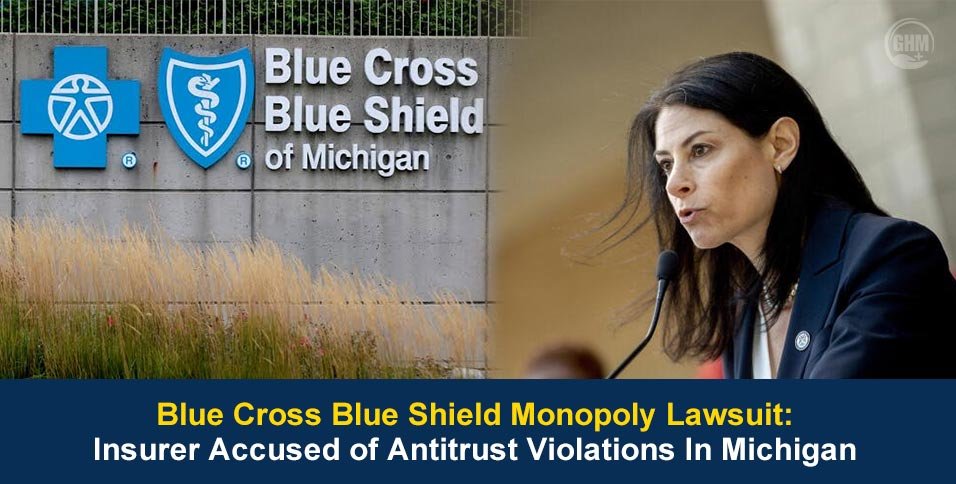
Michigan Attorney General Dana Nessel filed a federal lawsuit against the state’s largest health insurer, Blue Cross Blue Shield of Michigan, alleging that it used anticompetitive agreements to limit competition and increase healthcare costs. The Blue Cross Blue Shield Monopoly lawsuit, filed in the U.S. District Court for the Eastern District of Michigan, accuses BCBS of violating federal and state antitrust laws.
The Blue Cross Blue Shield antitrust case could have significant implications for Michigan health insurance costs, employers, patients, and healthcare providers. However, the allegations remain unproven in court.
More Reasons Behind the BCBSM Monopoly Allegations
The Blue Cross Blue Shield monopoly lawsuit centers on alleged agreements between Blue Cross Blue Shield of Michigan (BCBSM) and other companies in the national Blue Cross Blue Shield network.
According to the Michigan Attorney General’s announcement, these agreements allegedly divided customers and territories, restricted insurance products, and reduced competition for large employer contracts.
The state says BCBSM controls approximately 65% of Michigan’s health insurance market and 79% of its preferred provider organization (PPO) market. PPO plans generally allow members to access a network of healthcare providers at negotiated rates.
Dana Nessel alleges that this market dominance enabled Blue Cross Blue Shield to charge higher premiums while limiting competition for insurance contracts, including plans covering state employees.
Rising Michigan Insurance Premiums Costs Under Scrutiny
The Blue Cross Blue Shield Insurance lawsuit highlights concerns about the affordability of health coverage for individuals, families, and businesses.
According to reports from the Michigan Department of Insurance and Financial Services, BCBSM filed 2026 annual rate increases of approximately 23.3% to 24% for individual plans and 11.2% for small-group plans.
The attorney general’s office also reported that:
- More than 68% of Michigan adults surveyed in 2025 experienced at least one healthcare affordability problem that forced them to skip or delay care.
- More than 40% of small-business owners said rising healthcare costs were putting significant pressure on their businesses and could force them to drop coverage.
The state argues that limited Michigan healthcare competition has weakened the pressure on insurers to keep coverage affordable. The Blue Cross Blue Shield monopoly lawsuit also alleges that restrictions on competing insurers allowed BCBSM to overcharge the state for administering employee health plans.
Blue Cross Blue Shield Monopoly Leads To Hospital Closures in Michigan
The Blue Cross Blue Shield monopoly lawsuit allegations extend beyond insurance premiums to payments for medical services.
Nessel’s office claims that BCBSM has paid healthcare providers rates that rank among the lowest in the region, sometimes falling below the cost of delivering care. According to the state, these reimbursement pressures have contributed to staffing reductions, fewer services, and facility closures.
Sturgis Hospital, which closed in June 2026, is one example mentioned by the attorney general’s office. The closure eliminated emergency services and other hospital departments in the community.
The state of Michigan also points to a dispute between BCBSM and Michigan Medicine over a proposed 30% reimbursement reduction earlier in 2026. The disagreement raised concerns about access to care for thousands of members before the parties reached a tentative agreement in May.
These examples form part of the state’s argument about the potential consequences of concentrated power in the Michigan health insurance market.
Blue Cross Blue Shield Responds to the Michigan Antitrust Lawsuit
BCBSM rejected the attorney general’s characterization of Michigan’s insurance market. In a statement reported by The Detroit News, the insurer said it was “blindsided” by the announcement and had not yet been served with the lawsuit.
The company said local and national insurers compete in Michigan and emphasized that it has provided coverage in every county in the state for nearly 90 years. It also said it could not comment on the case’s merits before reviewing the lawsuit.
Michigan’s Ask In The Blue Cross Blue Shield Insurance Lawsuit
The Blue Cross Blue Shield antitrust case includes claims under the federal Sherman Act, which prohibits certain anticompetitive business practices, and the Michigan Antitrust Reform Act. The state also alleges public nuisance and unjust enrichment.
Michigan is asking the court to:
- Permanently prohibit the alleged anticompetitive conduct.
- Award available damages and civil monetary penalties.
- Order disgorgement, or the repayment of gains allegedly obtained through unlawful conduct.
The Blue Cross Blue Shield monopoly lawsuit could influence future scrutiny of health insurance market concentration and provider payment practices. However, its outcome will depend on the legal process and evidence presented in court.