A bone density report that says “osteopenia” often leads straight to the supplement aisle. The shelves are full of options, but the evidence for routine supplementation is narrower than the labels suggest.
Calcium, vitamin D and protein all support bone health. Supplements can close a nutrient gap, yet they are not a stand-alone treatment, and large trials in generally healthy adults have not shown that routine vitamin D lowers fracture risk.
The right plan starts with your diet, medications, history and overall fracture risk. Those details help you and your clinician decide whether you need a supplement at all and which form and dose fit.
Key Takeaways
- Food comes first. Supplements fill the gap between what you eat and what you need.
- Bone density is only part of the picture. Age, past fractures and falls also shape treatment decisions.
- Vitamin D corrects a shortfall but is not a universal fracture fix. In the VITAL trial, 2,000 IU of vitamin D3 daily did not reduce fractures in generally healthy midlife and older adults.
- Dose and form matter. Calcium absorbs best in doses of 500 mg or less, and 4,000 IU of vitamin D is an upper limit rather than a target.
- Interactions matter. Vitamin K affects warfarin, minerals can block some medicines and thiazide diuretics change calcium balance.
What Osteopenia Means
Osteopenia means bone mineral density is lower than the young-adult average but not low enough to count as osteoporosis. On a DXA scan, that is a T-score below -1.0 but above -2.5.
A score of -2.5 or lower falls in the osteoporosis range, while -1.0 or higher is normal. These categories mainly apply to postmenopausal women and men age 50 and older. Younger adults are usually assessed with a Z-score instead.
Bone is living tissue that is constantly broken down and rebuilt. Calcium, protein and vitamin D support that cycle, but nutrition cannot address every cause of bone loss.
Do Supplements Help?
Supplements help when they correct a shortfall. The practical goal is to meet calcium and protein needs through food where possible, get enough vitamin D to absorb that calcium and use pills only for the gaps.
The VITAL trial, published in the New England Journal of Medicine in 2022, found that 2,000 IU of vitamin D3 daily did not significantly reduce fractures compared with placebo. Participants were generally healthy adults rather than people recruited for deficiency or osteoporosis, so the results don’t settle how to treat a documented deficiency.
Your starting point decides the likely benefit. Someone who eats few calcium-rich foods has a gap worth closing, while someone already meeting their needs gains little from more.
Start With Food, Then Check Your Baseline
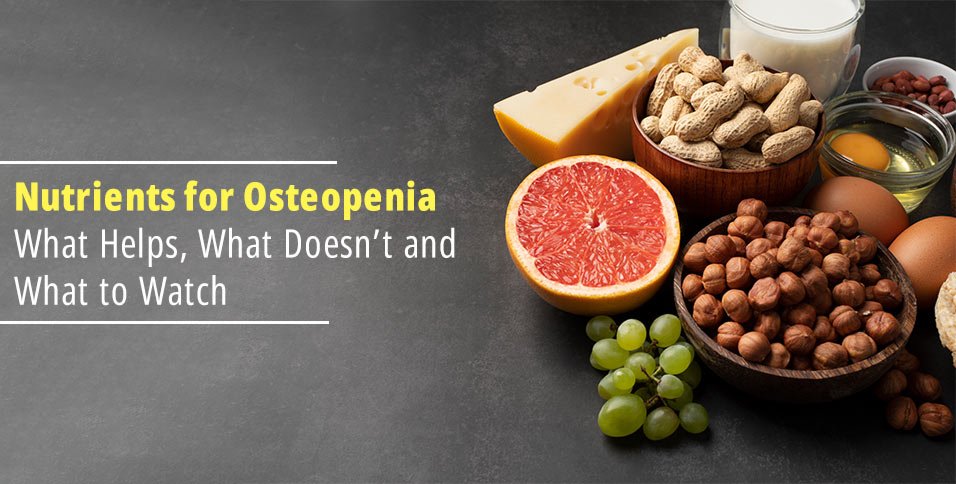
The Bone Health and Osteoporosis Foundation (BHOF) favors everyday foods over pills because food delivers several nutrients at once. Good sources include:
- Calcium: milk, yogurt, cheese, calcium-set tofu, canned sardines or salmon with bones, fortified plant milks and greens such as kale and bok choy.
- Protein: eggs, poultry, fish, beans, lentils, dairy and soy.
- Magnesium: nuts, seeds, whole grains, legumes and leafy greens.
- Vitamin K: leafy greens and broccoli for K1, plus fermented foods and some animal foods for K2.
Spinach contains oxalates, which make its calcium hard to absorb, so it is not a reliable calcium source. Calcium content also varies between fortified plant milks, so check each label.
Before buying anything, tally the calcium in two or three typical days of eating and compare it with your target. Then list every prescription, over-the-counter medicine and supplement you take, since warfarin, bisphosphonates, thyroid medication, diuretics and kidney disease all change what is safe.
The Endocrine Society’s 2024 guideline advises against routine vitamin D testing in generally healthy adults. During a low bone density workup, though, testing may still make sense if your history points to deficiency or poor absorption.
Calcium
Calcium is the main mineral in bone, and the body pulls it from the skeleton when intake runs short. Most adults need 1,000 mg a day, rising to 1,200 mg for women 51 and older and men 71 and older.
Those totals include food and supplements combined. The NIH Office of Dietary Supplements (ODS) sets the upper limit at 2,500 mg a day for adults 19 to 50 and 2,000 mg for adults 51 and older.
Calcium carbonate needs stomach acid, so take it with meals. Calcium citrate works with or without food. Doses of 500 mg or less absorb best, so split larger amounts across meals.
Calcium can cause constipation, and high supplemental intake may raise kidney stone risk. It also reduces absorption of oral bisphosphonates and thyroid hormone, so timing matters.
Supplement the gap, not the whole target. If food gives you about 800 mg and your target is 1,200 mg, the shortfall is roughly 400 mg.
Vitamin D
Vitamin D helps the gut absorb calcium and supports normal bone mineralization. BHOF recommends 800 to 1,000 IU daily for adults 50 and older, counting food and supplements together.
Labels list vitamin D in both micrograms and IU: 1 mcg equals 40 IU, so 25 mcg is 1,000 IU. ODS sets the adult upper limit at 4,000 IU (100 mcg) a day, though clinicians sometimes prescribe more, with monitoring, to treat a deficiency.
Too much vitamin D can raise blood calcium and cause nausea, weakness and kidney problems. Thiazide diuretics also reduce calcium loss through the kidneys, so pairing them with calcium and vitamin D supplements may need monitoring.
Low bone density alone is not a reason to take high-dose vitamin D. Choose a dose that fits your intake and care plan.
Protein and Collagen
Protein is part of bone’s structure and supports the muscle strength you need for balance. BHOF notes that many older adults fall short, so a protein food at every meal is a sensible start.
Collagen peptides are heavily marketed for bones. A few small trials report density gains, but none show that collagen prevents fractures, so treat it as optional rather than a substitute for varied protein foods.
For a wider look at which nutrients hold up to scrutiny, Osteoboost, maker of an FDA-cleared prescription wearable for osteopenia, has put together a practical guide to supplements for osteopenia. It is a useful companion when you sit down to compare products.
Magnesium and Vitamin K
Magnesium supports bone structure and helps the body use calcium and vitamin D. That role does not mean extra magnesium prevents fractures in people who already get enough.
ODS caps magnesium from supplements and medicines at 350 mg a day for adults, not counting food. Higher doses often cause diarrhea, and people with impaired kidney function need medical guidance because magnesium can build up.
Magnesium can also reduce absorption of alendronate and certain antibiotics. Ask a pharmacist for the exact spacing rather than guessing.
Vitamin K activates proteins involved in bone formation, but supplement trials for density and fractures have shown mixed results. It is not a standard osteopenia treatment.
Vitamin K can also change how warfarin works. Anyone on warfarin should keep vitamin K intake steady and not start or stop a supplement without the prescriber’s input.
Other Supplements and How to Read a Label
A few other ingredients show up in bone formulas with thin evidence behind them:
- Omega-3s: evidence for osteopenia is limited.
- Probiotics: human bone density findings are inconsistent.
- Boron: trials are too small to support routine use.
- Strontium: supplement strontium citrate is not the prescription drug strontium ranelate, and it can inflate DXA readings.
When you buy, look at the “Calcium” line in the Supplement Facts panel, which shows elemental calcium. “Calcium carbonate 1,250 mg” supplies about 500 mg of actual calcium.
Check the serving size too, since one serving may be two or three tablets. USP Verified or NSF marks speak to product quality, not to whether a product prevents fractures.
A “supports bone health” claim comes with a disclaimer that the FDA has not evaluated it. That wording is not a seal of quality.
Timing Supplements Around Your Medicines
A schedule can reduce some interactions, but it cannot make a poor combination safe. This example assumes standard oral alendronate tablets and that each supplement is genuinely needed.
- On waking: take alendronate with a full glass of plain water. Wait at least 30 minutes before food, other drinks or medicines, and stay upright for at least 30 minutes and until after your first meal.
- Lunch or dinner: take calcium if needed, at 500 mg or less per dose and with food if it is carbonate. Vitamin D can go with any meal.
- Evening: take magnesium if it has been recommended, at a time checked against your other medicines.
Keep calcium at least four hours apart from levothyroxine. Have a pharmacist review the full schedule, especially if more than one medicine needs an empty stomach.
Beyond Supplements: Movement and Risk-Based Care
Nutrition is one part of fracture prevention, and movement matters just as much. Resistance and weight-bearing exercise support muscle and bone, and breaking up prolonged sitting with short walks keeps muscles working through the day.
Balance training and fall prevention cut injury risk further. Good lighting, clear walkways, sturdy footwear and regular eye checks deal with everyday hazards.
Limiting alcohol and not smoking also protect bone. Tools such as FRAX estimate fracture risk from age, medical history and sometimes bone density, and osteopenia with high fracture risk may warrant prescription treatment that your clinician can talk through.
Who Should Check With a Clinician First
Some conditions make self-directed supplementation risky, even at standard doses:
- Chronic kidney disease: the kidneys regulate minerals and activate vitamin D, so your care team should set targets.
- Sarcoidosis or primary hyperparathyroidism: both can raise blood calcium.
- Recurrent kidney stones: supplemental calcium and high-dose vitamin D need review, though calcium-rich foods usually stay in the diet.
- Thiazide diuretics or warfarin: both interact with bone nutrients and may need monitoring.
- Pregnancy and breastfeeding: follow prenatal or postnatal guidance rather than products aimed at older adults.
The Daily Value on a label is not your personal target or a guarantee of safety. In these situations, even an ordinary dose may need adjusting.
Building a Plan That Fits
Osteopenia calls for a plan built around overall fracture risk, not a growing shelf of bottles. Tally your intake, close gaps with food first and add calcium or vitamin D only where a real shortfall exists.
Pair that with regular exercise and fall prevention. Then agree on follow-up with your clinician, including any lab tests and whether medication belongs in the plan.
Frequently Asked Questions
Can supplements reverse osteopenia?
No supplement has been shown to reverse osteopenia. Calcium and vitamin D correct shortfalls that would otherwise speed bone loss, and they work best alongside exercise and any treatment your clinician recommends.
What is the best form of calcium for osteopenia?
Both carbonate and citrate work. Carbonate needs to be taken with food, while citrate absorbs well with or without a meal.
How much vitamin D should I take for osteopenia?
BHOF recommends 800 to 1,000 IU a day for adults 50 and older. Your clinician may suggest more if a blood test shows a deficiency.
Should I take magnesium or vitamin K for my bones?
Only if your diet falls short or your clinician recommends it. Neither has been shown to prevent fractures in people who already get enough.