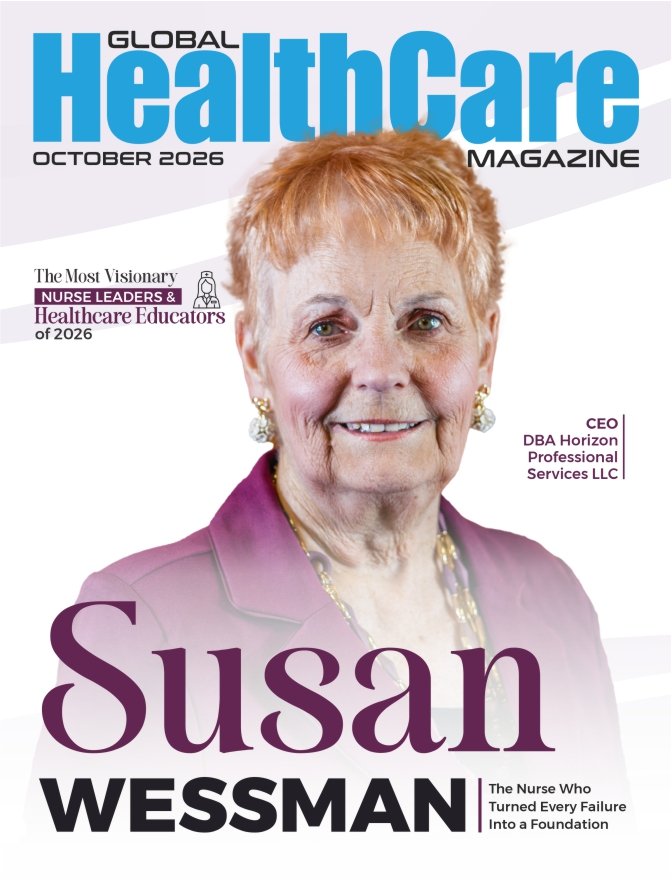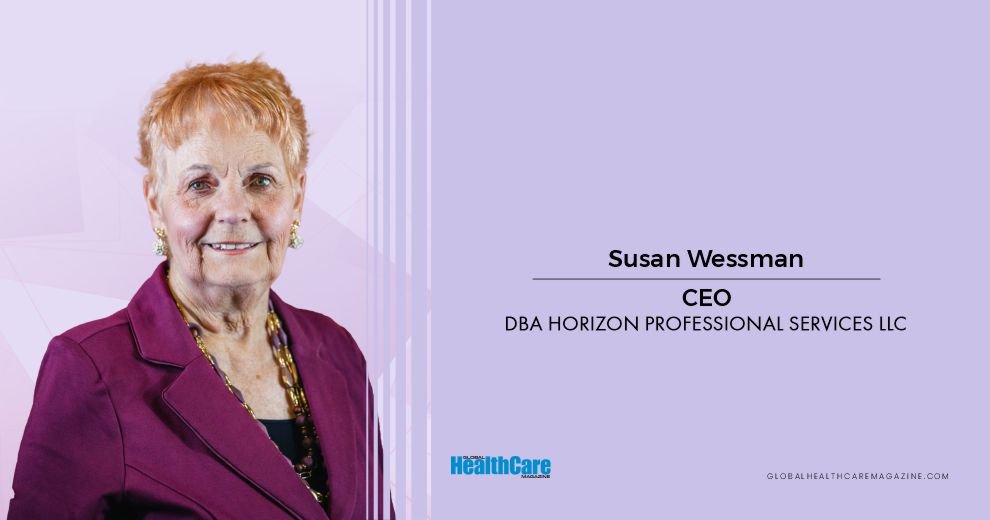
For most of her childhood, Susan Wessman was told, in one way or another, that she was not capable. She was severely tongue-tied, which made speaking difficult. She struggled with a congenital bladder defect that caused her to wet the bed well into her mid-twenties. She carried a severe learning disability that no one around her seemed interested in understanding, only in punishing. Her oldest brother and her mother bullied her, and the pain of it, she says, was not only physical but psychological and emotional. It was her father who intervened, who “stepped in when it did not stop,” and who became, in her words, her cheerleader.
Then, on January 16, 1969, he died suddenly of a heart attack. Susan did not understand what a heart attack was. Her family would not explain it to her. And so a question took root in her, one that would not let go for years: what had actually happened to her father, and could it have been prevented?
The Class That Rewired Everything
By her late teens and into her twenties, Susan still wanted answers, but her mother and siblings had convinced her she was too dumb to find them. She enrolled in an EMT course anyway. Her brother, a police officer who worked closely with paramedics and EMTs, tried to stop her, working behind her back to prevent it. He failed.
That EMT course, she says plainly, changed her life. For the first time, she discovered she was not the person her family had raised her to be. She learned how to learn. She became one of the top students in her class, and in doing so, she finally answered the question that had haunted her since childhood: what a heart attack was, and that it could often be prevented. Her brother, once her quiet saboteur, was now astonished and proud.
That single course became a launching point. She went on to become a certified nurse assistant, then a certified medical assistant, then a certified medical transcriptionist, and finally, a Licensed Vocational Nurse. Her family, she recalls, was in “complete disbelief” that she had become more capable than they ever imagined. But her mother never came around. To her mother, Susan says, she remained “the dumb daughter,” a verdict that stood even to the day she passed.
From Bedside to Byline
Susan’s business did not start with the name it carries today. She originally called it Nurse2writer-wessmanenterprises LLC, a name that reflected her transition from bedside nursing into writing, a craft she had always loved. But the name confused people. She wanted something that captured what she was actually building: a new horizon for nursing students, the same kind of turning point that the EMT course had once been for her.
That is how DBA Horizon Professional Services LLC was born, where she now serves as CEO. As a nurse and a writer, she wanted to hand down her history and her hard-won success, particularly to nursing students. “I did not, and do not, want student nursing to struggle any more than necessary,” she says. The name, to her, said exactly that: a new horizon for students and a professional nurse and writer ready to help guide them forward.
A Warning From the Front Lines
Ask Susan what troubles her most about nursing education today, and she does not hesitate. She has watched the quality of graduating registered nurses decline, and the pattern has become impossible to ignore. LVNs, she says, are routinely showing newly minted RNs skills that those RNs should already know, and know better than the LVNs teaching them.
There was a moment, working alongside a few directors of nursing in home health, when the problem crystallized for her. One director mentioned that her own daughter needed to sit down with Susan and learn what she should already know. The same director told her, unprompted, that the RNs she had been hiring needed extra guidance and teaching that their programs had failed to provide. Over the past five years, Susan says she has watched this gap widen. “It actually scares me, and it should scare the public,” she says, and she means it as a warning, not a complaint.
Standing In the Gap Students Fall Into
Susan built Horizon around a simple premise: give students the support she never had. She remembers her own vocational nursing program vividly and how brutal it was. Half of her class did not finish. Some who failed their Boards. Most of her classmates arrived with no medical background at all, unlike Susan, whose EMT and CNA training gave her a head start many others lacked.
She wants to be the person a struggling student can call, someone who has already survived the program and can offer both technical help and encouragement. “I did not have that support. I was on my own. I don’t want that for future nurses,” she says. It is a mission built entirely from memory, from knowing exactly what it felt like to have no one to call.
The Supervisor Who Proved a Point
When Susan talks about leadership, she returns to one figure in particular: a nursing supervisor she once worked under, someone she describes as among the most effective supervisors in the hospital. When that supervisor left to take a new position outside the hospital, many nurses left with her. Susan was one of them.
The supervisor did not fully grasp her own impact until years later, but Susan saw it clearly at the time. Nurses under her wanted to give their best because she expected it and modeled it herself. “When nurses feel appreciated and given praise without asking for it, the nurses’ morale skyrockets, and patients see it and feel it,” she says. She has watched patients tell their families about a nurse’s good attitude, and she believes that atmosphere, invisible as it may seem on a chart, changes outcomes.
The Rhythm of a Shift
Susan’s account of a typical shift reads like a checklist built from thousands of repetitions. Arrive, then report on every assigned patient, with attention paid to anything urgent. Rounds, sometimes folded into the handoff itself, so both nurses can lay eyes on a patient together. IV lines checked. Wounds checked. A quick read on who is on oxygen, who might be struggling to breathe, who is stable, and who is not. Then the medications were pulled and passed. Call lights are answered unless a CNA is available to catch them first. Full assessments, especially for whatever brought the patient in, and a check on pain levels throughout.
Underneath the routine, she describes something more personal: a commitment to let each patient know she genuinely cares about their condition and is willing to listen, particularly when something has gone unsaid to another nurse. As a woman of faith, when given the opportunity and the patient’s permission, she has prayed with them. “They always loved being prayed over. It was special for both of us,” she says of those moments, describing them as a quiet exchange of faith that mattered to her as much as it did to the patient.
Networks That Did Not Always Welcome Her
Not every part of Susan’s career has come with camaraderie. She is candid that many of the teams she worked with lacked what she would call a genuine professional network, unless a nurse had a personal connection that opened doors. She observed that too many RNs, in her view, entered the profession for the money, and it showed in how they treated colleagues.
She has also lived through the isolation that comes with speaking up. Susan describes herself as having been a whistleblower once and admits plainly that “it did not turn out well for me.” It is a rare moment of candor about the personal cost of doing what she believed was right.
When the Room Went Quiet, and She Did Not
Twice in her career, Susan’s judgment was tested in situations where lives hung in the balance. The first came while she was working with ICE at a detention facility. She raised concerns about a medical emergency, and her directives were ignored, in part, she believes, because she was still new and had not yet earned trust. The staff member at the center of that emergency died a few days later, after a second medical emergency that was also dismissed. She was not on duty for that second event, but afterward, colleagues realized her original assessment had been correct all along.
The second test came during a deployment with the American Red Cross. Susan was working at a shelter whose staff were preparing to close when a diabetic male resident came in complaining of a severe headache. The RN on duty gave him pain medication and told him to lie down. Susan insisted on checking his glucose first. It came back dangerously low. What followed was a scramble, roughly thirty minutes long, to find enough sugar to bring him back to normal. When he stabilized, the RN was shaken, Susan recalls, because she realized how close they had come to losing him, a possibility she had not seen coming.
Eighteen Years, Guided by Something Larger
Susan speaks of her clinical instincts with an unusual mix of confidence and humility. She has made medical decisions RNs around her would not make, and has been told repeatedly by RNs themselves that she always knew what to do in an emergency, no instruction required. She credits herself with having “literally saved a few lives” through decisions made without an RN’s backup.
But she is careful not to claim the credit outright. “It is not me,” she says, “it’s through God’s help and guidance.” She describes nursing as her calling, one accompanied, in her telling, by God’s presence throughout her eighteen years in the field, including nursing school itself.
That same conviction runs through her book, Failure is an Option, which chronicles her journey into nursing, a path she says God prepared her for long before she understood it herself. Through her writing, she hopes to arm people with the kind of talking points that make a doctor’s appointment less intimidating and their own bodies less of a mystery.
What Comes Next
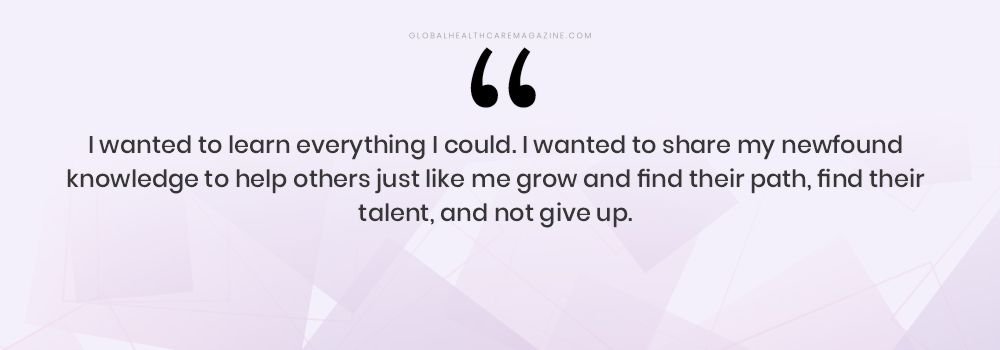
Looking ahead, Susan wants to keep doing what she has already started: sharing her path into nursing as a source of encouragement for others who feel they cannot. Her philosophy is embedded in the title of her book. Failure is an Option, to her, means that trying and coming up short is still worth something, because she never knew what she could do until she attempted it.
She is quick to note she is no exception to limits altogether. She owns a piano and reads music, but her left hand, she says with some resignation, simply will not go where it needs to go. Not everyone is built for everything, she says. “So, find YOURS! I did. So can you.”
Life Beyond the Nurses’ Station
These days, Susan is working from home while recovering physically, splitting her time between writing articles and blogs and indulging a genuine love of research. She runs two podcasts, one aimed at students and the wider community, with a particular focus on helping people, especially men, learn how to talk to their doctors and know what questions to ask.
She is also at work on a new book, Power Play, a Christian title she has already completed. She has been told it needs a sequel, and has not yet decided whether to write one or publish the book as it stands. Outside of writing, her interests run toward the tactile and the creative: she loves to sew, particularly wedding gowns and veils, and plans to branch into making puppets and aprons. She also loves to sing whenever the chance arises.
A Closing Word, In Her Own Terms
Susan does not see her achievements as solitary ones. As a woman of faith, she avoids going it alone, calling it “a sure way to fail.” She wants to extend that same philosophy to other women, believing firmly that people learn from one another in both directions.
She measures the distance she has traveled openly: tongue-tied, a bedwetter, carrying a learning disability into her twenties, convinced by her own family that she would amount to nothing. It was her father’s sudden death at fifty-one that upended that story entirely. She does not claim her path leads to the presidency or an opera stage, only that everyone, disabled or not, carries some talent worth finding.
“If I did it,” Susan says, closing the thought the way she opened her career, with a challenge rather than a boast, “so can you.”
Quote