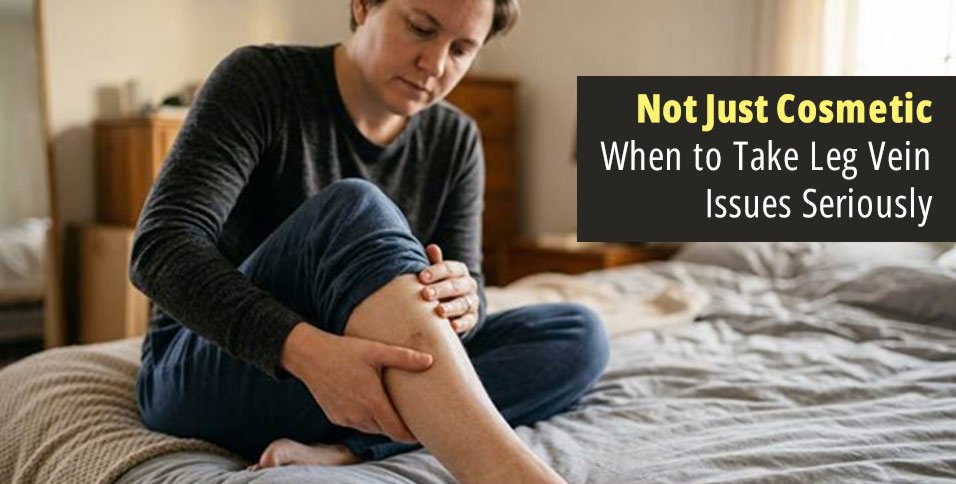
That constant ache in your legs after a long day could be more than just being tired. Many people think of varicose veins as just a cosmetic problem, something to hide. But they are often a sign of a deeper circulation problem called chronic venous insufficiency. This happens when tiny valves in your leg veins don’t work right, making it hard for blood to flow back to your heart. This can cause swelling, pain, cramps, and changes to your skin.
If you ignore these signs, the problem can get worse. According to a study in *American Health & Drug Benefits*, about 24% of adults in the U.S. have varicose veins you can see. To know if your veins are a cosmetic issue or a medical one, you need a proper diagnosis. The first step is to see a specialist at a vein clinic irvine or a local vascular center to find out what’s really going on.
Quick answer: Visible veins are often a medical problem, not just a cosmetic one. A real diagnosis needs more than just looking at your legs. It requires a special ultrasound to see how your blood is flowing and find any broken valves. Today’s treatments are simple procedures done in a doctor’s office. They are much easier than the old “vein stripping” surgeries that required a hospital stay.
What’s inside
· How Do I Know if My Vein Issues Are Medical or Just Cosmetic?
· What Should I Look for in a Vein Specialist?
· How Do Modern Vein Treatments Actually Work?
· Frequently Asked Questions About Vein Treatment
· The Final Check: Is Your Vein Care Comprehensive?
How Do I Know if My Vein Issues Are Medical or Just Cosmetic?
The main difference is whether your visible veins come with physical symptoms or are caused by a deeper circulation problem.
Many people think varicose veins are just about looks, something to hide instead of treat. But they are often the clearest sign of a condition called chronic venous insufficiency (CVI). This happens when tiny, one-way valves in your leg veins get weak and can’t push blood back up toward your heart. The real difference between a cosmetic and a medical issue is having physical symptoms and getting a diagnosis that confirms this hidden circulation problem.
This is a big problem. While many people have visible varicose veins, a smaller group has more serious issues. The same study in *American Health & Drug Benefits* shows that while about 24% of U.S. adults have visible varicose veins, around 6% have a more advanced form of the disease. This advanced stage is not just about looks. It includes serious symptoms like constant swelling, painful skin color changes, and even open sores that won’t heal.
When the valves in your veins fail, blood collects in your lower legs. This creates high pressure in the veins, which is called chronic venous hypertension. This constant pressure is what turns a simple bulging vein into a serious medical problem. Over time, the pressure can push fluid from the veins into the nearby tissue, which causes swelling (edema). It also harms the skin from the inside, making it turn brownish, get thick, and feel tough or leathery. In the worst cases, the delicate skin can break open, creating wounds called venous ulcers that are slow to heal.
❝ You can do a simple check for something called “pitting edema.” At the end of the day, press your thumb firmly on the skin over your shinbone for five seconds. If a small dent stays for a few moments after you let go, it’s a strong sign that fluid is building up. This is a common sign that your vein problems might be a medical issue that a doctor should check.
Besides skin damage, untreated vein disease has other risks. The skin over a large varicose vein can get thin and weak, and it might bleed a lot from a small bump or cut. Also, the slow blood flow in these damaged veins makes it easier for blood clots to form. If a clot forms in a vein near the skin, it’s a painful problem called superficial thrombophlebitis. It’s not as dangerous as a deep vein thrombosis (DVT), but it’s a clear warning sign that your veins are not healthy and should be checked out.
What Should I Look for in a Vein Specialist?
Look for a doctor who is board-certified, uses thorough diagnostic tests, and offers a variety of modern treatments.
Finding the right doctor is the most important step. The word “phlebologist” just means a doctor who treats veins, but it’s not an official specialty. Look for a doctor who is board-certified in an area like Vascular Surgery, Interventional Radiology, or Interventional Cardiology. These specialties require years of tough, approved training in vein and artery procedures. You can check a doctor’s board certification on the American Board of Medical Specialties (ABMS) website, a trusted non-profit group.
How a doctor diagnoses your problem is just as important as the treatment. A complete check-up should always start with a detailed ultrasound of your legs. This isn’t a quick scan. It’s a long exam that creates a map of your veins. It shows the doctor exactly which valves are broken and where blood is flowing the wrong way.
❝ Ask who will be doing your ultrasound. The best person for the job is a Registered Vascular Technologist (RVT). This certification means the tech has passed difficult exams on vein imaging and understands how blood flows. The doctor should then go over the ultrasound images with you, explain what they found, and talk about the plan for your treatment.
A good clinic will create a treatment plan just for you, not a one-size-fits-all solution. Be careful if a doctor offers only one type of treatment for every patient. A good clinic should have several modern, simple options, like radiofrequency ablation (RFA), VenaSeal medical glue, and different kinds of sclerotherapy. The specialist should explain why one treatment is a better choice for your body and your symptoms.
Finally, pay attention to how the clinic works. It’s a red flag if a clinic tries to push you into getting a procedure on your very first visit. A proper first visit should include a full diagnosis, a talk about your options, and a clear plan to get approval from your insurance before any treatment is booked.
To help organize your evaluation, here are some key questions to ask.
| Evaluation Area | Key Question to Ask | What to Look For |
| Physician Credentials | “What is your primary board certification?” | Vascular Surgery, Interventional Radiology, or Interventional Cardiology. |
| Diagnostic Imaging | “Is the person performing my ultrasound a Registered Vascular Technologist (RVT)?” | A “yes.” This means a certified pro is doing the scan. |
| Treatment Plan | “What are all my treatment options, and why is this one best for me?” | A clear explanation of your options and why one is best for you. |
| Insurance & Costs | “Will you provide a detailed pre-treatment estimate and handle insurance pre-authorization?” | They should be clear about costs and help you with insurance. |
How Do Modern Vein Treatments Actually Work?
They close the problem vein from the inside using heat, medical glue, or a special solution. This sends blood flow to your healthy veins instead.
Unlike the old “vein stripping” surgery that required a hospital stay and long recovery, today’s treatments are simple procedures done right in the doctor’s office. The goal isn’t to remove the bad vein anymore, but to seal it shut from the inside. Your body then naturally sends the blood to your deeper, healthy veins. This fixes the circulation and gets rid of symptoms. The three main ways to do this are with heat (thermal ablation), medical glue, or a chemical solution.
Thermal ablation uses heat to seal the vein shut. The two most common types are Radiofrequency Ablation (RFA) and Endovenous Laser Ablation (EVLT). In both, the doctor uses an ultrasound to guide a thin tube, called a catheter, into the problem vein. For RFA, the tip of the catheter sends out radiofrequency energy that gently heats the vein wall. This heat makes the vein shrink and close. The doctor does this in small sections while slowly pulling the catheter out.
Another method uses a medical-grade glue instead of heat. The VenaSeal procedure, for example, uses a special medical superglue. A doctor puts the glue into the vein through a tiny tube. They inject small drops of glue along the vein while pressing gently from the outside. The glue hardens right away, sealing the vein shut. A big plus for this method is that you often don’t need the large amount of numbing medicine that’s used in heat treatments.
❝ Which treatment is best often depends on the shape of your vein. A fairly straight vein is a good fit for a heat-based treatment. But if a vein is very twisty or close to the skin, medical glue or a guided chemical injection might be a better and safer choice.
Finally, a method called sclerotherapy uses a chemical solution to close the vein. A doctor injects a special liquid or foam into the vein. This chemical irritates the inside lining of the vein, making it swell up and stick together. Over time, the vein turns into scar tissue and is absorbed by the body. This was once used only for small spider veins, but now doctors can use it with ultrasound to treat larger varicose veins too.
Frequently Asked Questions About Vein Treatment
Will my insurance cover vein treatment?
Coverage depends on whether the treatment is medically necessary. If a diagnostic ultrasound confirms you have chronic venous insufficiency (CVI) and you experience symptoms like pain, swelling, or skin changes, most insurance plans, including Medicare, will typically cover the corrective procedures. Treatments for purely cosmetic spider veins that cause no physical symptoms are almost never covered.
How much can I expect vein treatment to cost?
Costs vary widely based on your specific condition, the recommended procedures, and your insurance plan. For medically necessary treatments, what you pay depends on your insurance plan. For cosmetic procedures not covered by insurance, it’s important to get a detailed cost estimate from the clinic beforehand so you know what you will have to pay.
Do I need a referral from my primary doctor to see a vein specialist?
This is determined by your health insurance plan. If you have a Health Maintenance Organization (HMO) plan, you will almost certainly need a referral from your primary care physician before seeing a specialist. If you have a Preferred Provider Organization (PPO) plan, you can usually self-refer and schedule an appointment directly.
What is the recovery like after a modern vein procedure?
Recovery is typically quick, with most patients walking immediately after the procedure and returning to work the next day. You will likely be required to wear compression stockings for one to two weeks to aid healing and reduce swelling. Strenuous exercise and heavy lifting are usually restricted for about a week, but normal daily activity is encouraged to promote circulation.
Are the treatments painful?
The procedures are performed with local anesthesia, so you should feel minimal discomfort during the treatment itself. Patients sometimes report a sensation of pressure or warmth during thermal ablation, but not sharp pain. Afterward, it is common to experience some mild soreness, tightness, or bruising along the treated vein, which can be managed effectively with over-the-counter pain relievers.
The Final Check: Is Your Vein Care Comprehensive?
The array of minimally invasive vein treatments available today is remarkable. However, the technology itself should not be the sole focus of your decision. The most critical factor is the diagnostic precision that precedes any procedure. Effective, long-term relief comes not from simply closing a problematic vein, but from accurately mapping your entire venous system to understand the root cause of the pressure and reflux. A treatment plan built on an incomplete or rushed diagnosis is a temporary fix at best.
Your role in this process is to be an active participant. The best specialists expect and welcome detailed questions about their credentials, their diagnostic process, and their rationale for choosing one treatment over another. A provider who is transparent about their methods and takes the time to explain your specific vascular ultrasound findings is demonstrating a commitment to patient-centered care. Ultimately, you are choosing a partner for your long-term vascular health, not just a technician for a one-time procedure.
About the author
California Vein Institute is a medical practice in Irvine, California, focused on the diagnosis and treatment of venous diseases for patients in Orange County. The clinic’s physicians specialize in addressing conditions such as chronic venous insufficiency, deep vein thrombosis, and varicose veins using modern, minimally invasive procedures like radiofrequency ablation and sclerotherapy. Their patient-centered approach utilizes advanced vascular imaging to develop personalized treatment plans performed in an outpatient setting.