Healthcare professionals play an essential role in improving lives, supporting patients, and strengthening healthcare systems. From doctors and nurses to medical technicians, administrators, and support staff, every team member contributes to the quality of care that healthcare organizations provide. Recognizing employees who dedicate years of their careers to serving patients is an important way to express gratitude and celebrate their commitment.
Years of service awards offer hospitals, clinics, medical centers, and other healthcare organizations an opportunity to honor professional dedication and long-term contributions. These awards can acknowledge the experience, compassion, and teamwork that help healthcare facilities operate effectively. When thoughtfully planned, employee recognition programs can also strengthen workplace relationships and contribute to a positive organizational culture.
However, meaningful recognition involves more than presenting a certificate or trophy. The most effective programs combine personalized awards, sincere appreciation, and memorable experiences that reflect the important work healthcare professionals perform every day.
1. Recognize Important Healthcare Career Milestones
Healthcare professionals often spend years developing specialized knowledge, building patient relationships, and supporting their colleagues. Recognizing significant service anniversaries helps healthcare organizations acknowledge these achievements and celebrate professional growth.
Hospitals and medical facilities can establish recognition milestones at five, ten, fifteen, twenty, and twenty-five years of service. Each milestone represents a different stage in an employee’s professional journey.
For example, five years of service may demonstrate dedication and growing expertise, while twenty years can reflect extensive clinical experience, mentorship, and a lasting contribution to patient care.
Healthcare administrators should maintain accurate employee records and plan anniversary celebrations in advance. This ensures that doctors, nurses, technicians, and support staff receive recognition when they reach important milestones.
2. Personalize Awards for Healthcare Professionals
Personalized recognition can make a service award more meaningful because it demonstrates that an organization appreciates the individual behind the achievement.
Rather than presenting generic awards, healthcare facilities can include the recipient’s name, professional title, department, years of service, and a message of appreciation. These details help transform an ordinary award into a lasting reminder of an important career milestone.
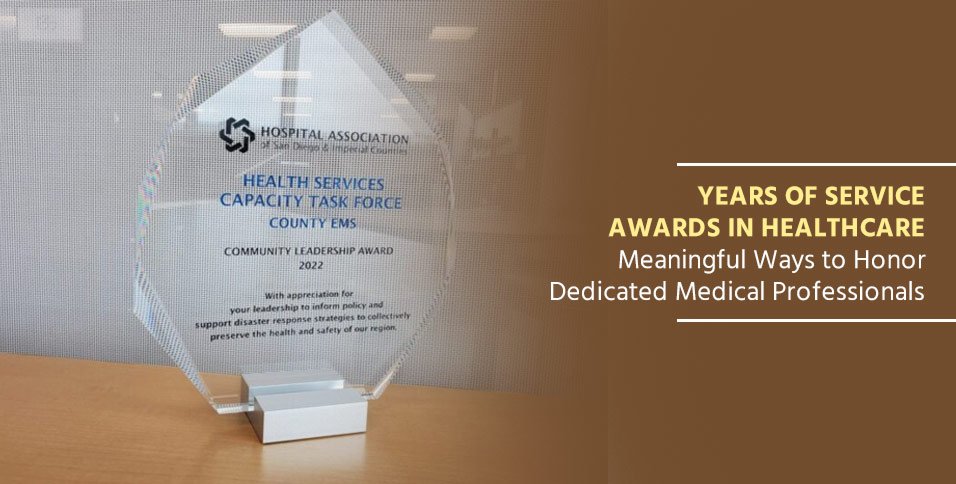
Custom Plaques are one option for commemorating healthcare professionals. Organizations can personalize them with engraved names, service dates, institutional logos, and messages that recognize an employee’s dedication to patient care.
For example, a hospital might present a personalized plaque to a nurse celebrating fifteen years of service, highlighting their compassion, professionalism, and contribution to the nursing team.
These awards can be displayed in offices, staff rooms, or at home, allowing recipients to preserve a meaningful reminder of their professional achievements.
3. Organize Meaningful Employee Recognition Ceremonies
A dedicated recognition ceremony can make a service anniversary more memorable. Healthcare organizations can incorporate awards into annual staff appreciation events, hospital celebrations, departmental meetings, or professional development gatherings.
The event does not need to be elaborate to have a positive impact. Even a short ceremony during a staff meeting can communicate genuine appreciation when it is thoughtfully organized.
During the presentation, a hospital administrator, department head, or senior colleague can acknowledge the recipient’s contributions. Examples might include mentoring junior nurses, supporting clinical teams during demanding periods, improving administrative processes, or consistently demonstrating compassion toward patients.
Recognizing employees in front of their colleagues helps highlight the value of long-term commitment. Because healthcare professionals often work in demanding environments, public appreciation can also provide an opportunity to celebrate the people behind essential medical services.
Organizations should accommodate different shifts and clinical responsibilities so that employees across departments have a fair opportunity to participate.
4. Choose High-Quality Awards That Reflect Professional Achievement
The design and quality of a service award can influence how recipients perceive it. Choosing durable materials and professional designs helps create a keepsake that employees can value for years.
Healthcare organizations can consider several award options, including crystal awards, glass plaques, wooden plaques, acrylic designs, and metal trophies. Each offers a different appearance and may suit different recognition occasions.
Crystal and glass awards can provide an elegant option for major career milestones, while wooden plaques may offer a traditional and understated presentation. Acrylic awards can accommodate contemporary designs and customized shapes.
When selecting awards, organizations should consider engraving quality, durability, display options, personalization, and budget. Custom Plaques can be particularly suitable for hospitals and medical centers seeking a professional way to commemorate employee service.
The goal is not necessarily to choose the most expensive award. Instead, the award should reflect the significance of the achievement and communicate sincere appreciation.
5. Include Personalized Messages of Appreciation
A thoughtful message can give a service award greater meaning. It explains why the employee’s work matters and recognizes the contribution they have made to the healthcare organization.
Healthcare employers can adapt messages to suit different service milestones.
- Five Years of Service: In appreciation of five years of dedication, teamwork, and commitment to quality patient care.
- Ten Years of Excellence: Celebrating a decade of professionalism, compassion, and valuable contributions to our healthcare community.
- Fifteen Years of Dedication: With sincere gratitude for fifteen years of service, collaboration, and support for patients and colleagues.
- Twenty Years of Service: Honoring two decades of dedication, experience, and commitment to advancing healthcare excellence.
- Distinguished Healthcare Service Award: Presented in recognition of exceptional commitment to patients, colleagues, and the continued success of our healthcare organization.
Whenever possible, organizations should personalize these messages by mentioning a specific achievement or professional quality. Recognizing leadership, mentoring, teamwork, patient communication, or service improvement can make the acknowledgment feel more genuine.
6. Combine Awards With Thoughtful Gestures
A physical award can be an excellent way to commemorate an anniversary, but combining it with another thoughtful gesture may make the experience even more memorable.
Depending on organizational policies and available resources, healthcare employers might offer a team lunch, a handwritten note from senior management, a professional development opportunity, an additional day off, or a small personalized gift.
For example, a hospital celebrating a physician’s twenty-year anniversary could present an engraved award alongside a message from the medical director recognizing their contribution to patient care and staff development.
Organizations should also consider individual preferences. Some employees appreciate public celebrations, while others prefer a personal acknowledgment or a quiet gathering with close colleagues.
These gestures should be planned fairly and should not interfere with essential staffing requirements or patient safety. The most important factor is demonstrating genuine appreciation rather than relying on expensive gifts.
7. Ensure Fair and Consistent Recognition Across Departments
Healthcare organizations often employ people across multiple departments, shifts, and locations. A successful recognition program should ensure that every eligible employee has a fair opportunity to be acknowledged.
Hospitals can establish transparent guidelines explaining which service milestones qualify for awards, how employment dates are calculated, and what form of recognition employees can expect.
Human resources teams can maintain accurate records, monitor upcoming anniversaries, and coordinate award preparation. This reduces the likelihood of missed milestones and helps ensure that names, titles, and service dates are correct.
Recognition should extend beyond physicians and senior administrators. Nurses, laboratory technicians, receptionists, maintenance staff, patient care assistants, and other support professionals also contribute to the daily operation of healthcare facilities.
Acknowledging these contributions reinforces the idea that excellent healthcare depends on collaboration across the entire organization.
8. Build a Lasting Culture of Appreciation
Years of service awards are most effective when they form part of a broader culture of appreciation. Healthcare professionals should not have to wait five or ten years to hear that their work makes a difference.
Managers can recognize successful projects, celebrate teamwork, thank employees for mentoring new colleagues, and acknowledge efforts to improve patient experiences. Regular appreciation can help create a workplace where employees feel that their contributions are noticed.
Healthcare organizations can also share employee milestones through internal newsletters, staff communications, or workplace displays, with appropriate consent and respect for privacy.
Combining everyday appreciation with formal service awards allows organizations to recognize both long-term loyalty and ongoing contributions. This approach supports a more inclusive environment in which employees across different roles feel respected.
Conclusion
Years of service awards provide healthcare organizations with a meaningful opportunity to honor dedicated medical professionals, celebrate career milestones, and recognize the people who support patient care. From doctors and nurses to technicians and administrative staff, every employee deserves acknowledgment for the contributions they make to a healthcare organization’s success.
By personalizing awards, organizing thoughtful ceremonies, selecting quality materials, and writing sincere messages of appreciation, hospitals and medical centers can create lasting memories for their teams.
Custom Plaques offer a professional way to commemorate these achievements through personalized engravings, service dates, institutional branding, and messages of gratitude. When combined with fair recognition policies and consistent appreciation, these awards can become meaningful symbols of professional dedication.
Ultimately, recognizing years of service is about more than celebrating time spent at an organization. It is about honoring the experience, compassion, teamwork, and commitment that help healthcare professionals make a difference in people’s lives.