The resume begins with a residency that lasted seven years and leads, so far, to a classroom and a clinic in Greenville, North Carolina. Between those two points sit a fellowship in Boston and a tenure in Ohio that ran for nearly 13 years.
The sequence is unusually clear: training came first, followed by a long period of building at one institution and then a move that brought clinical leadership and physician education into the same role.
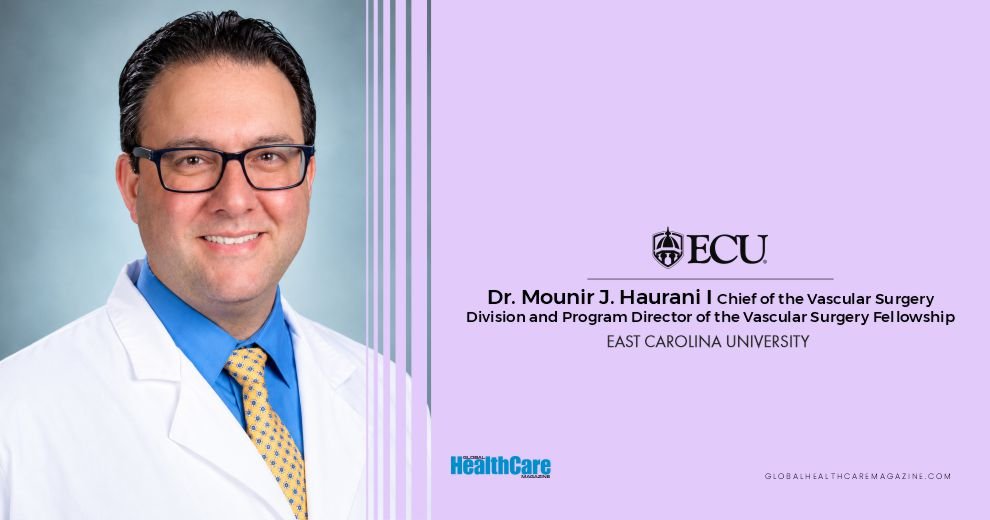
At the center of that shape is Dr. Mounir J. Haurani, Chief of the Vascular Surgery Division and Program Director of the Vascular Surgery Fellowship at East Carolina University. He is also a Professor in the Division of Vascular Surgery, and his stated commitments read like a syllabus: surgical innovation, better patient outcomes, and the mentoring of the next generation of vascular surgeons.
His career illustrates how leadership and teaching can become inseparable.
Nine Years of Preparation
Dr. Haurani’s training began in July 2002, when he started as a Resident Doctor at Henry Ford Health System. The residency ran full-time until June 2009, a span of seven years.
In July 2009, he moved to Boston for a full-time fellowship at Massachusetts General Hospital. It lasted two years, ending in June 2011. Together, the two stages account for roughly nine years of training. It is the kind of apprenticeship that rarely makes headlines, yet it quietly explains much of what followed.
Nearly Thirteen Years at Ohio State
In August 2011, just two months after finishing his fellowship, Dr. Haurani joined The Ohio State University Wexner Medical Center as an Associate Professor. He stayed until May 2024. The tenure lasted nearly 13 years, making it the longest single chapter in his professional record.
Length of service is not, on its own, a measure of vision. But the duration points to something the record makes clear: this is a surgeon who builds over years rather than seasons. His committee service and professional leadership sit alongside that record of sustained work.
A Seat at Many Tables
Dr. Haurani has served on multiple committees for national and regional vascular surgical professional organizations. The responsibilities are wide-ranging, and each one touches a different part of the field:
- Contributing to discussions around CMS performance metrics, the measures by which quality is judged
- Supporting education and recruitment, which help determine who enters the specialty
- Engaging in government relations and advocacy, where policy meets practice
- Contributing to professional communication, helping the specialty share knowledge and engage wider audiences
His leadership in this area includes chairing the Society for Vascular Surgery’s Government Relations Committee, which addresses legislative and regulatory issues affecting vascular surgeons and their patients.
Read together, these responsibilities describe a surgeon who takes an active interest in the structures surrounding his specialty. Metrics, training, policy, and public communication are all, in their way, part of patient care.
Greenville, 2024
In August 2024, Dr. Haurani joined East Carolina University as a full-time Professor, based on-site in Greenville, North Carolina. More than two years into this appointment, he continues to combine institutional leadership with the education of future vascular surgeons.
Today he holds two leadership roles at once. As Chief of the Vascular Surgery Division, he leads the division. As Program Director of the Vascular Surgery Fellowship, he is responsible for the program that trains new vascular surgeons.
The second role connects directly to the arc of his own career. A man who spent nine years in training now directs the training of others. The apprenticeship has come full circle.
Dr. Haurani describes his commitments in terms of shaping the future of vascular care. In Greenville, that future has a concrete form: a fellowship program and the surgeons who pass through it.
The Ambassador
Beyond the hospital and the classroom, Dr. Haurani serves as an Ambassador for the Society for Vascular Surgery’s Highway to Health campaign, which promotes vascular health awareness and education.
In that role, he champions three causes:
- Vascular disease prevention
- Patient education
- The essential role of diversity and inclusion in driving innovation and elevating care
The third item is worth pausing on. It frames inclusion not as an add-on but as a driver of better medicine, an argument that places diversity at the center of innovation rather than at its edge.
Prevention and education, meanwhile, point to a view of vascular care that begins well before anyone reaches an operating table.
The Work Behind the Leadership
Taken together, Dr. Haurani’s work spans clinical care, professional service, surgical education, and public advocacy. Each area addresses a different need within vascular healthcare, yet they share a common purpose: strengthening the specialty and the people who sustain it.
His professional service connects the day-to-day realities of vascular practice with broader questions of policy, standards, and public awareness. His academic role, meanwhile, gives him a direct part in preparing surgeons to take responsibility for the specialty’s future.
This combination of responsibilities makes his career notable not simply for its progression through institutions, but for the range of ways in which he contributes to vascular care.
Where Leadership Extends Beyond the Operating Room
Vision in vascular healthcare is not only about devices or techniques. It is also about who gets trained, how quality is measured, and whether patients understand the diseases that affect them.
Dr. Haurani works across these areas through his leadership at East Carolina University, his professional service, and his advocacy for vascular health awareness. The significance of this work lies in connecting clinical excellence with the systems that support it: education, professional standards, and public understanding.
In a field that depends on skilled hands, he has chosen to invest in the people who will own them next. By helping prepare the next generation while contributing to the wider development of vascular surgery, he is building a legacy that can extend well beyond his own clinical practice.