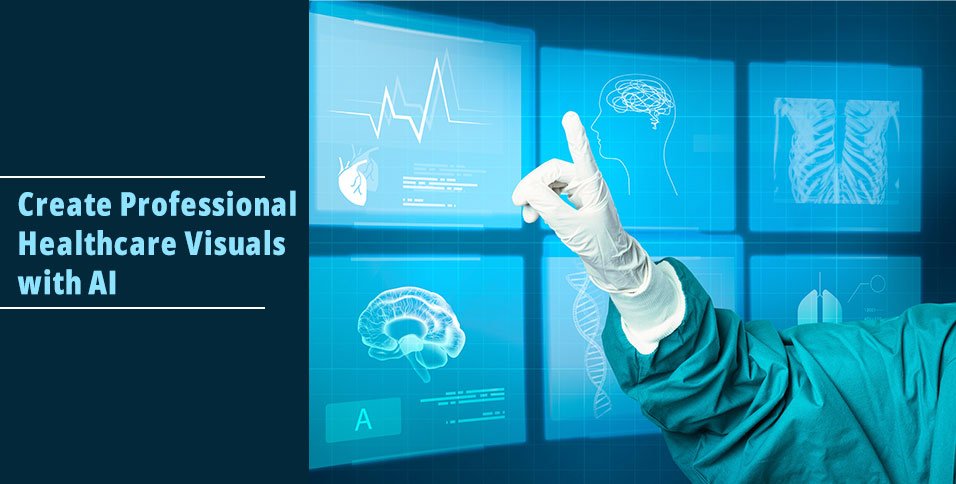
Healthcare is a field where clear communication can make a real difference. Doctors, nurses, healthcare educators, medical writers, and healthcare content creators often need visual content to explain complex medical topics in a simple and understandable way. From patient education materials to healthcare blogs, presentations, and social media posts, professional visuals help people understand information more easily.
However, creating high-quality healthcare visuals can take time, effort, and design skills. Traditional design methods may require specialized software, medical illustration experience, and a significant amount of work.
Dreamina’s image generator tool is changing this process. With this tool, healthcare professionals and content creators can develop clear, attractive, and professional visuals more efficiently. These tools can help turn ideas into illustrations, diagrams, infographics, and educational graphics.
In this article, we will explore how to create professional healthcare visuals with AI, the benefits of using AI for medical content, and the best practices for producing accurate, engaging, and trustworthy visuals.
What Are AI-Generated Healthcare Visuals?
AI-generated healthcare visuals are images, illustrations, diagrams, and other visual materials created or enhanced with the help of artificial intelligence tools.
These visuals can support different healthcare communication needs, including patient education, medical training, healthcare marketing, and health-related content creation.
For example, a healthcare content writer can use AI to develop an illustration explaining how the human heart works. A medical educator can create a visual guide to the digestive system, while a healthcare organization can design an infographic about healthy lifestyle habits.
AI tools can support the creation of several types of healthcare visuals, such as:
- Medical illustrations: Visual representations of organs, body systems, and anatomical structures.
- Healthcare infographics: Graphics that present health information, statistics, and practical tips in an easy-to-follow format.
- Patient education materials: Visual guides that explain medical procedures, general health conditions, and preventive care.
- Healthcare presentations: Professional graphics for medical lectures, training sessions, and educational seminars.
- Social media graphics: Engaging visual content for healthcare campaigns, awareness days, and public health education.
- Medical concept illustrations: Simplified visuals that help explain complex scientific or healthcare concepts.
When used correctly, AI can make healthcare information more accessible while helping content creators maintain a consistent visual style.
Why Use AI to Create Professional Healthcare Visuals?
Creating healthcare visuals is not only about making content look attractive. The main goal is to communicate information clearly, responsibly, and effectively.
AI offers several advantages when used as part of the visual creation process.
1. Save Time and Improve Efficiency
Creating a medical illustration from scratch can be a time-consuming task. AI tools can help users develop initial concepts, explore different visual styles, and generate design ideas in less time.
For example, a healthcare blogger writing about diabetes prevention can use AI to create a draft infographic featuring healthy food choices, physical activity, and everyday wellness habits.
The creator can then refine the image, verify the information, and prepare it for publication.
This approach helps reduce the time spent on early design work while leaving more room for research, editing, and quality control.
2. Explain Complex Medical Topics Simply
Many healthcare topics contain technical terms and scientific details that can be difficult for general readers to understand.
Visuals can make these topics easier to follow by presenting information in a clear and organized way.
For example, an illustration showing how air moves through the respiratory system may help readers understand the breathing process more easily than a long paragraph alone.
AI can help create simplified visual concepts that support written explanations. However, medical accuracy must always come first. Any illustration that represents anatomy, disease processes, or medical procedures should be reviewed carefully before publication.
3. Create Consistent Healthcare Branding
Consistency is important for healthcare websites, hospitals, clinics, educational platforms, and medical publications.
Using a similar color palette, typography, illustration style, and layout across different visuals helps create a professional and recognizable identity.
AI can help generate visual concepts that follow a chosen style. Designers can then adjust the results to match the organization’s brand guidelines.
For example, a healthcare website might use calm blue and green colors, clean layouts, and simple illustrations throughout its patient education articles.
A consistent visual style makes content look more organized and helps readers recognize the source.
4. Make Healthcare Content More Engaging
People often find information easier to explore when it combines clear writing with relevant visuals.
A well-designed infographic, anatomical illustration, or educational diagram can draw attention to important points and encourage readers to continue learning.
AI can help content creators develop visuals for blog posts, newsletters, online courses, and social media platforms.
Still, visual appeal should support the message rather than distract from it. Healthcare content should remain informative, respectful, and easy to understand.
5. Support Different Audiences and Learning Needs
Healthcare content serves many audiences, including patients, caregivers, students, researchers, and healthcare professionals.
Each audience may require a different level of detail.
A patient education graphic may need simple labels and everyday language, while a medical training illustration may require more detailed anatomical information.
AI can help creators explore different presentation styles and levels of complexity. Human review is essential to ensure the final visual is appropriate for its intended audience.
How to Create Professional Healthcare Visuals with AI
Creating effective healthcare visuals does not require every content creator to be an experienced designer. A clear process can help produce better results.
Step 1: Define Your Purpose and Audience
Before using an AI tool, decide what you want the visual to communicate.
Ask yourself three simple questions:
- What healthcare topic am I explaining?
- Who will view this visual?
- What should readers understand after seeing it?
For example, if your goal is to educate patients about high blood pressure, your visual might explain what blood pressure measures, why regular monitoring matters, and which healthy habits can support cardiovascular health.
Defining the purpose helps you avoid unnecessary details and keeps the design focused.
Step 2: Choose the Right AI Tool
Different AI tools support different parts of the visual creation process. Some generate images from text descriptions, while others help create layouts, diagrams, presentations, or infographics.
When selecting a tool, consider its ability to produce clear visuals, support editing, maintain consistent styles, and export suitable image formats.
You should also review its privacy terms and data-handling practices, particularly when working in a healthcare environment.
AI-generated images are often best suited to concept development and general educational illustrations. For precise medical diagrams, use verified medical references and appropriate professional illustration or diagramming tools.
Step 3: Write a Clear and Detailed Prompt
The quality of an AI-generated visual often depends on the clarity of the instructions.
A useful prompt should describe the subject, intended audience, visual style, composition, color palette, and important details.
For example, instead of writing:
“Create a healthcare image.”
Use a more specific description:
“Create a clean, professional educational illustration of the human respiratory system for a general health education website. Show the lungs, trachea, and major airways using a simple, clearly organized layout. Use a white background, soft blue and teal colors, a balanced composition, and a friendly educational style. Avoid decorative clutter and ensure the illustration is suitable for adult readers.”
This prompt gives the AI a clearer understanding of the desired result.
For medically sensitive subjects, include only details that can be checked against reliable medical references. Do not assume that a realistic-looking illustration is anatomically correct.
Step 4: Review the Generated Visual Carefully
AI-generated content may contain errors, unusual anatomical structures, misleading details, or visual inconsistencies.
These problems can be particularly serious in healthcare communication because readers may interpret an illustration as medically accurate.
Review the visual for:
- Correct anatomical structures and proportions.
- Accurate representation of the health topic.
- Appropriate medical terminology and labels.
- Clear visual hierarchy and readability.
- Unnecessary or potentially misleading details.
- Respectful representation of patients and diverse populations.
If the visual explains a condition, procedure, medication, or diagnostic process, ask a qualified healthcare professional to review it when appropriate.
Step 5: Refine the Design
The first AI-generated image is rarely the final version. Small improvements can make a significant difference.
Adjust the composition, background, colors, spacing, and image balance. Remove distracting elements and ensure that the main subject is easy to identify.
For infographics and educational diagrams, add labels and explanatory text using a design tool when necessary. This is often more reliable than asking an image generator to produce complex text directly inside an image.
Keep the design simple. A visual with a clear message and sufficient white space is usually more effective than one filled with too many elements.
Step 6: Add Reliable Information and Sources
Healthcare visuals should be based on trustworthy information rather than AI-generated claims.
Use reputable medical references, public health guidance, peer-reviewed research, and approved organizational resources to verify factual statements.
If your visual includes statistics, treatment information, health recommendations, or scientific claims, confirm that the information is current and relevant to the intended audience.
Where appropriate, include source notes, publication dates, or links to further reading.
This helps readers understand where the information comes from and supports responsible healthcare communication.
Step 7: Prepare the Visual for Publication
Before publishing, check the technical quality of the image.
Make sure the resolution is suitable for its intended use, the text remains readable on mobile devices, and the colors provide enough contrast.
Consider the following points:
- Use appropriate image dimensions for websites, presentations, or social media.
- Add descriptive alternative text for accessibility.
- Use readable fonts and clear labels.
- Avoid relying on color alone to communicate essential information.
- Check image licensing and the AI tool’s terms of use.
- Follow applicable privacy and organizational policies.
A final quality check helps ensure that the visual is useful, accessible, and ready for its audience.
Best Practices for Professional AI Healthcare Visuals
To create healthcare visuals that readers can trust, focus on accuracy, clarity, and responsible use.
Prioritize Medical Accuracy Over Appearance
A visually impressive image is not necessarily a medically accurate one.
AI may generate incorrect organs, unusual body structures, misleading medical equipment, or inaccurate depictions of a procedure.
Use AI as a creative assistant, not as the final authority on medical facts. Verify relevant details before sharing the visual with patients or healthcare professionals.
Keep the Design Simple and Clear
Healthcare readers should not have to work hard to understand an image.
Use a clear focal point, short labels, balanced spacing, and a logical arrangement of information. Avoid unnecessary decorative elements that compete with the main message.
For complex topics, consider dividing the information into several visuals instead of placing everything in one infographic.
Use Inclusive and Respectful Imagery
Healthcare visuals should represent people respectfully and avoid reinforcing stereotypes.
When appropriate, consider diversity in age, skin tone, disability, body type, and other relevant characteristics. Make sure the visual reflects the needs of the intended audience without making unsupported assumptions about individuals or groups.
Protect Patient Privacy
Never upload identifiable patient photographs, medical records, test results, or other confidential health information to an AI tool unless the tool and its use have been appropriately approved under applicable privacy and security requirements.
Use fictional examples, generic illustrations, or properly authorized and de-identified material instead.
Healthcare organizations should follow applicable privacy laws, data protection requirements, and internal policies when using AI tools.
Be Transparent About AI Use When Appropriate
Healthcare organizations should establish clear policies for AI-assisted content creation.
Depending on the purpose, audience, professional standards, and applicable requirements, it may be appropriate to disclose that a visual was generated or modified with AI.
Transparency is particularly important when the image could otherwise be mistaken for an authentic clinical photograph, a real patient case, or a validated medical illustration.
Make Accessibility Part of the Design
Professional healthcare visuals should be understandable to as many people as possible.
Use sufficient contrast, readable text, descriptive alternative text, and straightforward language. Avoid placing essential information only within an image.
For readers who use screen readers or have difficulty interpreting complex graphics, provide a written explanation of the visual’s main message.
Common Mistakes to Avoid
Although AI can simplify the visual creation process, some mistakes can reduce the quality and reliability of the final result.
Using vague prompts: General instructions often produce generic or inconsistent visuals. Describe the topic, audience, purpose, and desired style clearly.
Trusting every generated detail: AI can produce convincing but incorrect medical information. Check factual and anatomical details before publication.
Adding too much information: Overloaded infographics can confuse readers. Focus on the most important message and organize supporting details carefully.
Ignoring text quality: AI-generated images may contain misspelled words, incorrect labels, or unreadable text. Add important wording separately and proofread it.
Choosing style over clarity: Complex backgrounds and decorative effects can distract from healthcare information. Keep the main message easy to identify.
Skipping professional review: Visuals involving diagnosis, treatment, procedures, or other clinically important information may require review by a qualified healthcare professional.
Avoiding these mistakes helps create visuals that are not only attractive but also informative and trustworthy.
The Future of AI in Healthcare Visual Communication
AI is creating new opportunities for healthcare content development. As these tools evolve, they may help professionals produce more customized educational materials, adapt visuals for different audiences, and develop interactive learning resources.
For example, a healthcare educator may be able to create several versions of the same educational concept for different reading levels. A medical communications team may use AI to explore alternative layouts before selecting a final design. Healthcare websites may also use AI-assisted workflows to develop consistent visual content across multiple topics.
However, progress in AI does not remove the need for professional judgment. Medical accuracy, privacy, accessibility, and ethical communication will remain essential.
The most effective approach combines AI’s ability to generate ideas quickly with human expertise in healthcare, communication, and design.
Conclusion
Creating professional healthcare visuals with AI can make health information easier to understand, more engaging, and more accessible. From medical illustrations and patient education graphics to healthcare infographics and educational presentations, AI tools offer practical ways to develop visual content efficiently.
The key is to use AI thoughtfully. Start with a clear purpose, write specific prompts, review every image carefully, verify medical information, and refine the design before publication.
Most importantly, remember that healthcare visuals carry responsibility. They can influence how people understand their health and make decisions about their care. Accuracy, privacy, accessibility, and trust should always come before visual appeal.
When AI technology is combined with human expertise and responsible content practices, it can become a valuable tool for creating healthcare visuals that inform, educate, and connect with readers.