The rapid and widespread exchange of data is helping to transform just about every aspect of the modern economy. In the world of healthcare, the potential benefits are considerable, but they must be weighed against the potential harms. Let’s consider what these harms and benefits might look like.
What is Healthcare 4.0?
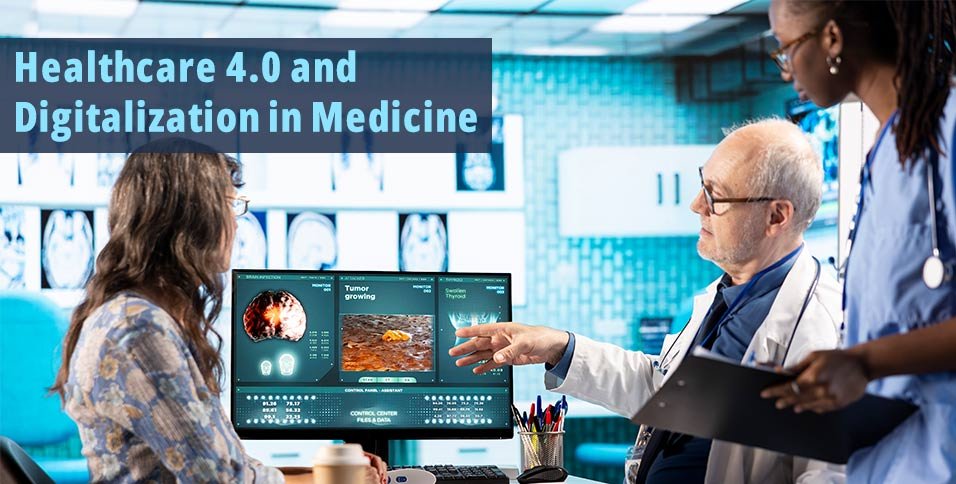
One term you might hear is ‘Healthcare 4.0’. This is a way of distinguishing this new, data-driven approach from previous leaps forward in the provision of medicine.
Healthcare 1.0, which persisted for thousands of years, was of a purely reactive, traditional kind. The storing of electronic data, and the use of social media and the internet more generally, characterized a switch to Healthcare 2.0. Then, we saw an explicitly predictive approach emerge in Healthcare 3.0.
Healthcare 4.0 takes things a stage further, with cloud computing, the Internet of Things, and smart devices being used to monitor everyone’s healthcare, and to spot potential harms before the patient ever arrives at a hospital.
The Connected Technologies Powering Healthcare 4.0
All of this is made possible by certain specific technological advancements. Fundamentally, it’s about devices being able to talk to one another about specific individuals. You might consider a smartwatch that continuously monitors your heart rate in search of abnormalities and reports its findings to a centralized machine, which is able to sift through millions of similar reports submitted by other people.
This machine might then do what machine-learning algorithms excel at, which is report correlation. If your markers match up with those of pathological patients, then you can be warned before any real symptoms show up.
Of course, providing the measurements in the first place means finding the right devices. Sensors of all kinds are becoming smaller, cheaper, and more reliable, which is making it possible to collect more and more accurate patient data.
From Connected Devices to Data-Driven Medicine
It’s easy to envision a future in which healthcare data becomes a valuable, actionable resource. Clinical research, which is currently very expensive and resource-intensive, might be made much cheaper, as a vast treasure trove of user-generated content is gradually built. This content might have a similar transformative effect to the one that user-generated video had in the world of entertainment.
Turning Healthcare 4.0 into a Sustainable Digital Transformation
Healthcare organizations need to view this transition as amounting to more than a change in the devices we use. Friction, and the barriers that slow the spread of valuable data, might slow down the frontier of this revolution, at a cost to the health, and lifespan, of human patients.
Of course, there are also risks to this pooling of data. Some patients might not willingly consent to the sharing of their medical data, even if it’s anonymized. At the same time, the collection and storage of sensitive medical data might present a target for cybercriminals and other malicious actors.
Making Healthcare 4.0 a success will require winning the trust of the public, and that means being honest not just about the potential rewards of the technology, but about the potential risks, too.