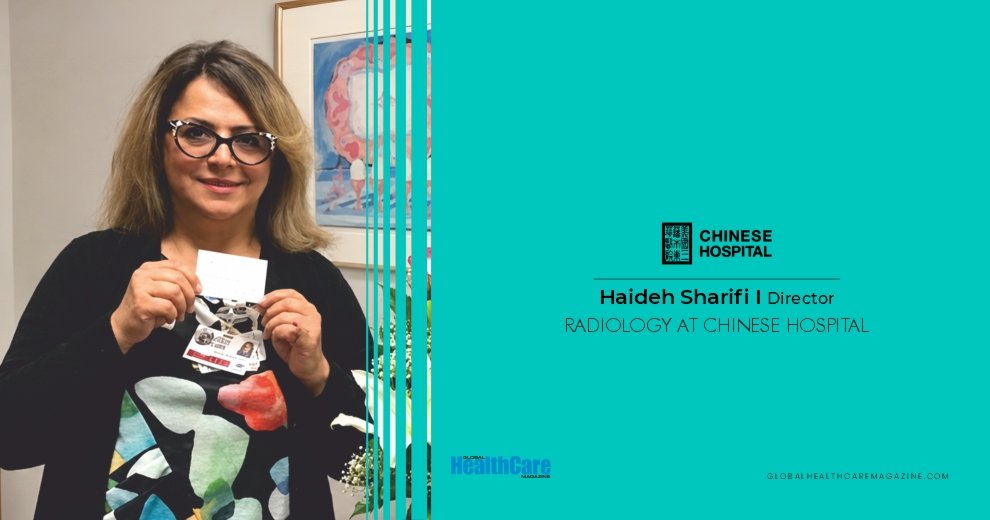
A radiology department, at first glance, looks like a place governed entirely by machines. The scanners hum, the monitors glow, the hallways carry that particular hush of a building where people wait for answers about their own bodies. But spend enough time in one, and it becomes clear that the machines are only half the story. The other half is human: the scheduling, the judgment calls, the quiet reassurance offered to a frightened patient before a scan. Haideh Sharifi has spent more than two decades learning to hold both halves at once.
Her path did not begin in a hospital. It began, as she describes it, with a lifelong interest in science, learning, and continuous improvement. Her academic foundation was in chemistry, a discipline that trained her to think in evidence, in cause and effect, in the kind of analytical rigor that does not tolerate guesswork. After coming to the United States, she carried that foundation forward, building a career in diagnostic imaging and healthcare operations that would eventually lead her to her current role as Director of Radiology at Chinese Hospital.
Along the way, she went back to school. Not because she needed to, but because she wanted to understand the business side of the field alongside the professional experience she had already built. She completed her MBA with distinction from the Jack Welch Management Institute, adding strategy, finance, leadership, and organizational performance to her professional foundation.
What drew her to imaging specifically, she explains, was the way it sits at an intersection. “Diagnostic imaging attracted me because it brings together science, advanced technology, clinical expertise, and human connection,” she says. Imaging, in her telling, is not a single moment but a thread that runs through the entire arc of a patient’s experience, from prevention and early detection through diagnosis, treatment planning, and follow-up. Somewhere along that thread, she found her calling: creating imaging environments where clinical quality, operational excellence, and compassionate care are not competing priorities but parts of the same system.
Lessons From the Floor
Ask Haideh about her professional journey, and she does not reach for a single dramatic turning point. Instead, she talks about accumulation, the slow gathering of insight that comes from working alongside talented healthcare professionals through years of growth, change, and technological advancement. Those years taught her something specific: that leadership in healthcare requires adaptability, collaboration, transparency, and a willingness to continuously learn.
Her leadership style, as she describes it, is not about imposing a vision from above. It is about listening first. “I use data and frontline perspectives to identify opportunities for improvement while respecting the knowledge and experience already present within an organization,” she says. It is a subtle distinction, but an important one. Sustainable improvement, in her view, does not come from mandates. It comes from people understanding why a change matters and having a hand in shaping it.
That philosophy becomes especially relevant when you consider what imaging departments are up against today. The list, as she lays it out, is long: workforce availability, patient access, evolving technology, financial stewardship, cybersecurity and privacy considerations, accreditation standards, regulatory requirements, and the ever-present expectation of an excellent patient experience. It is a lot to hold at once. And yet demand for imaging continues to evolve, which means scheduling, workflow, equipment utilization, and communication all have to be continually re-examined to keep resources aligned with patient needs.
She does not frame this complexity as a burden. She frames it as an invitation. “I view these challenges as opportunities for thoughtful innovation,” she says, adding that strong imaging operations depend on the right combination of people, processes, technology, measurement, and collaboration.
Standards With Room to Breathe
Managing a multi-site imaging operation is a bit like conducting an orchestra where every section has learned to play at a slightly different tempo. Haideh’s approach to that challenge rests on a foundation of clear standards, communication, collaboration, quality, and measurable performance. Consistency, she says, starts with well-defined expectations around patient safety, staff competency, regulatory compliance, service quality, and operational performance.
But standardization, on its own, is not enough. Different imaging sites serve different patient populations, carry different volumes, and rely on different technologies. So she has learned to hold two things in tension: strong foundational standards on one hand, and enough flexibility on the other to let teams adapt their workflows responsibly to the communities they actually serve. It is not a contradiction, in her view. It is simply what good leadership looks like in a field this varied.
That same instinct for evaluation, weighing what is essential against what is merely fashionable, shapes how she thinks about new technology entering the field.
Technology in Service of People
There is no shortage of new tools promising to transform diagnostic imaging, and Haideh has developed a clear filter for sorting signal from noise. She starts, always, with the need. “Technology should provide meaningful value, not simply represent innovation for innovation’s sake,” she says.
Before adopting anything new, she asks whether it can genuinely improve patient access, quality, safety, workflow efficiency, clinical decision support, employee experience, or the responsible use of resources. She is particularly drawn to the possibilities of AI and automation in areas like scheduling, workflow optimization, and administrative processes, seeing real potential to lighten the operational load on imaging teams.
That enthusiasm, though, comes with guardrails. Healthcare technology, she insists, requires thoughtful evaluation, appropriate validation, privacy and security protections, sound governance, human oversight, and continuous performance monitoring. Rather than replacing professional judgment, she sees technology as a means of strengthening the people and processes behind patient care.
A Day in Full
The responsibilities that come with directing radiology are, by Haideh’s own account, deeply interconnected. Daily operations, staffing, scheduling, patient experience, quality, regulatory readiness, financial stewardship, equipment utilization, physician collaboration, employee development, performance improvement: none of these exist in isolation, and all of them demand attention, often simultaneously.
Ask her what she loves most about the job, though, and her answer sharpens quickly. It is bringing people together around a shared objective and watching that alignment turn into measurable improvement. It is developing solutions that serve patients and employees at the same time, in service of larger organizational goals.
And then there is the part of the work she returns to again and again: developing people. “Sustainable excellence comes from creating an environment where employees understand expectations, feel respected for their expertise, and recognize the importance of their contribution to the patient journey,” she says. It is a sentiment that reveals something essential about how she leads. The systems and metrics matter, but the people responsible for delivering them are what make excellence sustainable.
What a Great Imaging Team Looks Like
Haideh has strong opinions about what separates a good imaging team from a truly exceptional one. Technical and clinical competency are the baseline, she says, but they are not the whole picture. The qualities she looks for beyond that baseline include accountability, adaptability, compassion, communication, collaboration, professionalism, attention to detail, and an unwavering commitment to patient safety.
There is a reason she emphasizes the human qualities as heavily as the technical ones. Patients arrive at imaging departments during some of their most uncertain and stressful moments, often not knowing what a scan might reveal about their health. Technical skill gets the image captured correctly. But it takes something more, in her words, to “communicate respectfully and recognize each patient’s individual needs.” The strongest teams, she believes, combine clinical excellence with teamwork, emotional intelligence, professionalism, and compassion, qualities that do not show up on an equipment spec sheet but shape every patient’s experience just the same.
When Everything Happens at Once
Every leader has a story about the moment their leadership was truly tested, and for Haideh, that moment was never a single dramatic event. It was, instead, the recurring reality of leading teams through periods when multiple operational priorities demanded attention all at once. Those stretches, she says, sharpened her ability to prioritize, to stay focused on patient safety above all else, to communicate with clarity, and to collaborate across different functions under pressure.
Her method, when the pressure is highest, follows a consistent sequence: understand the facts first, assess the immediate patient and operational needs, establish clear priorities, and then work collaboratively toward solutions. But her process does not end once the immediate crisis passes. She believes just as strongly in the step that comes after, reflecting on what was learned and determining whether processes, communication, or resources need to be strengthened going forward. “Leadership is about remaining thoughtful, accountable, and solution-focused, particularly during periods of change,” she says.
The Numbers Behind the Vision
Ask Haideh what she is proudest of, and she does not lead with a single anecdote. She leads with results, the product of collaborative efforts around workforce utilization, scheduling, quality, customer service, and operational efficiency.
The figures speak plainly. Through staffing optimization and scheduling initiatives, her leadership has helped achieve approximately $900,000 in payroll savings. Her teams reduced reliance on temporary staffing from five travelers down to just one, within seven months. Premium pay decreased by more than 60 percent. Overtime dropped by approximately 550 hours.
But numbers, for Haideh, are not the whole story either. She is equally proud of the improvements in quality, customer service, operational capacity, and regulatory readiness that came alongside those figures. “The significance of these results goes beyond individual numbers,” she says. “They demonstrate what can happen when teams align around common goals and use data, collaboration, and thoughtful process improvement to support both organizational performance and patient care.”
Looking Toward the Horizon
When the conversation turns to the future, Haideh’s ambitions widen but never lose their grounding. She envisions herself continuing to contribute to healthcare leadership at a broader strategic level, while staying rooted in the fundamental purpose of healthcare: serving patients and communities.
She sees medical imaging entering an especially transformative period, one shaped by AI, automation, advanced diagnostics, predictive analytics, and integrated digital workflows. The organizations that succeed in this new landscape, she believes, will be the ones that combine these innovations thoughtfully with clinical expertise, strong governance, workforce development, operational excellence, and compassionate care.
For all her interest in emerging technology, Haideh keeps returning to a single conviction: innovation only matters if it serves a human purpose. It should improve access. It should support earlier detection. It should enhance quality, simplify appropriate workflows, empower healthcare professionals, and create a better experience for the patient on the table.
“My larger vision is to help build healthcare systems where clinical excellence, operational performance, responsible innovation, financial stewardship, and patient-centered care strengthen one another,” she says. Technology, she adds, will keep changing the shape of healthcare. But the purpose beneath that transformation should remain constant: using knowledge, resources, and leadership to serve patients better. It is, in the end, a vision built not around machines or metrics, but around the belief that innovation and humanity were never meant to be at odds in the first place.
Quote