Understanding Your Options for Therapy in Massachusetts
Looking after your mental health is an important part of your overall wellbeing, yet emotional difficulties are not always easy to understand. Some people live with constant worry or intrusive thoughts, while others notice low mood, disrupted sleep or strain in their relationships that does not seem to lift. Knowing when and where to seek professional support can make a meaningful difference.
Anyone who has typed therapist Massachusetts into a search bar knows how many profiles appear, and how hard it can be to tell them apart. The most useful starting point is a clinician with relevant experience, accessible appointments and a clear treatment approach. People across the state can also choose between in-person sessions at local practices and secure video sessions from home.
Specialist therapy helps people understand their symptoms, identify the patterns that keep them stuck and build practical skills for lasting change. Whether you need support for a specific condition, help through a difficult life transition or a fresh start after previous therapy, understanding the available options can help you make informed decisions.
Why Choosing the Right Therapist Matters
Therapy works best when the clinician’s training matches the concern you bring. A therapist who specializes in obsessive-compulsive disorder will approach treatment differently from one who mainly supports couples or grief.
The relationship between client and therapist also plays a major role. Feeling heard, respected and understood creates the safety needed to talk openly about difficult experiences.
However, therapy is not only for people in crisis or with a formal diagnosis. Many people seek support because they feel overwhelmed, stuck or simply want to understand themselves better.
An effective therapist considers your history, goals and circumstances rather than applying the same approach to every client.
Signs It May Be Time to Speak With a Therapist
Emotional difficulties look different for everyone. Some are mild or come and go, while others affect work, relationships and everyday activities.
Common reasons people reach out for therapy include:
- Persistent worry: Anxious thoughts that are hard to switch off or control.
- Low mood: Ongoing sadness, emptiness or loss of interest in things you used to enjoy.
- Intrusive thoughts: Unwanted thoughts, images or urges that lead to repetitive behaviors.
- Panic attacks: Sudden episodes of intense fear with physical symptoms such as a racing heart.
- Trauma reactions: Flashbacks, nightmares or feeling constantly on edge after a distressing event.
- Relationship strain: Repeated conflict or disconnection with a partner or family member.
- Major life changes: Loss, divorce, a new job, parenthood or other transitions that feel overwhelming.
These experiences do not always point to a specific condition, but they deserve attention when they affect your quality of life.
If you are thinking about suicide or are in immediate danger, call or text 988 to reach the Suicide and Crisis Lifeline, or call 911, rather than waiting for a routine appointment.
Common Concerns Therapists Help With
Licensed therapists support people with a wide range of mental health conditions and life challenges.
Anxiety and stress are among the most common reasons people start therapy. Treatment focuses on understanding triggers and reducing avoidance.
Depression can affect energy, sleep, motivation and self-worth. Therapy helps people re-engage with daily life and challenge negative thinking patterns.
Obsessive-compulsive disorder involves distressing obsessions and compulsions that can take up hours each day.
Trauma and PTSD can follow a single event or long-term difficult experiences, and often affect safety, trust and sleep.
Other concerns include panic attacks, phobias, ADHD, bipolar disorder, anger management and addictions. The right treatment depends on the specific concern, its severity and the person’s wider circumstances.
Understanding Therapist Credentials in Massachusetts
The letters after a therapist’s name show how they were trained and which state board oversees their work.
In Massachusetts, most clinicians who provide talk therapy hold one of these licenses: Licensed Independent Clinical Social Worker (LICSW), Licensed Mental Health Counselor (LMHC), Licensed Marriage and Family Therapist (LMFT) or Licensed Psychologist.
These clinicians provide assessment and therapy but do not prescribe medication. Psychiatrists and psychiatric nurse practitioners can prescribe, and many people see both a therapist and a prescriber.
A title alone does not determine quality. Specific training and experience with your concern are often more important than the type of license.
Evidence-Based Approaches to Look For
Modern therapy uses structured methods that have been studied in clinical research. These approaches give sessions a clear direction and make progress easier to measure.
Commonly used evidence-based approaches include:
- Cognitive Behavioral Therapy (CBT): Identifies and changes unhelpful thoughts and behaviors.
- Exposure and Response Prevention (ERP): A specialized form of CBT for OCD.
- Acceptance and Commitment Therapy (ACT): Builds willingness to experience difficult feelings while acting on personal values.
- Dialectical Behavior Therapy (DBT): Develops skills in emotion regulation, distress tolerance and relationships.
- Mindfulness-based techniques: Strengthen present-moment awareness and reduce reactivity.
- Prolonged and narrative exposure: Structured approaches for processing trauma.
People researching therapist Massachusetts options should ask which approach a clinician would use for their concern and why.
Cognitive Behavioral Therapy for Anxiety and Depression
CBT is one of the most widely researched forms of talk therapy. It focuses on the connection between thoughts, feelings and behaviors.
In sessions, a therapist helps you notice thinking patterns that fuel worry or low mood, then test them against real evidence.
CBT also uses practical steps, such as gradually facing avoided situations or scheduling activities that rebuild energy and motivation.
Treatment is usually goal-focused, and clients often practice skills between sessions. Many people find that this structure helps them see progress more clearly.
Exposure and Response Prevention for OCD
Exposure and Response Prevention is considered a first-line psychological treatment for obsessive-compulsive disorder.
During ERP, a person gradually faces the thoughts, images or situations that trigger anxiety while resisting the compulsions that usually follow.
Over time, this process helps the brain learn that the feared outcome is unlikely and that anxiety reduces on its own without rituals.
ERP should be collaborative and carefully paced. A trained therapist builds an exposure plan with the client rather than forcing difficult steps.
Not every therapist is trained in ERP, so people with OCD symptoms should ask about this directly before starting treatment.
Support for Trauma and PTSD
Trauma can follow a single frightening event or develop after long periods of difficult experiences.
Symptoms may include flashbacks, nightmares, avoidance, irritability, trouble concentrating or feeling unsafe even in familiar places.
Trauma-focused therapy aims to reduce these symptoms and help people process memories in a safe, structured way. Approaches such as prolonged exposure and narrative exposure therapy are often used.
Good trauma care begins with stability and trust. Clients should feel in control of the pace and able to pause when needed.
In-Person and Online Therapy Options in Massachusetts
People across Massachusetts no longer need to choose a therapist based only on how close they live to an office.
In-person therapy suits people who prefer face-to-face contact, find it easier to concentrate away from home or do not have a private space for sessions.
Online therapy, delivered through secure video, removes travel time and can make it easier to fit appointments around work, school or family responsibilities. It can also widen access to specialists for people in areas with fewer local options.
For many common concerns, research suggests video therapy can be as effective as meeting in person. The most important factors remain the therapist’s skill, the treatment approach and the quality of the working relationship.
A therapist generally needs to be licensed in the state where the client is located during the session, so people should confirm this if they travel or live part of the year elsewhere.
Accessing Therapy Through Green Hill Counseling
Patients considering therapist Massachusetts services should look beyond location alone. The clinician’s training, experience with specific conditions and the practice’s approach to matching clients are equally important.
Green Hill Counseling is a group therapy practice led by Alec Lotstein, LICSW, who is listed as the practice’s therapist and owner. The practice offers in-person sessions at its office in Dedham and video sessions for clients across Massachusetts.
The practice lists support for anxiety and stress, depression, OCD, panic attacks, trauma and PTSD, ADHD, phobias, bipolar disorder, anger management and addictions. Its clinicians use evidence-based methods including CBT, ERP, ACT and DBT.
The Green Hill Counseling clinical team includes licensed social workers, a mental health counselor and a marriage and family therapist. New clients request an appointment and are then matched with the clinician best suited to their needs before starting therapy.
People should contact the practice to confirm availability, session format and insurance details before booking.
What Happens During the First Therapy Session?
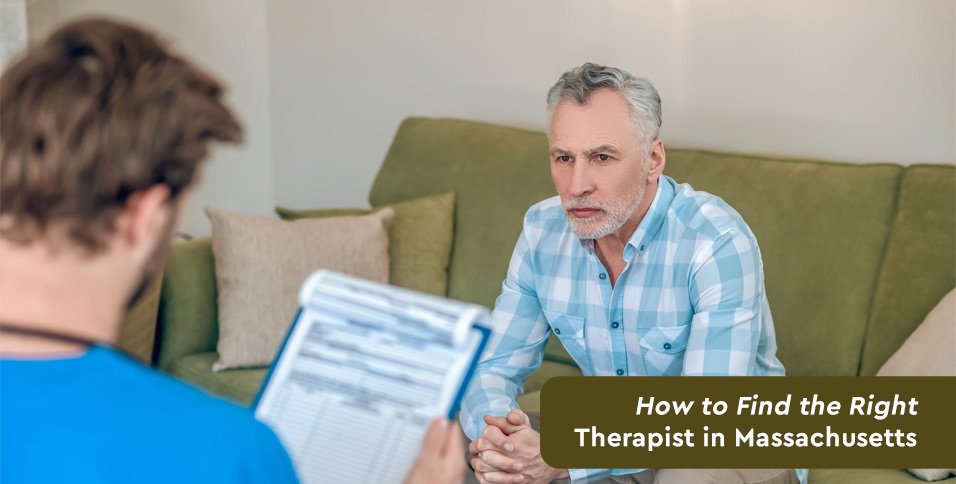
The first session provides an opportunity to discuss current concerns, relevant history and what you hope to change.
The therapist will generally ask when difficulties started, how often they occur and how they affect sleep, work, relationships and daily routines.
Previous therapy, current medication, physical health and family history may also be reviewed. Some practices use short questionnaires to measure anxiety or mood at the start of treatment.
You do not need to share everything at once. It is reasonable to say that a topic feels too difficult to discuss yet.
The purpose of the first session is to understand your situation, agree on goals and outline a treatment plan. You should leave with a clear idea of the approach and how often sessions will take place.
Insurance and Payment Considerations
Cost is one of the most common reasons people delay or stop therapy, so it helps to understand coverage before the first session.
Many Massachusetts health plans include outpatient mental health benefits. People should check their copay or coinsurance, any remaining deductible and whether video sessions are covered on the same terms as in-person care.
Insurer directories are not always up to date. It is worth confirming directly with the practice that it is in network with your specific plan, not only your insurance company.
Green Hill Counseling lists around fifteen insurance partners on its website, including Aetna, Blue Cross Blue Shield, Harvard Pilgrim, Optum, Oscar and UMR. The practice states that it does not accept MassHealth (Medicaid) plans.
People without in-network coverage can ask about out-of-network reimbursement, which some insurers provide for part of the session fee.
How to Choose the Right Therapist
Choosing a suitable therapist involves looking at professional training, areas of specialization and the practical details of care.
Start with clinical experience. A therapist who regularly treats your particular concern will usually offer a more focused plan than a generalist.
Consider the treatment approach. Ask which method the therapist would use and how it applies to your situation, such as ERP for OCD or trauma-focused therapy for PTSD.
Check practical arrangements as well, including session format, availability, fees, insurance and cancellation policies.
Preparation also makes the first appointment more productive. It helps to note when your difficulties started, what makes them better or worse, any current medication and the questions you want to ask.
For people comparing therapist Massachusetts options, these considerations can help distinguish between services. The closest office is not necessarily the most suitable choice, and feeling comfortable with the clinician matters just as much as credentials.
Taking the Next Step Towards Better Mental Health
Understanding your symptoms and the available treatment options is an important part of making informed decisions about your mental health.
Specialist therapy can help you make sense of difficult experiences, learn practical skills and work towards clear, realistic goals.
For Massachusetts residents, the choice between in-person and online sessions makes it easier than ever to access experienced, evidence-based care.
When considering therapist Massachusetts services, focus on clinical experience, a proven treatment approach, transparent insurance arrangements and a clinician you feel comfortable talking to.
The goal is to receive personalized support and a clear plan that helps you feel more like yourself again.