Itching around the vulva, scrotum or anus is one of the most common reasons people try three or four creams before seeing a doctor. Many of those cases are contact dermatitis, and the cause is often a product the person uses every day without a second thought.
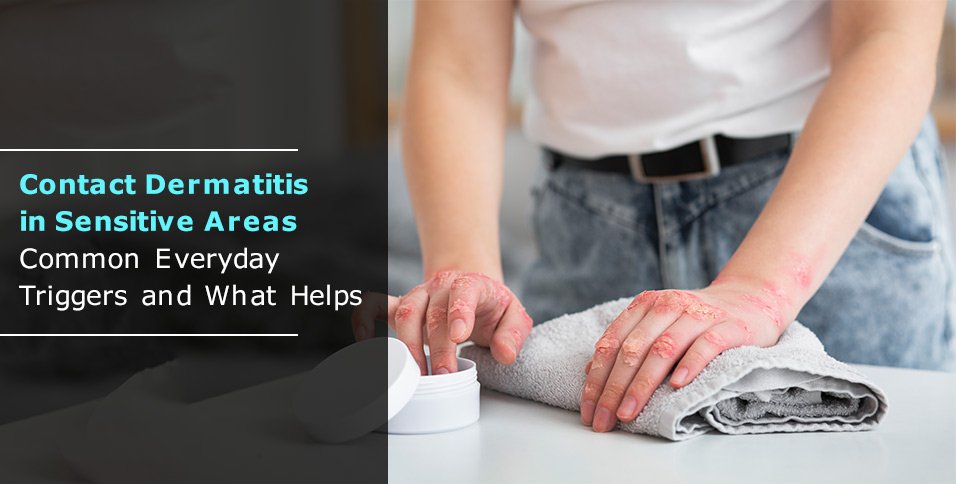
Contact dermatitis is inflammation of the skin after something touches it. On the hands it is easy to spot and easy to link to a cause. In the genital and perianal area it is harder, because the symptoms look like thrush, haemorrhoids or an infection, and people tend to treat it themselves for months.
What Is Contact Dermatitis?
There are two main types, and they behave differently.
- Irritant contact dermatitis: The most common type. A substance damages the outer layer of the skin directly. No allergy is involved, so anyone can get it with enough exposure.
- Allergic contact dermatitis: Less common. The immune system becomes sensitised to a specific ingredient and reacts every time the skin meets it, even in small amounts.
The difference matters for treatment. An irritant reaction often settles once exposure drops. An allergic reaction usually keeps coming back until the exact ingredient is found and avoided completely.
Why Is Genital and Perianal Skin So Reactive?
This skin is thinner than skin elsewhere on the body. It also sits in a warm, closed space where sweat, urine and discharge soften the outer layer and let substances pass through more easily.
Friction adds to the problem. Tight clothing, cycling and repeated wiping wear down the skin barrier, and damaged skin reacts faster to the next exposure.
Then there is the cleaning habit. When the area itches, many people wash it more often and with stronger products. That feels logical, but it frequently makes the dermatitis worse.
What Are the Most Common Triggers?
None of these is harmful for everyone, but each is a frequent finding when doctors investigate a persistent rash in this area.
- Soaps, shower gels and bubble baths: Foaming agents strip natural oils, and scented versions add fragrance, one of the most common allergens in patch testing.
- Feminine washes, sprays and deodorants: Often marketed as gentle, yet many contain fragrance and preservatives.
- Moist wipes: Wet toilet wipes and baby wipes need preservatives to stop bacteria growing, and some of those preservatives are strong allergens.
- Topical medicines: Over-the-counter haemorrhoid creams, anaesthetic gels and antifungal creams can cause reactions of their own. A rash that is not getting better is sometimes being caused by its treatment.
- Laundry products and fabrics: Fabric softener, detergent residue and synthetic underwear that traps moisture.
- Urine and stool: In people with incontinence, prolonged moisture is itself a strong irritant.
The Role of Wipes and Toilet Paper
Wiping happens several times a day, every day, so it deserves more attention than it usually gets.
The clearest evidence concerns moist toilet paper. A Mayo Clinic case series in the Archives of Dermatology described four adults with severe perianal and perineal allergic contact dermatitis caused by the preservative MCI/MI in moist toilet paper. All four had positive patch tests, and their symptoms resolved or improved substantially once they stopped using the wipes. One patient had lived with the rash for 20 years. Patients kept using the wipes because they believed extra cleansing would help, and the authors advised clinicians to ask about moist toilet paper in every case of perianal or perineal dermatitis.
Europe has since restricted that preservative, but wipes are still made with other preservatives and fragrances that can cause the same problem.
Dry toilet paper is a smaller factor, but it is not always neutral. Scented, coloured and lotion-coated papers add extra ingredients to skin that may already be inflamed. For patients with reactive skin, the usual advice is plain, dry, unscented paper without dyes or lotions. Some people choose an unbleached option for the same reason, such as unbleached bamboo toilet paper, and pat rather than rub to limit friction.
What Are the Symptoms?
Symptoms usually start within a few hours or days of exposure.
- Itching, often worse at night
- Burning or stinging, especially when urinating or after a bowel movement
- Redness on lighter skin, or dark brown, purple or grey patches on darker skin
- Dry, cracked or raw skin, and sometimes small blisters
Long-term scratching thickens the skin, which then itches more.
How Is It Treated?
Removing the trigger comes first. Without that, every other treatment only works for a while.
- Simplify the routine: Wash with plain water or a soap-free emollient. Stop wipes, sprays, scented products and any non-prescribed creams for a few weeks.
- Protect the barrier: A plain emollient or barrier ointment, applied thinly, keeps the skin from drying and cracking.
- Short courses of topical steroids: A doctor may prescribe a mild corticosteroid cream for a limited period. Strong steroids are used with care here because the skin is thin.
- Reduce moisture and friction: Loose cotton underwear, changing out of damp clothes quickly, and patting dry after washing.
When Should You See a Doctor?
See a doctor if the rash lasts more than two weeks, keeps returning, bleeds, or does not improve after stopping likely triggers. Fungal infection, psoriasis and lichen sclerosus can look similar and need different treatment.
If an allergy is suspected, a dermatologist can arrange patch testing. Small amounts of common allergens are taped to the back and checked over several days. A positive result gives the patient one specific ingredient to look for on labels, which is far more useful than avoiding whole product categories.
Frequently Asked Questions
1. Can contact dermatitis in the genital area be mistaken for thrush?
Yes. Both cause itching and redness. If antifungal treatment has not helped, contact dermatitis is worth considering, and the antifungal cream itself can sometimes be the trigger.
2. Are “sensitive” or “natural” products always safe?
No. Plant extracts and essential oils are common allergens, so the full ingredient list matters more than the claim on the front of the pack.
3. How long does it take to clear up?
Irritant reactions often improve within a few weeks of removing the trigger. Allergic reactions can take longer, and they return quickly if the allergen is used again, even once.