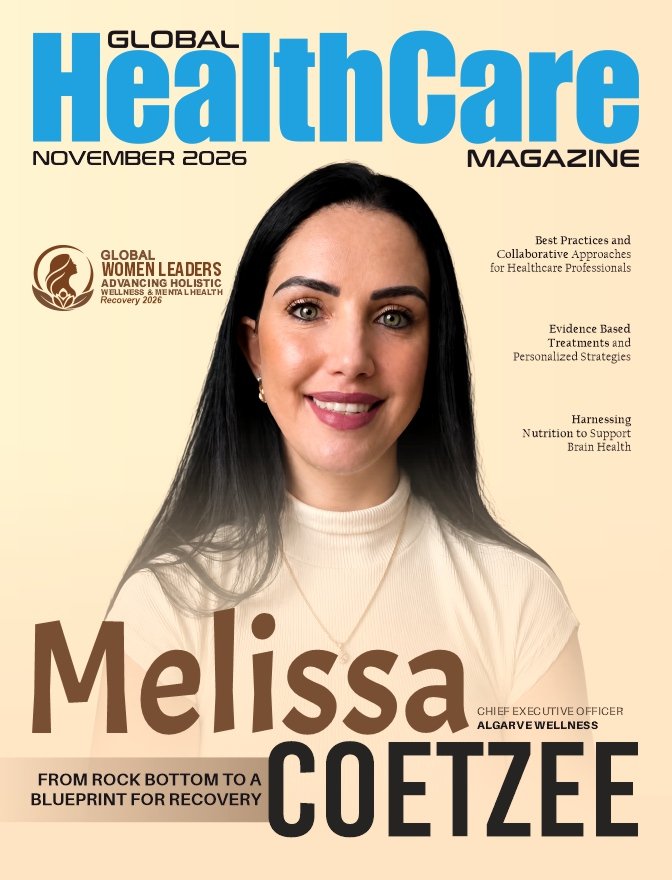
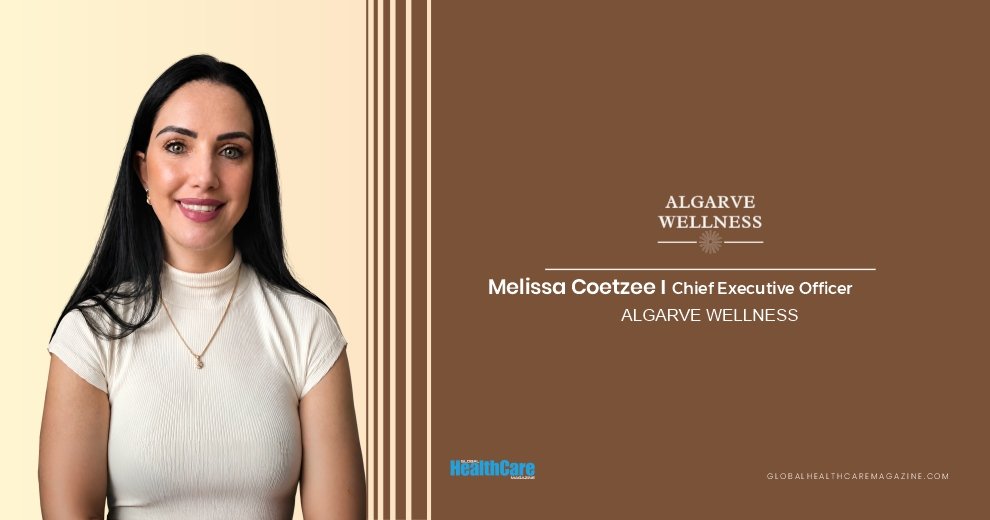
On the Algarve coast of Portugal, tucked away from the postcards and the tourist traffic, there is a clinic that treats exactly one person at a time. No shared common rooms. No group schedules dictate when a person eats, rests, or speaks to a therapist. It is a model built almost in defiance of the industry it belongs to, and it did not come from a business plan. It came from a memory. Melissa Coetzee, Chief Executive Officer of Algarve Wellness, built the place from the inside of her own experience, drawing on the feeling of entering treatment and believing everyone else was somehow further along than she was. That feeling, more than any market analysis, shaped what Algarve Wellness would become.
The Turn
Melissa was twenty-three when her daughter was born, and it was in that same period of her life that everything else was unraveling. She was living with alcohol dependency at the time, inside a relationship she describes only as difficult, and her body had reached a point where mornings without a drink were no longer possible. It is the kind of detail that could sound abstract if she did not say it so plainly. “I was living with alcohol dependency and a difficult relationship,” she recalls. “My body had reached the point where I could not start a day without a drink.”
What changed everything was seeing her daughter and realizing she would not survive unless something shifted. She says that, looking at her, she understood she would not survive if something did not shift. So she drove herself, alone, to a treatment centre in South Africa and stayed in a sober living home for six months. That was eight years ago. She has been sober ever since, and somewhere in that stretch of recovery, she found something unexpected waiting for her on the other side of her own healing: a sense of purpose in helping other women walking the same road. “Helping other women in recovery showed me my purpose,” she says, “and that became the foundation for everything I do now.”
Why Algarve Wellness Exists
The typical residential treatment model asks a person to vanish. Thirty days away from work, family, and the ordinary weight of responsibility. For many people, Melissa argues, that premise is simply unworkable. It assumes a version of life that can be paused, when in reality, the people she meets, entrepreneurs, executives, parents, who are often balancing businesses, children, and responsibilities that do not stop because someone is struggling.
The clinic was designed around that contradiction. The goal was never to offer a lesser version of care to accommodate a person’s schedule. It was to offer serious, individualized treatment that did not require someone to erase the rest of their life to receive it. That distinction, more than any amenity or therapy on offer, is the philosophical core of the business.
Dismantling Two Myths
Ask Melissa what still gets misunderstood about this work, and she does not hesitate. The first myth is a number: twenty-eight days. It has become, in the public imagination, a kind of finish line for recovery, and she considers it a dangerous one. Rewiring the brain and building durable new coping patterns, she says, takes considerably longer than a month, particularly for someone who has been struggling for years.
The second myth is heavier and more personal. It is the assumption that needing help with mental health or substance use means a person is failing at life. Melissa pushes back against that framing directly. “Many of the people we support are highly capable, highly successful, and quietly exhausted,” she says. Recognizing that, she believes, changes everything about how a person is cared for, because it replaces judgment with the correct diagnosis: not failure, but depletion.
Diagnostics Before Anything Else
Every program at Algarve Wellness opens the same way, with data rather than assumption. Clients undergo detailed diagnostics, including blood panels and brain mapping, so that treatment is designed according to what is actually happening in a person’s body rather than following a generic template. From there, the clinic layers in evidence-based clinical therapy, trauma-informed psychological support, and functional nutrition, alongside more advanced interventions such as Hyperbaric Oxygen Therapy, Red Light Therapy, and Transcranial Magnetic Stimulation.
Because the entire clinical team is oriented around a single individual at any given time, the daily schedule is not fixed. It can shift the moment a client’s needs change, an unusual degree of flexibility in an industry often built around rigid structure.
Walking Beside, Not Ahead
That experience continues to shape how she leads Algarve Wellness.“We walk beside our clients, not in front of them,” she says. The entire plan, she explains, bends around the person in front of her team: their history, their pace, their condition on any particular day. If someone needs rest instead of a scheduled session, that is what they receive. Safety and trust, in her view, are prerequisites, not outcomes. Only once those are established can a person begin to feel truly seen and slowly restored.
A Day in the Operational Thread
As CEO, Melissa’s days are less about grand vision and more about the granular work of holding a case together. She stays close to the lead clinicians, reviews each program as it evolves, and remains the first point of contact for anyone reaching out for help. It is not a passive title but one defined by constant oversight and close involvement in every client’s journey.
What energizes her most within that routine is a very specific moment: watching a client’s nervous system shift from hypervigilance into genuine safety. “That moment, when someone finally exhales after years of pushing through, is what makes every other demand of this work worthwhile,” she says. It is a small, physiological signal, but for her, it represents the entire purpose of the enterprise.
The People Behind the Model
The team includes clinical psychologists, trauma-informed therapists, medical consultants, bio restoration specialists, functional chefs, and somatic coaches. Melissa is careful to note that what distinguishes them is their combination of technical expertise and shared commitment to the clinic’s vision. Each person, she says, has given something personal toward building this place, and that investment shows up in the quality of care.
The team operates through what she calls ego-free collaboration, with daily communication among practitioners, so that clients are never left to bridge gaps between one specialist and another. The coordination happens behind the scenes, invisible to the person receiving care.
When Leadership Gets Hard
Not every part of running the organization has been gentle. Melissa describes leadership as being tested most acutely when difficult decisions have to be made with compassion still intact. There have been instances where a client behaved inappropriately toward a staff member, and she ended that placement without hesitation. The safety of her team, she says plainly, is non-negotiable.
There have also been quieter, harder seasons, times when she has had to release commitments and let people go. In both circumstances, her guiding idea has been the same: modeling healthy behavior through those moments is the real work of leadership, arguably more so than the strategic decisions that get more public attention.
Milestones Worth Naming
The recognition has come in specific, tangible forms. Algarve Wellness was honored at the Portuguese Business Awards, and the organization has contributed to Brainz Magazine. It has also expanded internationally, extending its standard of care into South Africa through a sister initiative called Africa Wellness.
But the milestone Melissa returns to most is not an award. It is a single client, a man who came back to Algarve Wellness not because he had relapsed, but because he had improved so substantially that he wanted to invest further in his own progress. For her, that return visit, born of growth rather than crisis, is the truest measure of what the clinic actually accomplishes.
What Comes Next
Melissa’s vision for the future is architectural in scope. She wants Algarve Wellness to become a fully integrated clinic capable of carrying a client from admission through detoxification, primary care, and long-term aftercare, all under the same values that guide the organization today. She imagines Hyperbaric Oxygen Therapy, Red Light Therapy, and other longevity protocols sitting alongside deep psychological work, all housed under one roof.
Her broader conviction is that the future of recovery lies in treating the nervous system as something that can be trained and restored. And she remains committed to the belief that one person at a time, not a cohort, not a program cohort model, is the most effective form of care available.
Life Outside the Clinic
Melissa is direct about how she protects her own equilibrium: balance, she says, is protected by design, not by hope. Because the clinical work demands her full presence, she treats family time and rest with the same seriousness she gives a client’s residency, not an afterthought squeezed into the margins, but a structured priority.
Her grounding force is close to home: her husband Jaco, their two young children, and their three dogs. She strength trains four times a week, a practice she credits with letting her switch off what she calls the executive mind. And cooking with clean, functional ingredients keeps her tethered to the same standards she asks of the people in her care.
A Philosophy, Not a Slogan
Melissa’s closing thought is less a mission statement than a working belief, tested over years of building something from very little. “Visionary wellness is never built by one person,” she says. “It is built by a team whose cups are full enough to pour into others.” Her guiding philosophy is deliberately simple: look after your people, build an ecosystem of mutual respect, and the excellence of the work will follow on its own. When people feel truly seen for who they are, she believes, not merely for what they produce, they arrive fully, with their whole hearts intact.
It is, in the end, the same principle that once carried her out of her own crisis and into the life she has built since. From the treatment centre where her own recovery began to the private sanctuary she leads today on Portugal’s Algarve coast, Melissa Coetzee has turned her personal journey into a philosophy of healing – one person, one exhale, at a time.
Quote.