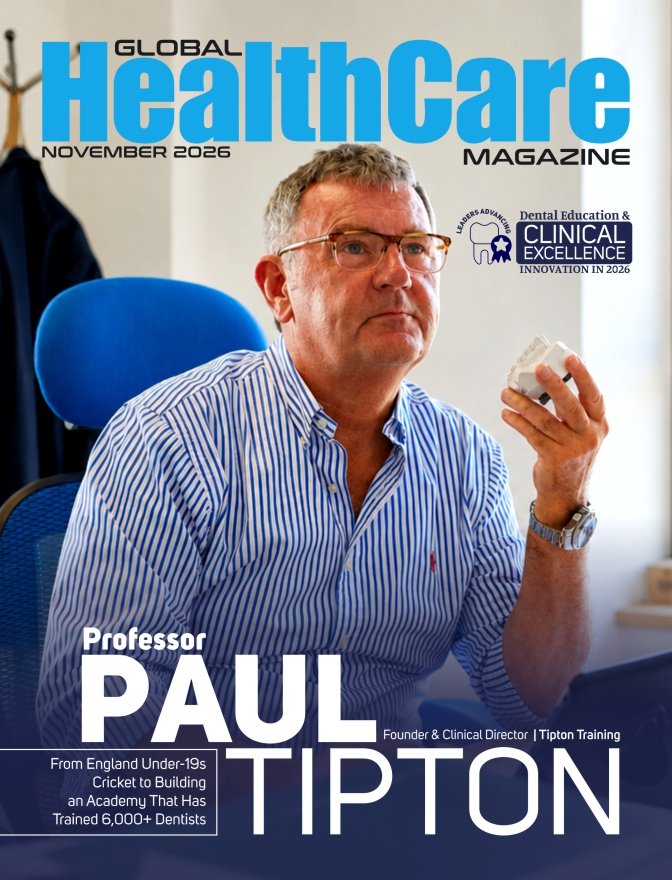
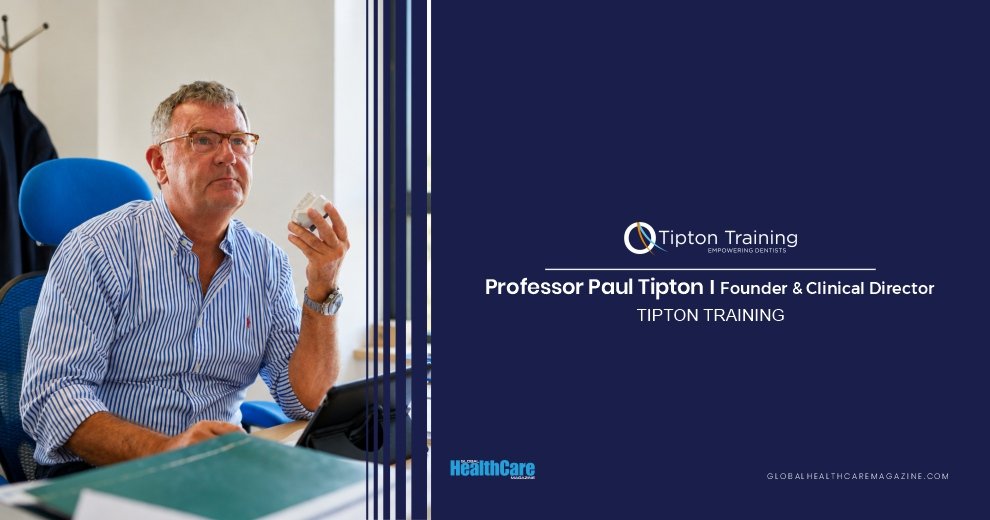
Before he built a career in restorative dentistry and postgraduate education, Professor Paul Tipton was pursuing a very different professional ambition: cricket. The discipline and constant practice that shaped his sporting years would later become central to his approach to dentistry.
Today, he is Founder and Clinical Director of Tipton Training, a postgraduate academy that has trained more than 6,000 dentists across the UK and internationally. A Specialist in Prosthodontics, he continues to treat complex restorative, implant and aesthetic cases.
At the heart of Professor Paul Tipton’s approach to dentistry and education is a firm belief in the importance of mastering the fundamentals. He believes that true clinical confidence comes not just from theoretical knowledge, but from practical experience and hands-on learning. His journey from the cricket pitch to the dental clinic has helped shape this philosophy, influencing both his approach to clinical practice and the educational institution he has built.
From the Crease to the Clinic
Professor Tipton’s original ambition was to become a professional cricketer. He represented England Under-19s for two years and joined Lancashire County Cricket Club’s professional staff. During that time, he recognised that his ambitions exceeded his prospects in professional cricket, prompting him to consider another career path.
His decision came down to a choice between studying dentistry at Sheffield University or pursuing a science degree at Durham, where cricket was particularly strong. He chose Sheffield, initially intending to continue playing for Lancashire during university holidays. Eventually, dentistry became his profession, while he continued semi-professional cricket with Cheshire. He qualified from Sheffield University in 1978.
The two worlds, as he sees it, were never as distant as they appear. “The great parallel between the two is that as a cricketer you have to put in the hard work, and practice all the time, and it’s the same with dentistry.”
The pitch, it turns out, was also a classroom. “Sport taught me discipline, perseverance and the importance of continually refining your skills, principles that have remained central throughout my career.” Those habits would later shape how he teaches, and what he expects of the dentists who sit in front of him.
The Course That Changed Everything
In 1982, the year he opened his own referral practice in Manchester, Professor Tipton attended an occlusion course taught by Mike Wise. It fundamentally changed his approach. He came away convinced that successful dentistry demands more than technical ability; it calls for a comprehensive understanding of the entire masticatory system.
He went on to complete four years of Wise’s restorative training, then earned an MSc in Conservative Dentistry at the Eastman Dental Hospital in 1989, where Derek Setchell became another influential mentor.
In 1991 came Tipton Training, one of the UK’s first private postgraduate dental academies. He had recognised that many fundamental aspects of restorative dentistry, occlusion above all, were inadequately covered in undergraduate education. Newly qualified dentists, in his view, were entering practice without sufficient knowledge of treatment planning, tooth preparation and the management of occlusal problems, which could lead to compromised outcomes and unnecessary patient discomfort.
The original one-year Restorative Dentistry programme placed occlusion at the heart of its curriculum. What began as a single restorative course has since grown into an international postgraduate academy teaching across multiple dental disciplines.
Learning by Doing
A common misconception, in Professor Tipton’s experience, is that postgraduate education is simply about acquiring qualifications or mastering the latest techniques. Qualifications matter, he says, but genuine professional development requires an understanding of the scientific principles behind successful treatment. Cosmetic dentistry meets a similar misreading: it is often seen as purely aesthetic, when lasting results depend on sound restorative foundations, particularly occlusion and function.
He urges dentists to invest in postgraduate education early. The profession is increasingly competitive, and recognised qualifications, alongside demonstrable clinical competence, help practitioners distinguish themselves and open doors to greater professional opportunities. “Knowledge is power, but knowing how to apply it is equally important.”
Application is where the teaching turns practical. “Dentistry cannot be mastered through lectures alone.” Theory provides the foundation, and repetition builds competence. Tipton Training’s programmes pair evidence-based teaching with phantom-head exercises, demonstrations, simulations and supervised practical sessions. Delegates receive personalised feedback throughout, allowing them to refine technique, address weaknesses and build confidence.
Mentorship is equally important. The academy encourages dentists to discuss challenging cases, ask questions and seek guidance from experienced clinicians.
For Professor Tipton, translating scientific knowledge into sound clinical practice begins with accurate diagnosis and comprehensive treatment planning. Occlusion is central to his teaching philosophy because it influences almost every aspect of dentistry, from individual restorations and implant placement to full-mouth rehabilitation. Delegates are encouraged to understand the rationale behind treatment decisions and apply their learning progressively, within their clinical competence. The aim is to develop clinicians who can make informed decisions and deliver safer, more predictable and longer-lasting outcomes.
Quality Before Scale
The academy’s greatest strength, Professor Tipton believes, is the breadth of clinical expertise within its faculty: experienced restorative dentists, prosthodontists, implant clinicians, periodontists and specialists in aesthetic and operative dentistry. Each is a practising clinician, selected for real-world experience alongside academic knowledge.
The logic is practical. Dentistry rarely operates in isolation, and successful treatment often requires restorative, periodontal, surgical and aesthetic disciplines to work together.
That combined expertise gives delegates a broader understanding of patient care, helping them appreciate how different dental disciplines interact when planning and delivering treatment.
Growth put that model to the test. As the academy developed from a single restorative programme into an international education provider, maintaining educational quality while increasing its reach became one of the greatest challenges of expansion. Consistency in teaching standards, facilities and delegate experience mattered more with each step.
His response was to prioritise educational excellence over expansion for its own sake, investing in experienced educators, structured curricula and rigorous quality assurance.
A Career Measured in Milestones
The academy’s development has been accompanied by significant educational milestones. In 2017, its Certificate and Diploma programmes were formally recognised by EduQual as Level 7 postgraduate qualifications. In 2019, Tipton Training became the first private postgraduate dental education provider in the UK to receive Centre Accreditation from the Royal College of Surgeons of England.
Personally, becoming the first recipient of the Kimberley Finlayson Lifetime Achievement Award in 2022 was an incredibly proud moment, recognising over 30 years of dedication to private dentistry and dental education. Throughout Professor Tipton’s career, both in clinical practice at T Clinic and through Tipton Training, he has always strived to give his very best to the profession, his patients and his students. “To receive such recognition from my peers made those years of hard work particularly rewarding.”
His earlier honours and appointments further reflect his contribution to the profession. In 1992, he was awarded an honorary Diploma in General Dental Practice by the Royal College of Surgeons of England and appointed to the British Dental Association’s Independent Practice Committee. In 1999, the General Dental Council certified him as a Specialist in Prosthodontics. In 2014, he was appointed Visiting Professor after becoming programme leader for the City of London Dental School’s MClinDent modules in restorative and cosmetic dentistry.
Peer and industry rankings echo this. Dentistry Magazine named him among the UK’s Top 20 Most Influential Dentists in 2012 to 2013, while he was ranked in the top three of Aesthetic Dentistry’s 25 Poll in 2012. His influence extends internationally, with the Global Summits Institute recognising him as one of the World’s Top 100 Doctors in 2021. He has also consistently featured among the UK’s Top 50 Most Influential Dentists, reflecting his longstanding contribution to the profession.
Yet the achievement he values most lies elsewhere. “My proudest achievement remains seeing so many of our alumni go on to establish their own successful practices, return to teach on our courses, or even launch their own training academies.”
Clinical Practice, Education and Leadership
Professor Tipton’s professional life spans clinical dentistry, postgraduate education and leadership. At Tipton Training, he oversees the academy’s educational philosophy, contributes to programme development, lectures internationally and mentors dentists. His clinical work takes place at clinics in Manchester and London, where he treats complex restorative, implant and aesthetic cases. With more than 40 years of private practice behind him, he considers remaining clinically active essential to keeping his teaching grounded in the realities and challenges of everyday dentistry. He also undertakes consultancy and expert witness work.
His professional commitments extend beyond the academy and clinical practice. He serves as President of the British Academy of Restorative Dentistry and was a founding member and board director of both the British Academy of Aesthetic Dentistry and the British Academy of Cosmetic Dentistry. He is also a Fellow of the International Academy of Dental Facial Esthetics.
His contributions to the profession include serving on the editorial boards of and writing for Private Dentistry Magazine, Restorative & Aesthetic Practice, and Implant Dentistry. He also served as a medical writer and advisory board member for Expert Beauty Magazine and Woman’s Magazine.
Variety is what he enjoys most, though teaching remains particularly rewarding. “Seeing dentists develop their knowledge, confidence and clinical abilities is an enormous privilege.”
The Road Ahead
International expansion is a major focus. Tipton Training is growing its presence in Kenya, Nigeria, Dubai, Egypt, India, Pakistan, Sri Lanka, Mongolia and Uzbekistan, with many more opportunities emerging for 2027 and beyond. The ambition is to bring the same standards of clinical education and hands-on training to dentists around the world.
The curriculum is widening too, across restorative dentistry, implantology, periodontology, full-mouth reconstruction, veneers, clear aligners and digital dentistry, with many new programmes in development. The academy has also moved into pre-university education, helping aspiring dentists prepare for dental school, a step that lets him support people from the very start of their journey through to advanced postgraduate training. Professor Tipton’s aim is for Tipton Training to become a globally recognised leader in dental education, bridging the gap between academic knowledge and clinical practice and empowering dentists to embrace innovation while delivering safe, predictable dentistry.
Beyond the Clinic
Cricket remains a lifelong passion. Having played for Lancashire and Cheshire, Professor Tipton enjoys watching the game and has been a member of the MCC, regularly attending matches at Lord’s. He also enjoys golf, travelling and spending time with his family and five dogs. His teaching career has given him opportunities to experience different cultures and build lasting friendships around the world. Balancing clinical practice, education and business leadership can be demanding, he acknowledges, but he has been fortunate to build a career around work he genuinely enjoys.
His message to dentists is clear. Invest in postgraduate education, build a thorough understanding of the fundamentals and seek guidance from experienced mentors. “My message to dentists is simple: never stop learning.” Above all, he encourages practitioners never to underestimate the importance of occlusion, diagnosis and treatment planning. For him, the greatest reward has never been teaching a technique or awarding a qualification, but empowering dentists to become more confident, capable clinicians and helping them provide better care for their patients.
Quote